The pretty fair-looking girl – judging from her face she can’t be more than 19-20 years – walks hesitantly into the non-descript compound by the corner. As she approached the front she looked furtively to the right and then left with her cheeks puffed, suggesting she is tensed. There’s that hint that her mind is working to rationalise her mission in that compound but she walked on nonetheless towards the door determined to achieve her mission. As she gets to the door, it suddenly opened and another girl, slightly older, smiled at her in welcome – It’s clear they know each other. She forced herself to smile back as she was ushered into the house.
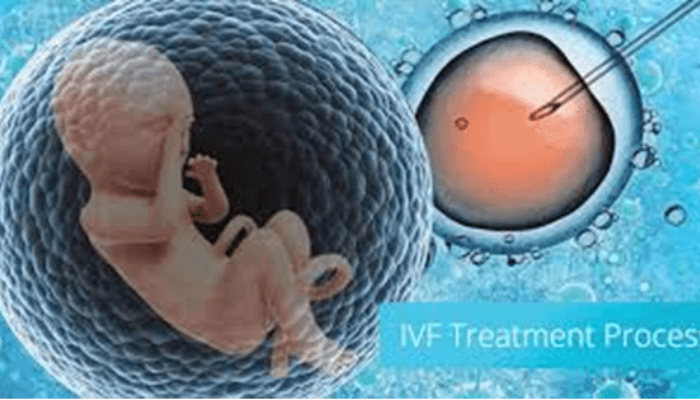
The building looked nondescript from the outside, but the interior was posh and pristine. It was that faint smell of disinfectant that gave the first hint of what the building was, a clinic. It was a fertility clinic and the girl was there to start the process of donating her egg, which involves taking hormone injections that will stimulate her ovaries into producing mature eggs.
The young girl, an undergraduate in one of the nation’s universities, travelled about 25km from her campus to commence the procedure. It was her first experience. A month earlier she had been recruited by the girl that welcomed her and convinced, through monetary inducement, to donate her egg. She was assured it was risk free plus the opportunity to make extra money.
A thriving side hustle?

Egg donation by young Nigerian girls, teenagers and ladies in their early 20s, is on the increase, in fact, at an alarming proportion. The young ladies see it as a side hustle, where they can make extra money to flex. Payments to these girls vary from as low as N14,000 to N250,000. In truth, these girls are selling their eggs. There is a thriving market in sperm and egg sales involving the fertility clinics, who are at the top of the pyramid, followed by the agencies who are tasked with sourcing donors, then the recruiters or marketers engaged by these agencies, usually young girls and boys, who themselves have probably sell their sperms or eggs and are then promised commissions by the agencies if they bring their friends, then there are the naïve donors at the bottom of the pyramid, who are often exploited.
The trend got so alarming that the National Assembly got involved. Last year, the House of Representatives mandated its Committee on Healthcare Services to investigate the activities of fertility clinics in the country. Before then, the trend had caught the attention of Al Jazeera, which ran a documentary on it in 2021 that it titled “Inside Nigeria’s unregulated human egg industry.”
Driver of the demand
The key driver of this unsavoury trend is the rising demand by married couples in the country for assisted conception. A study has shown that over 30% of married couples in Nigeria are infertile and are expectedly having challenges conceiving naturally. Poverty and financial difficulty are other challenges driving young Nigerians into this trade. People will do whatever it takes to survive, including engaging in crime and activities that could damage their health down the road.
Many of these cases are hidden to the authority and not regulated. So, one can imagine the unethical practices going on in that field. There have been reported cases of 15, 16-year-olds recruited as donors.

Egg donation not illegal
To be sure, egg donation is not illegal in the country. The National Health Act of 2014 only specify that donors must be adults, 21 years and above, willingly agree to be donors, must understand the procedure and risks involved, what one will call informed consent and must not be paid for the egg but reasonably compensated. However, many teenagers are today involved in this enterprise. Section 53-57 of the Act, which deals with tissues, donation, and removal of human body parts or reproductive tissues, never condemned the act. What the sections condemned is commercialising sperm and egg donation. However, the law is vague on the amount that constitute commercialisation. And that is one loophole the unscrupulous fertility clinics are taking advantage of.
Donor ignorance
Many of the donors are completely ignorant of the health risks associated with giving out their eggs. They are never provided with adequate information. And where such is provided, the associated risks are downplayed. The donors are only too happy to conclude the transaction and get paid. There are definitely health issues that could arise from donating one’s egg. For instance, because of such likely health issues, experts recommend that women should only donate their eggs six times in a lifetime. Unfortunately, many of these young girls have had repeated circles of donation.
Unusual rationalisation
In fact, many would say it is a noble thing as the donors are helping to bring joy to families that cannot conceive naturally, and by extension saving marriages that could possibly have broken up due to barrenness or childlessness. Some student donors will argue that egg donation is better than stealing or prostitution. Such arguments fail to factor in the related health risks.
Health risks
Donating eggs involves hormonal stimulation. These hormones are injected into the donor to help her produce multiple eggs. These hormonal injections can cause adverse effects that could sometimes be significant. The harvesting of the eggs requires surgery. Such surgical retrieval carries the risks of infection and damage to reproductive organs.
Exploitation
Many of the donors are students who consider such activity as a side hustle to get money to augment whatever they could get from home. Herein lies the danger of such thinking. Because many student donors see it as a side hustle, a source of income, they are quite willing to keep repeating the egg harvesting circle as well as coercing their friends, colleagues, or even siblings into the ‘business’ for the extra pay they get for bringing a candidate. Many of the fertility clinics and their agents/agencies know that the student donors are financially vulnerable and they exploit this. The fertility clinics pay premium to the agencies who pay peanuts to the donors in many instances.
Ethical issues
Issues such as commodification of human reproductive material, privacy of donor identity, rights of children born via donated material, and many other related issues would need to be addressed.
Government must act now
It is clear that the National Health Act of 2014 has become inadequate to address the current situation. The Act needs to be urgently reviewed and updated to close the gapping holes in it through which unscrupulous fertility clinics and their agents pass through unhindered.
“Donating” sperm or eggs in Nigeria remains a complex issue with many moving parts. However, economic hardship, poor regulation, ignorance, and high demand are driving the informal ecosystem. To protect the integrity of the industry and safeguard donors, genuine industry players must band together and collaborate with governments to flush the evildoers out of the system.