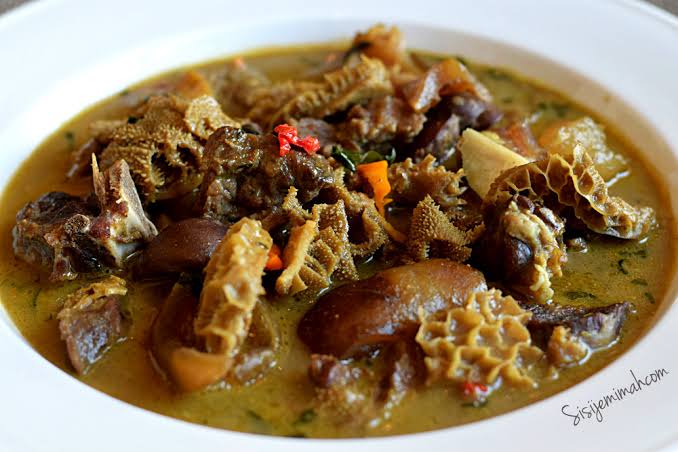
When life gives you pepper, make pepper soup! It is a variation of the viral lemon to lemonade trend. This quote is meant to inspire you on how to turn your woes to fortune. Whoever wrote this version has not experienced the “Nigerian life” or tried to start a business in my country, otherwise he would have said “when Nigeria shows your pepper all you’ve got is stew”. That is because life does not give you “cat-fish” or “assorted meat” (those are the items that make pepper soup what it is, not the pepper). I will explain based on what I have faced trying to start an SME and my experience as an amateur chef cooking both stew and pepper soup.
On the eve of my departure from Nigeria to study in Georgia, my dad gave me two advice, “remember the son of who you are” and “don’t ever forget where you come from”. He said the same thing when I was leaving for the boarding house, only this time he went further on the latter. He said “son you are going to a better place, when you get there don’t forget how you left us here”. When I got to the other side, the grass was indeed greener but I did not burn my bridges, so I always look back, lest, I forget the road that would lead me home.
All through my studies I was determined to come back home to be of value to my country. I wasn’t going to be one of those young folks doing exploits out there without impacting home. Returning to Nigeria, I decided to start a small business. After doing a SWOT analysis on myself, I came up with a business plan. Start a company that does three things: record and document history (my hobby), provide tour services, manufacture and sell souvenirs to tourists (here I could use my training as an industrial engineer)
It sounds good on paper, but Nigeria made me understand that paper and reality are far from each other.

When Nigeria shows you pepper it comes in three flavours; Shombo (red Chili), Tatashe (red bell pepper) and Rodo (scotch bonnet). I will try to explain these three using the challenges I have faced so far.
Shombo is a variety of pepper that is used to spice food. It is not hot at all, but it gives a special aroma. In business, these are the problems that can be controlled, challenges that are normal for new businesses. For example, in the souvenir segment, finding skilled technicians is a big headache as fewer Nigerian youths now practise craft. I had to travel to the countryside to find skilled technicians, then train them on how to make custom souvenirs that meets international standard. As challenging as it was, I could control it, my training as an industrial engineer had prepared me for this.
Tatashe is a variety of pepper that is mildly hot. Though not as spicy as Shombo. These are the challenges that I have some control over. I can’t completely eradicate them but there are steps I could take to minimise their effects. One of my top performing souvenirs are bags made from local Aso Oke fabric. There are two types of machines used in sewing these bags, the industrial machine and the manual machine. The industrial machine could make bags neater and three times faster than the manual. The problem is, the industrial machine needs electricity. We only get power for about four hours daily at the workshop. There is nothing I can do about power supply; all I can do is schedule production time to maximise the use of power supply and look for alternative power source.
Rodo is a type of pepper that is very spicy and extremely hot. These are the challenges I have faced that I have absolutely no control over. The tourism segment is where I encounter most of these issues. I have a lot of contacts that wants to visit Nigeria, but how do you protect tourists in a country where police chiefs get kidnapped. There is absolutely nothing I can do about it.
None of the three peppers listed is used in the preparation of pepper soup. That is because pepper is not what makes pepper soup what it is, it is the fish or assorted meat. Life will never give assorted meat or cat-fish.

Stew on the other hand uses a lot of pepper and all the above pepper can be used in its preparation. Stew is present in Nigerian cuisines because it goes with most of our staples. Stew goes with rice, beans, bread, yam etc. Pepper soup is a luxury meal and you eat it for relaxation and on special occasions.
Stew perfectly describes doing business in Nigeria. Stew is not easy; it is tough but with good packaging and support, stew will make it to every occasion.
Starting in Nigeria is not easy, it is very tough but with the right packaging and support you can build a global brand. So next time Naija shows you pepper make stew not pepper soup.
LEKAN OLASENI
Olaseni writes from Lagos