Nigeria’s commercial capital has long been a paradox: chaotic yet creative, overpopulated but bursting with opportunity. Yet behind the glittering skyline and headline GDP growth, Lagos faces a quieter but costly threat: pollution.
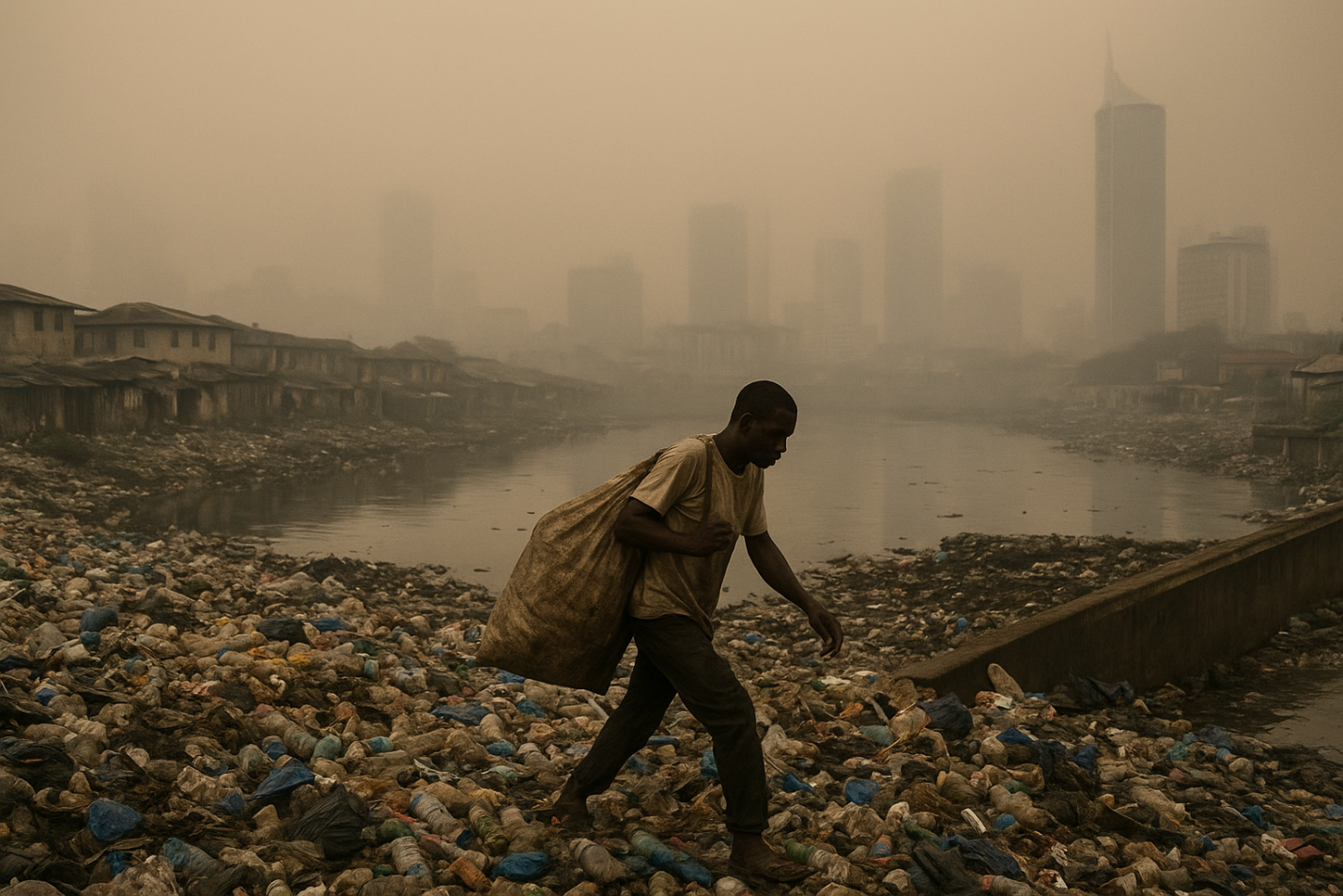
The Lagos State Waste Management Authority estimates the city generates 13,000 to 14,000 tonnes of waste daily, far more than its collection system can manage. Plastic bottles clog canals, refuse spills into drains, and the acrid smoke of open dumpsites lingers in the air.
The World Bank puts the bill in stark terms. In 2018, ambient air pollution cost Lagos $2.1bn, about 2.1 percent of state GDP, while contributing to more than 11,000 premature deaths. For a state that powers Nigeria’s economy, such costs are not marginal but structural.
“Poor air quality and a dense population have strained the health resources in Lagos State,” says Akin Abayomi, the state’s Commissioner for Health. His warning underscores how pollution is not just an environmental issue but a public health crisis with economic consequences.

Growth collides with fragility
By the numbers, Lagos is booming. In the first half of 2024, the city produced N27.39tn in output, equal to 22.4 per cent of Nigeria’s GDP, according to national accounts. Trade, ports and sprawling markets remain the backbone, while telecoms and digital platforms have turned consumer demand into a continental force.
A state report prepared with World Bank support ranked Lagos as Africa’s second largest city economy in 2023, valued at $259.75bn (PPP), with ambitions to hit $800bn to $1tn by 2052. Yet the same report warns that drainage bottlenecks, waste backlogs and flood risks could turn an infrastructure gap from pressing to catastrophic.
A drag that does not make the headlines
The financial cost of delay is steep. The report estimates climate inaction could cost between $22bn and $29bn, underlining how environmental risks steadily erode growth. Each flood, traffic jam or smog-filled day eats into productivity in an economy that already carries more than one-fifth of Nigeria’s output.

“As engineers we see the risks daily,” notes Azeez Agoro, chairman of the Lagos chapter of the Nigerian Institution of Environmental Engineers. “A city with more than 20 million people cannot afford to treat air pollution and waste management as afterthoughts. We must lead with innovative, practical, and sustainable solutions.”
Why the risks are rising
Population growth makes the challenge harder. UN projections suggest Nigeria could reach about 400m people by 2050, nearly double today’s level. Such pressure will stretch jobs, housing, infrastructure and basic services.
Manufacturing, once a source of employment, has struggled under high borrowing costs. Inflation is easing but lending rates remain steep, keeping firms under strain. Currency swings, though more stable of late at about N1,535 to the dollar, have added another layer of uncertainty.
If the billions already lost to pollution persist or spread more widely, the combined drag on productivity, healthcare and public finances could undermine fragile gains.
The contrast is stark: ICT, finance and construction are expanding, but investment in drainage, waste management and clean energy remains thin. Lagos risks sustaining an economy of headline growth, hidden fragility.
Spending as investment, not cost
Solutions are within reach. Cleaner buses and trains, stricter emission standards and a gradual shift to renewables could reduce urban smog. Recycling, now dominated by informal workers, could be scaled up and formalised to create jobs while easing landfill pressures.
Ololade Wright, a researcher on clean energy and household fuels, points to the stakes at ground level: “About 90 million Nigerian households are still cooking with solid fuels. Household air pollution adds to the city’s wider smog problem and compounds the health burden.”
Just as crucial are incentives for compliance, from tax breaks for firms that adopt cleaner technologies to penalties for persistent polluters, creating both a carrot and stick for change.
The Lagos Economic Development Update estimates that climate inaction alone could cost $22bn to $29bn. With the city generating nearly a quarter of national GDP, the logic is clear: cleaning up costs less than carrying on.
The real test
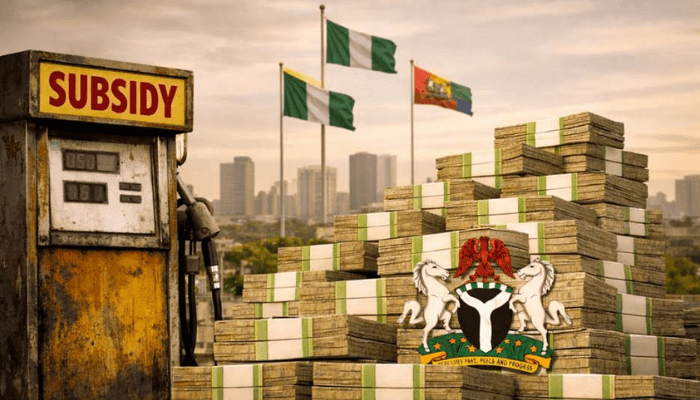
Nigeria’s government has focused reforms on subsidy removal, tighter budgets and bank recapitalisation. These moves may stabilise public finances, but they risk being offset by a sick workforce and flood-damaged infrastructure if environmental risks remain neglected.
The question is not whether Lagos can keep growing—it clearly can. The test is whether it can grow without choking itself. For Nigeria, treating pollution as an economic emergency is no longer optional. It is the price of survival.