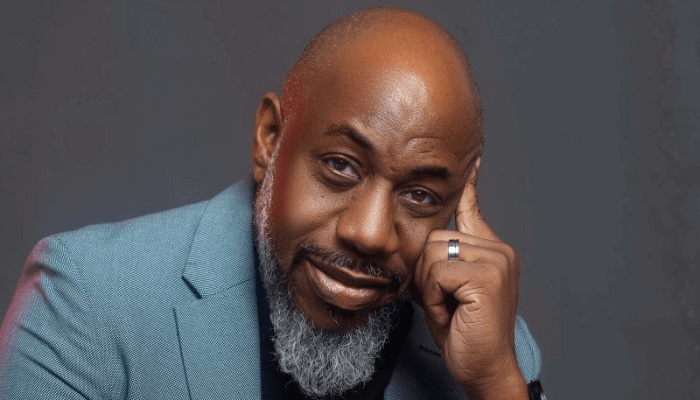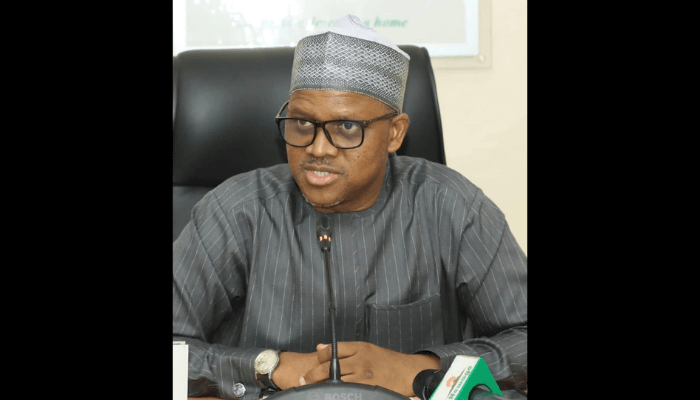
SHEHU USMAN OSIDI is the managing director/chief executive of the Federal Mortgage Bank of Nigeria (FMBN), who was appointed to this position by President Bola Tinubu in February 2024. He is a seasoned banker with over 30 years’ experience in the financial sector. In this interview with CHUKA UROKO, BusinessDay’s Property Editor, Osidi shares exciting insights on the activities of the apex mortgage bank within the past 17 months of his stewardship, highlighting the impact the bank has made under the Renewed Hope Agenda on Housing promoted by the federal government. He also speaks on other issues of interest as they concern housing and mortgage, among others. Excerpts:
- “We understand that while homeownership is the ultimate goal, millions of Nigerians are still renters, and the struggle to pay one or two years’ rent upfront is a serious challenge that affects household stability and financial security.”
- “We’re in the middle of transformative reforms—digitisation, product expansion, recovery optimisation, support for the Renewed Hope Housing Programme, and having an engaged and experienced board helps us stay aligned with national priorities.”
Like a flash in the pan, two years have passed since the inauguration of President Bola Tinubu. How would you assess the impact of his Renewed Hope Agenda on housing, and what role is the Federal Mortgage Bank of Nigeria (FMBN) playing in support of the agenda?
I believe it’s important to begin by commending the president for making housing a central pillar of the Renewed Hope Agenda. In just two years, the administration has moved housing from the margins of public policy to the very heart of Nigeria’s inclusive development strategy.
The agenda is not just about building houses but also about stimulating economic activity, generating jobs, reducing poverty, and restoring dignity to the lives of ordinary Nigerians. And the results are already visible. We are seeing new housing developments rising nationwide and, more importantly, renewed and increasing public trust in the government’s commitment to solving Nigeria’s housing challenge.

As the apex public mortgage institution in the country, FMBN has played—and continues to play—a vital role in translating this bold vision into practical outcomes. We are providing the critical financial support needed to kick-start and scale these housing projects. So far, we have committed over ₦100 billion in off-taker guarantees to unlock private sector investment in the construction of Renewed Hope Cities and Estates nationwide.
We are also directly funding, in part, landmark ministry-led housing developments such as the 3,112-unit Renewed Hope City in Karsana, Abuja, and the 1,500-unit Renewed Hope City in Ibeju-Lekki, Lagos, respectively.
So, to sum up, our role at FMBN is clear: we are a key financial engine of the Renewed Hope Housing Programme. And under the leadership of Ahmed Dangiwa, Minister of Housing and Urban Development, we are fully committed to supporting Mr. President’s vision to deliver affordable housing at scale, transform our urban landscape, and ensure that every Nigerian—regardless of status—can dream of, and achieve, owning a home.
“We understand that while homeownership is the ultimate goal, millions of Nigerians are still renters, and the struggle to pay one or two years’ rent upfront is a serious challenge that affects household stability and financial security.”
FMBN is an agency of government under the Ministry of Housing and Urban Development, and therefore, you have worked closely with the minister. How would you describe his leadership and the impact it has had on your bank’s performance?
That’s an important question, and I must say without hesitation that the minister has been an outstanding leader and a steady hand in Nigeria’s housing and urban development sector. His leadership has brought clarity, consistency, and renewed energy to the housing agenda.

One of the most impactful things he’s done is provide clear policy direction. He understands the housing system intimately, having served previously as managing director of FMBN, so he knows where the institutional gaps are and how to fix them. That experience has made a big difference.
He has also been incredibly supportive of our efforts at FMBN. He has backed key reforms that we have implemented over the past year, whether it’s in strengthening our loan recovery strategy, completing our long-overdue Core Banking Application, or expanding access to new market segments like the diaspora and the informal sector.
Most importantly, his insistence on affordability, transparency, and efficient service delivery has elevated our own internal performance. For example, his push for improved financial governance encouraged us to clear a four-year backlog of unaudited accounts in record time. That’s not something we did just to tick a box; it was inspired by a minister who believes public institutions must earn the trust of Nigerians.
His vision goes beyond housing delivery. He has invested much in land reforms, slum upgrading, building materials industrialisation, and housing finance innovation. These are the systems that sustain long-term housing development, and he has been actively mobilising the support of other stakeholders—state governments, development partners, and the private sector—to get them working.
So, from our perspective at FMBN, the minister is not just a supervisor but also a strategic partner and a source of inspiration. His leadership continues to open doors for us and align us with the broader goals of the Renewed Hope Agenda. We are grateful to have that kind of steady and purposeful leadership at the top.
“We’re in the middle of transformative reforms—digitisation, product expansion, recovery optimisation, support for the Renewed Hope Housing Programme, and having an engaged and experienced board helps us stay aligned with national priorities.”
What makes projects like Renewed Hope Cities in Karsana and Ibeju Lekki, which FMBN is financing, different from past efforts, and how are they contributing to access to affordable housing for Nigerians?
These projects represent a fundamental shift in how we approach housing development in Nigeria. In the past, many housing projects, especially government-led ones, suffered from poor planning, limited affordability, lack of infrastructure, or weak financing frameworks. What we’re doing under the Renewed Hope Cities and Estates model is completely different.
First, these projects are designed from the ground up to be fully integrated communities. We’re not just building houses but also delivering homes in livable, planned environments with essential infrastructure such as roads, water, electricity, green spaces, and even provision for schools, clinics, and markets. That’s critical for dignity and sustainability.
Secondly, the financing model is more robust and inclusive. At FMBN, we’re providing off-taker guarantees and construction financing to developers, which de-risks the projects and ensures that delivery doesn’t stall halfway. We’ve already committed over ₦100 billion in guarantees, including ₦27 billion to support the Ibeju Lekki City and ₦19.9 billion for the Karsana City in Abuja.
These are large-scale developments, delivering 3,112 units in Karsana and 1,500 units in Lagos, and we’re working with the minister to replicate them in other parts of the country.
Thirdly, the pricing structure is anchored on affordability. By leveraging our single-digit interest mortgage products, these Nigerians can now aspire to own decent homes with as little as 10 percent equity contribution and up to 30 years to repay.
Furthermore, the projects are part of a broader economic strategy. They create thousands of jobs in construction and allied sectors, stimulate local economies through supply chains, and support industrialisation. So, when we talk about these cities and estates, we’re talking about a holistic national development strategy, not just bricks and mortar.
In summary, these are not business-as-usual projects. They are better planned, better financed, more inclusive, and more sustainable. That’s what makes the Renewed Hope Cities and Estates different. And that’s why FMBN is proud to be a part of enabling affordable financing for them.
You recently completed the deployment of a core banking application. How is this improving service delivery for your contributors and borrowers?
The deployment of the Core Banking Application is arguably one of the most significant institutional reforms we’ve undertaken at the Federal Mortgage Bank of Nigeria in decades. For the first time, we are bringing our operations in line with global banking standards—real-time processing, full digitisation of records, and end-to-end automation of customer transactions.
Before now, the Bank operated largely manually. Loan processing was paper-based, approvals took a long time, and contributors couldn’t easily access their records. This created bottlenecks, delays, and frustration for our customers. With this new platform, we’ve changed that narrative completely.
The Core Banking Application now allows our contributors to do what many Nigerians expect in today’s digital world: register for the National Housing Fund, check their monthly contributions, apply for loans, and track the status of their applications—all online. That kind of transparency builds trust and empowers Nigerians to take control of their housing journey. Nigerians can simply go to ibank.gov.ng to do all that.
For loan applicants and developers, the system is helping us process and disburse funds faster, with fewer errors, clearer audit trails, and stronger compliance. It also helps us manage risk more effectively because we now have centralised data on all customer interactions, loan performance, and repayment trends.
I’m proud to say we officially went live in April 2025, and we are currently in the 6-month maintenance and optimisation phase. By August, we expect to complete all onboarding, fine-tuning, and staff capacity building to fully unlock the benefits of this new system across our national branch network.
Ultimately, this is about making FMBN more responsive, more efficient, and more customer-centric. It’s about making it easier for the average Nigerian—whether a teacher, trader, or public servant—to access affordable housing finance without the stress of bureaucracy. That’s the kind of institution we’re building.
Implementing a system such as this is no small feat. What were the key challenges, and how did you overcome them to ensure the system works optimally for contributors and applicants?
Absolutely, you’re right. Implementing a core banking platform, especially in a public institution with a legacy of manual operations like FMBN, is a massive undertaking. It’s not just about installing software; it’s a complete transformation of how the bank works—from back-end operations to customer-facing services.
One of the first challenges we faced was data integrity. Many of our records were in physical form or on fragmented databases across branches. We had to go through the painstaking process of cleaning, standardising, and migrating millions of records into the new system to ensure accuracy and reliability. That took time and careful planning.
The second challenge was changing management. This kind of shift naturally creates anxiety, especially among staff who are used to manual systems. We had to invest in extensive staff training, orientation, and engagement to ensure that the people operating the system understood its value and felt confident using it.
Another hurdle was the complexity of integrating our existing services—National Housing Fund contributions, loan application tracking, mortgage disbursement, and customer support—into a seamless platform. These are unique to FMBN and not something off-the-shelf banking software is typically designed for. So, we worked closely with our implementation partners to customise the system for our needs.
Despite these challenges, we made steady progress. When we assumed office in early 2024, the project had already started but was lagging behind schedule. We immediately made it a top priority, restructured the implementation plan, and put a dedicated task force in place to drive it to completion. That’s how we were able to go live in April 2025.
Today, we are in the 6-month maintenance and stabilisation phase, which runs until the end of August 2025. This is a crucial period. We are monitoring system performance, fixing bugs, onboarding more users, and collecting feedback from our branches and customers to make continuous improvements.
For the sake of Nigerians out there who may not know, what, in your opinion, makes FMBN different from other banks or mortgage institutions in the country?
That’s an excellent question, and it’s one we’re always happy to answer because FMBN is a very unique institution. We are not a commercial bank. We are Nigeria’s foremost public sector housing finance institution, established specifically to provide affordable mortgage financing to low- and middle-income Nigerians, especially those who would otherwise be excluded from the formal mortgage market.
Our uniqueness starts with our mandate. Unlike private mortgage banks that operate primarily for profit, FMBN was set up to deliver social impact—to make homeownership possible for the average Nigerian. We do this through the National Housing Fund (NHF) Scheme, which we manage on behalf of the Federal Government. Every worker in the formal sector contributes 2.5 percent of their monthly income, and, in return, they become eligible for a range of affordable housing loans at single-digit interest rates, with tenors of up to 30 years.
Another thing that sets us apart is affordability and accessibility. We offer mortgages at interest rates as low as 6 percent and tenors of up to 30 years, which is significantly below what commercial banks provide at over 25 percent and tenors of less than 5 years. And we require from zero to a 10 percent equity contribution, which lowers the entry barrier for people trying to get on the housing ladder.
We also have a strong developmental approach. We don’t just finance individual borrowers—we work with cooperatives, developers, state governments, and labour unions to fund estate construction and provide bulk mortgage financing so that more Nigerians can benefit. And our products are designed to meet people where they are—whether they are civil servants, artisans, market women, or members of the diaspora.
In addition, our loans are non-recourse, meaning they’re secured solely by the property. If a borrower defaults, we do not go after their other assets. This de-risks the process for many low-income earners who are usually hesitant to engage with formal financial institutions.
And of course, FMBN is national in scope. We have a presence in all 36 states and the FCT, ensuring that our services are accessible no matter where you live. Whether it’s in Sokoto, Calabar, Yenagoa, or Maiduguri, Nigerians can walk into an FMBN branch and start the process of owning a home.
In short, what makes us different is our mission, our people-focused products, our affordability, and our commitment to social impact. We are not here to serve just the privileged few; we are here to serve the hard-working Nigerian who simply wants a decent roof over his head and a place to call home.
What specific products does FMBN offer to help Nigerians, especially low- and middle-income earners, informal sector workers, and now the diaspora and non-interest banking segments, become homeowners?
That’s a great question because it goes to the heart of what we do at FMBN, which includes designing and delivering affordable housing finance products that respond to the real needs of Nigerians across different income levels and work structures.
We recognise that Nigeria is a diverse country, and so we’ve built a range of products tailored to meet people where they are—whether they are formal sector employees, entrepreneurs, artisans, traders, or even Nigerians living abroad. Our key products include:
NHF Mortgage Loan
This is our flagship product. It enables contributors to the National Housing Fund Scheme to access up to ₦50 million to buy, build, or renovate a home at just 6 percent interest per annum—the most affordable rate in the country—with up to 30 years to repay, depending on the age of the borrower. The equity contribution required is just 10–30 percent, making it highly accessible.
Home Renovation Loan
This product allows eligible NHF contributors to access up to ₦1 million to renovate or improve their existing homes. It’s simple, fast, and doesn’t require collateral beyond the borrower’s employment confirmation and NHF record.
Rent-to-Own Scheme
Here, we finance housing units that Nigerians can move into immediately and pay monthly rents that convert to ownership over time. It’s perfect for people who can’t make an upfront equity contribution or who want a more flexible path to homeownership.
Construction Loan and Cooperative Housing Development Loan
These are targeted at developers, cooperatives, and community groups who want to build in bulk for their members. We provide funding for estate construction under clear affordability guidelines so that end-users can eventually take over with FMBN mortgages.
Non-Interest Ethical Mortgage Products
We recently received approval from the Central Bank of Nigeria to launch Shari’ah-compliant housing finance products. This means Nigerians who prefer non-interest banking options—for religious or ethical reasons—will soon be able to access affordable housing finance from FMBN without compromising their values.
Diaspora NHF Mortgage Loan (coming soon)
We are working closely with the Central Bank of Nigeria and the Nigerians in Diaspora Commission (NIDCOM) to launch a product that will allow Nigerians abroad to participate in the NHF Scheme and access FMBN mortgages.
They will be able to buy or build homes for themselves or their families back home with peace of mind through a credible public institution. What ties all these products together is a shared focus on affordability, inclusiveness, and flexibility. We want every Nigerian—whether you’re a civil servant in Nasarawa, a trader in Aba, a nurse in Kaduna, or a software developer in Canada—to have a path to homeownership in Nigeria through FMBN.
One product that has caught the attention of many Nigerians is the Rental Assistance Product. Tell us more about it and the kind of impact it could have on housing affordability across Nigeria.
The FMBN Rental Assistance Product is a direct response to one of the most pressing realities many Nigerians face today, that is, the high cost and upfront burden of annual rent payments, especially in urban areas. We understand that while homeownership is the ultimate goal, millions of Nigerians are still renters, and the struggle to pay one or two years’ rent upfront is a serious challenge that affects household stability and financial security.
What makes the Rental Assistance Product unique is that it is not tied to FMBN-funded homes. It is designed specifically to support Nigerians who rent privately held residential properties—those already built and available in the market. So, whether it’s a young worker renting a one-bedroom apartment in Lagos or a teacher renting a two-bedroom flat in Jos, this product is meant to ease that pressure.
Here’s how it works: FMBN provides a soft loan to eligible NHF contributors—up to a specified amount—to enable them to pay their annual rent upfront. The loan is then repaid monthly over the course of the year at a low, single-digit interest rate. It’s a win-win. The landlord gets their rent, and the tenant avoids the financial shock of a large, one-off payment. Importantly, this makes renting more predictable, manageable, and less stressful.
This product will be transformational, especially for low- and middle-income earners who may not yet be ready to buy a home but still deserve a dignified and stable place to live. It helps them avoid falling into debt, borrowing from loan sharks, or defaulting on rent—issues that often lead to displacement and hardship.
And beyond the social impact, it also strengthens the rental market. Landlords get more certainty, and the system becomes more professionalised over time. We see it as part of a broader continuum of housing access—one that starts with rental security and ultimately transitions to homeownership, perhaps through our other offerings like the NHF Mortgage or Rent-to-Own.
We’re currently finalising operational guidelines and piloting the model, and we’re optimistic that it will have a meaningful impact on millions of Nigerians. It’s one more way FMBN is using housing finance as a tool for dignity, inclusion, and economic empowerment—not just for homeowners, but also for renters.
Within the last year, you have almost doubled loan approvals, moving it from ₦39.7 billion in 2023 to ₦71.5 billion in 2024. What enabled this leap, and how is it translating to access to housing finance for Nigerians?
Yes, this is one of the achievements we are most proud of, and it reflects a deliberate shift in how we do business at FMBN. Moving from ₦39.7 billion in loan approvals in 2023 to ₦71.5 billion in 2024, almost a 100 percent increase, didn’t happen by chance. It was the result of the speed of work of the minister. It was also a result of our focused institutional reforms, better coordination with key stakeholders, and, most importantly, a commitment to expand access to affordable housing finance for Nigerians in every corner of the country.
The first enabler was process efficiency. We reviewed and simplified our internal procedures, cut down bureaucracy, and digitised significant parts of the loan approval workflow. This allowed us to reduce bottlenecks and fast-track approvals without compromising on due diligence.
Secondly, we strengthened our collaboration with state governments, developers, cooperative societies, and labour unions. Many of our approvals in 2024 were linked to well-structured projects—Renewed Hope Cities, public-private housing initiatives, and cooperative-driven schemes. These bulk arrangements allowed us to process and disburse funds at scale, reaching more people in less time.
Thirdly, the deployment of our Core Banking Application also played a role. Though it went live in April 2025, preparatory work in 2024 enabled us to better track, analyse, and manage loan data—making decision-making more agile and evidence-based. But beyond the numbers, the most important impact is that tens of thousands of Nigerians now have access to real, life-changing housing finance.
Loan recovery is often seen as a weak point in public financial institutions. But FMBN set up internal recovery task teams and recovered billions in bad loans. How did you achieve this, and why did you decide to use only internal staff?
That’s a very important question, because loan recovery is often the Achilles’ heel of public finance institutions. But at FMBN, we knew that to be truly sustainable and credible, we had to take recovery seriously and do it differently.
When we assumed office in early 2024, we found that a significant portion of our loan portfolio was non-performing, with billions of naira in delinquent or unpaid loans—some stretching back several years. These were funds that should have been recycled into new mortgages for other Nigerians.
Traditionally, many institutions would outsource loan recovery to third-party agents. But we took a different path. On June 3, 2024, we inaugurated seven zonal Recovery Task Teams, composed entirely of FMBN staff. These are people who understand the bank’s processes, know the history of the loans, and most importantly, have a stake in the success of the institution. Our belief was simple: no one is better positioned to recover the bank’s funds than those who helped build its systems.
We also embedded the teams within each geopolitical zone, making it easier to follow up directly with borrowers, engage state and local authorities, and build trust. These were not just desk-based operations. Our staff visited project sites, met with cooperative leaders, engaged developers, and held community town halls where necessary.
The results speak for themselves. In 2024 alone, the teams successfully recovered ₦10.9 billion in bad loans. As of today, that figure has risen to ₦18.9 billion, and we expect it to climb even further. In addition, our regular recovery channels yielded another ₦3.1 billion last year.
What makes this even more remarkable is that we achieved this without the scandals, inefficiencies, or costs that often come with outsourcing. It showed that with the right leadership, clear targets, and strong accountability, public institutions can recover their own funds—and do so effectively.
But it’s not just about recovery for its own sake. Every naira we recover is a naira that goes back into the system to finance new housing loans for Nigerians. So, loan recovery, for us, is not about punishment—it’s about unlocking access for the next generation of homebuyers.
A new board has just been inaugurated. How important is the board-management partnership in ensuring that FMBN continues to deliver on its mandate effectively?
The inauguration of the new board is a very significant milestone for the Federal Mortgage Bank of Nigeria. In any organisation, especially a public financial institution like ours, the relationship between the board and management is absolutely critical to success. The Board provides strategic oversight, policy direction, and governance accountability, while Management handles the day-to-day operations and implementation.
We are fortunate to have a highly capable and diverse Board under the chairmanship of His Nasir Gawuna, a seasoned public servant and statesman with decades of experience in governance and administration. Alongside him, we have accomplished professionals from banking, architecture, accounting, and the public service—each bringing fresh insight, experience, and balance to the bank’s strategic decision-making.
For us at management, this new board couldn’t have come at a better time. We’re in the middle of transformative reforms—digitisation, product expansion, recovery optimisation, support for the Renewed Hope Housing Programme, and having an engaged and experienced board helps us stay aligned with national priorities, manage risks better, and scale our impact responsibly.
FMBN is an organic entity, and so, we should expect incremental growth as years roll by. Therefore, what should Nigerians expect from the bank over the next two years?
Over the next two years, Nigerians can expect to see a more responsive, innovative, and impactful Federal Mortgage Bank of Nigeria. We are building on the momentum of the past year to deepen reforms, scale delivery, and bring our services closer to the people, especially those who need them the most.
Our vision is simple but bold: to make affordable homeownership a reality for as many Nigerians as possible, regardless of income level or location. And we’re doing this through a combination of product innovation, technology-driven service delivery, and strategic partnerships.
First, we’re expanding our product base. By the end of this year, we plan to formally roll out the Diaspora NHF Mortgage Loan, in collaboration with NIDCOM and the Central Bank of Nigeria. This will provide an avenue for hard-working Nigerians abroad to invest in real estate back home through a trusted, transparent platform. We’re also rolling out the Non-Interest Ethical Mortgage Products—a long-awaited solution for millions of Nigerians who prefer faith-compliant financial options.
Secondly, we’re targeting underserved groups. We’re finalising new housing finance products tailored to informal sector workers—artisans, traders, and market women—who historically lack access to mortgage finance. We believe that homeownership should not be a privilege of the formal sector alone. Everyone deserves a chance to own a decent home.
Thirdly, we will fully operationalise our Core Banking Application. By August 2025, all of our branches nationwide will be using the system end-to-end. This means faster loan processing, real-time updates, digital tracking of contributions and applications, and ultimately, a better customer experience.
So, Nigerians should expect a more visible, accessible, and impact-driven FMBN—one that delivers not just numbers on paper, but tangible improvements in people’s lives. The Renewed Hope Agenda is not just a slogan for us, but also a call to action. And we’re fully committed to answering that call.