Welcome to 2026.
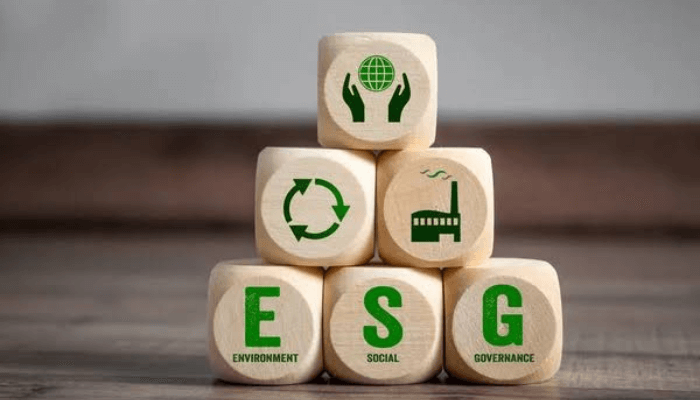
If the past few years were about introducing ESG to Nigerian boardrooms, this year is about scaling it deliberately, systematically, and with urgency. ESG is no longer a side conversation, a sustainability report prepared for optics, or a once-a-year compliance exercise. It has become core business infrastructure.
For Nigerian companies, the clock is also clearly ticking. By 2028, organisations will be required to fully comply with the IFRS Sustainability Disclosure Standards: IFRS S1 (General Sustainability-related Disclosures) and IFRS S2 (Climate-related Disclosures). That deadline is closer than it looks. The most strategic time to prepare is not 2027. It is now.
From awareness to action

Over the last three years, I have watched ESG evolve across sectors—energy, manufacturing, financial services, agriculture, and professional services. The conversation has matured. Executives now understand what ESG is. Investors are asking better questions. Regulators are tightening expectations. What 2026 demands, however, is a shift from awareness to execution.
Scaling ESG means embedding it into governance systems, risk management, strategy, data architecture, and performance measurement. It means moving beyond isolated sustainability initiatives to enterprise-wide alignment.
IFRS S1 and S2 are not designed to overwhelm businesses. They are designed to bring clarity, consistency, and credibility to sustainability disclosures—much like financial reporting standards did decades ago.
Why IFRS S1 and S2 matter
At their core, the IFRS sustainability standards ask organisations to answer four fundamental questions:

1. What sustainability and climate-related risks and opportunities affect your business?
2. How do these issues impact your strategy, cash flows, and long-term value?
3. How are your board and management overseeing these risks?
4. How are you measuring, managing, and reporting them?
This is not abstract theory. It is structured business thinking.
For Nigerian companies operating in a volatile economic, environmental, and social context, these disclosures are not just compliance tools; they are decision-making tools.
The benefits of early compliance
Organisations that start preparing early for IFRS S1 and S2 enjoy several advantages.
First, access to capital improves. Investors, both local and international, are increasingly directing funds toward businesses with credible ESG data and governance structures. Clear disclosures reduce perceived risk.
Second, risk management strengthens. Climate risks, supply chain disruptions, regulatory changes, and social licence issues are identified earlier and managed proactively rather than reactively.
Third, operational efficiency improves. ESG implementation often reveals inefficiencies in energy use, procurement, workforce management, and governance processes. What starts as compliance frequently ends as cost savings and performance improvement.
Finally, reputation and competitiveness increase. Customers, partners, and regulators now expect transparency. Companies that can confidently explain their sustainability position stand out.
Compliance is easier than you think
One persistent myth I encounter in boardrooms is that IFRS sustainability compliance is complex, expensive, and out of reach. In reality, most organisations already have 60–70 percent of the required information; they just have not structured it through an ESG lens.
Compliance becomes manageable when approached in phases:
– Start with a baseline assessment to understand where your organisation currently stands against IFRS S1 and S2 requirements.
– Strengthen governance, ensuring board oversight of sustainability and climate-related risks.
– Integrate ESG into enterprise risk management and strategy, rather than treating it as a separate function.
– Build reliable data systems, focusing on what is material to your business, not everything at once.
– Train leadership and key teams so ESG ownership is shared, not siloed.
This is not about perfection in year one. It is about progress, consistency, and credibility.
2026 is a strategic window
What makes 2026 so critical is timing. There is still enough runway to build systems thoughtfully before 2028. Companies that delay will be forced into rushed, box-ticking exercises that deliver little value and high stress.
Those that act now can spread investment over time, build internal capability, and turn compliance into competitive advantage.
As an ESG consultant and columnist, I see organisations that get this right enjoying smoother regulatory engagement, stronger investor confidence, and clearer strategic direction.
A personal note to business leaders
ESG is not a foreign concept imposed on Nigerian businesses. At its heart, it is about resilience, accountability, and long-term value creation, which are principles deeply aligned with sustainable African enterprise.
My role, through this column, is to demystify ESG, challenge complacency, and support organisations on this journey. You do not have to navigate this transition alone.
If you are unsure where to start, need clarity on IFRS S1 and S2, or want to scale your ESG strategy with confidence, I welcome the conversation. You can reach me via my social media platforms, where I regularly share practical insights, tools, and guidance for business leaders.
Welcome to 2026: The year to scale ESG, not as an obligation, but as a strategic advantage.
Sarah Esangbedo Ajose-Adeogun is the founder and managing partner at Teasoo Consulting Limited, a foremost ESG consulting firm. She is a former Community Content Manager at Shell Petroleum Development Company and served as the Special Adviser on Strategy, Policy, Projects, and Performance Management to the Government of Edo State. She is also the host of the #SarahSpeaks podcast on YouTube @WinningBigWithSarah, where she shares insights on leadership, strategy, and sustainable growth.