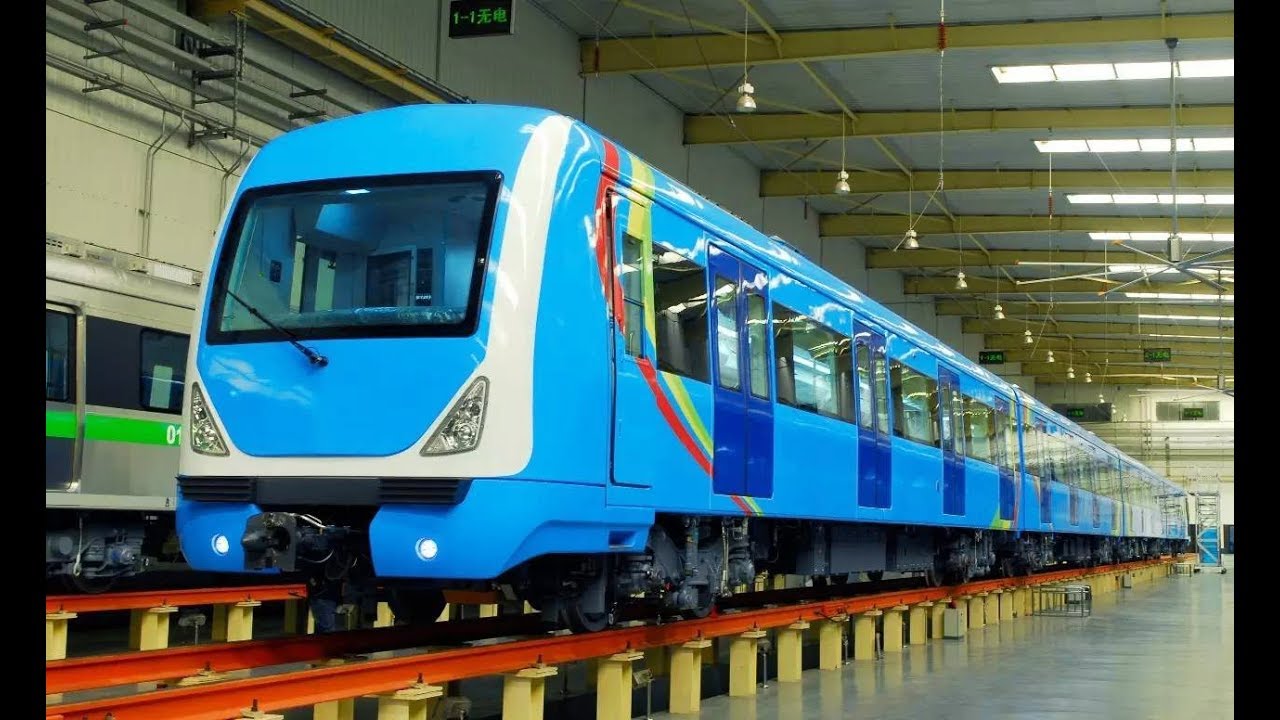
Governor of Lagos State Babajide Sanwo-Olu says his administration will fund the Lagos Blue Line rail system to full completion.
He has, however, not attached any date to it. His immediate predecessor in office, Akinwunmi Ambode, had shifted completion date for the project thrice to 2023.
The 27.1km rail line with elevated sections, spanning from Okokomaiko to Marina on Lagos-Badagry corridor, was started by the former administration of Babatunde Fashola in 2009 and projected to be completed in 2013, a feat the administration failed to achieve. Fashola’s successor, Ambode, also failed to fund the project to completion, before Sanwo-Olu inherited it on May 29, 2019.
But speaking at the 4th edition of the annual Lagos Traffic Radio lecture series with theme “Lagos beyond roads; the inter-modal transport option” held Thursday, Sanwo-Olu assured his administration will fund the rail line to completion.

Sanwo-Olu, represented by his deputy, Obafemi Hamzat, at the event where Fashola, the initiator of the project, was in attendance, affirmed that rail system was necessary to move growing human population.
He said the Lagos State government is in talks with the Federal Government to share the Nigerian Railway Corporation (NRC) alignment for another rail line (Red Line) also long proposed to run from Agbado to Marina, with the involvement of the private sector.
“We will open up the space for the participation of investors and stakeholders, both local and foreign in order to actualise the Red Line which is 31km from Agbado to Marina and a 6km spur from Oshodi to Muritala Mohammed Airport.
The Federal Government will build the stations at Agbado, Agege and Ebute-Metta while Lagos State government will build at Iju, Mushin, Oshodi, Ikeja, Yaba, and Oyingbo. From Ebute Metta, Lagos will then fund the extension of the line to Marina, said Sanwo-Olu.
The governor added that the state government was also doing its best to actualise the inter-modal transportation, fusing rail, waterways and road with the objective to reduce the current 95 percent dependence on roads to move the over 22 million residents of the commercial city.

JOSHUA BASSEY