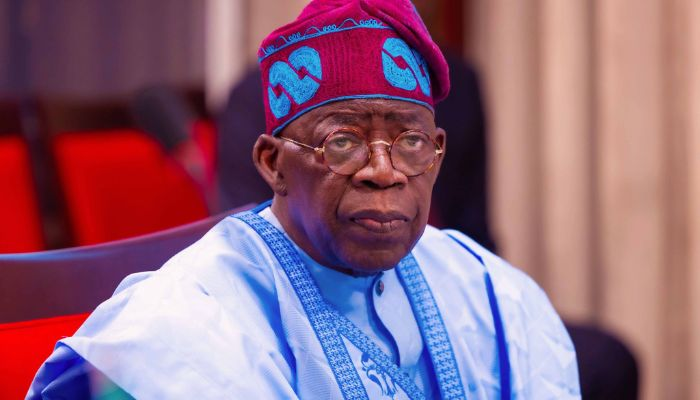
President Bola Tinubu has said that his administration remains on track with its fiscal target.
In his mid-term speech seen by BusinessDay on Thursday, the president said gross proceeds per barrel from crude oil are broadly aligned with his administration’s forecasts as it intensifies efforts to ramp up production.
“Our fiscal deficit has narrowed sharply from 5.4% of GDP in 2023 to 3.0% in 2024. We achieved this through improved revenue generation and greater transparency in government finances. In the first quarter of this year, we recorded over N6 trillion in revenue.”

He said debt-service-to-revenue has dropped from 100 percent to 40 percent, noting that the reforms initiated by his administration have not just reduced debt servicing but also raised states revenue by N6 trillion
“Our debt position is improving. While foreign exchange revaluation pushed our debt-to- GDP ratio to around 53%, our debt service-to-revenue ratio dropped from nearly 100% in 2022 to under 40% by 2024. We paid off our IMF obligations and grew our net external reserves by almost 500% from $4 billion in 2023 to over $23 billion by the end of 2024,” the president said.
“Thanks to our reforms, state revenue increased by over N6 trillion in 2024, ensuring that subnational governments can reduce their debt burden, meet salaries and pension obligations on a timely basis, and invest more in critical infrastructure and human capital development.”

President Tinubu removed the wasteful petrol subsidies in 2023 and liberalised the foeign exchange market, removing exchange rate control of his predecessor. So far, states’ allocation has risen, with savings from subsidies hitting $20 billion in 2024.
Tinubu said in his speech that one of his administration’s most impactful achievements is its bold tax reform agenda, which is already yielding results.
He noted that by the end of 2024, the nation’s tax-to-GDP ratio rose from 10 percent to over 13.5 percent, a remarkable leap in just one year.
“This was not by accident. It results from deliberate improvement in our tax administration and policies designed to make our tax system fairer, more efficient, and more growth-oriented.
“We are eliminating the burden of multiple taxation, making it easier for small businesses to grow and join the formal economy. The tax reforms will protect low-income households and support workers by expanding their disposable income.
“Essential goods and services such as food, education, and healthcare will now attract 0% VAT. Rent, public transportation, and renewable energy will be fully exempted from VAT to reduce household costs further.”