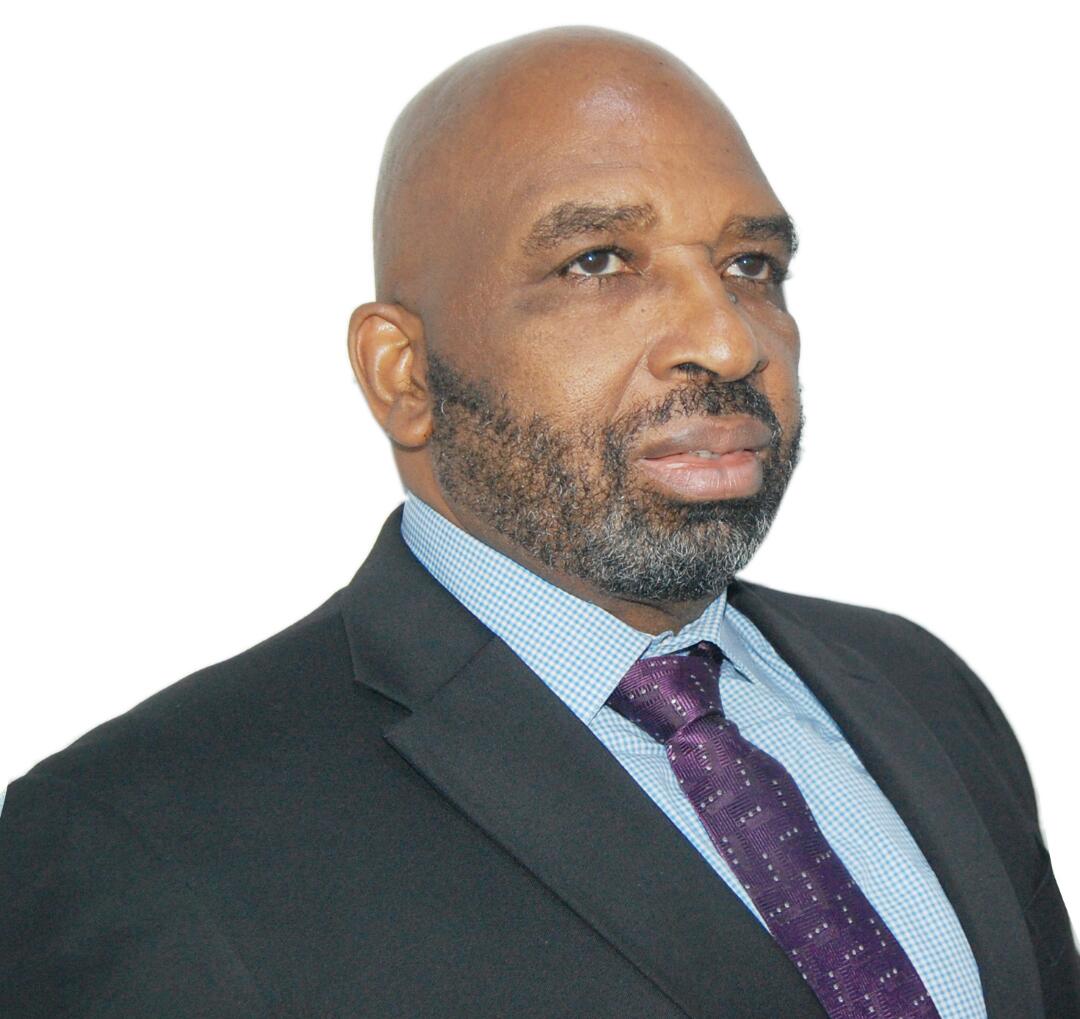
Rancard, a software company connected to more than 70 mobile networks in Africa, Middle East, South East Asia, and so on, has been in Nigeria in the past four years putting its expertise learnt from dealing with global businesses into local industry. Ehizogie Binitie, co-founder and chief technology officer, in this interview with Hope Moses-Ashike, sees tremendous growth in the local economies. Excerpts:
What does your company, Rancard, do?
Rancard is a software company which grew out of Ghana and is currently headquartered at Mauritius. It is an Intel portfolio company and has footprints across Africa, Middle East and South East Asia. It is an African-grown technology company which is solving problems of scale around the world. Our clients are other tech companies like Google, Intel, BBC, Amazon, ESPN, MTV, etc, who use our products and services to deliver their products and services and content across the world.
This is your fourth year in Nigeria. What has the experience been?
Nigeria is always an exciting place to work. I think it is a constantly evolving market with tremendous opportunities. So, it has been exciting with high growth markets, good opportunities, always challenging, but those challenges are great opportunities.
What is the level of acceptance of the solutions you are offering here?
Rancard provides a software platform and as a business, we have provided services and platforms for mobile networks. So in the past a large part of our customer base was purely mobile networks and content providers and other companies who are looking to deliver services over the mobile networks. Whether it was payment or content, over the years we have delivered services to companies who are looking to serve mobile users. That is our history. We have been leading players in the mobile platforms for many years and in many countries. Around the world, Rancard is connected to more than 70 mobile networks in Africa, Middle East, South East Asia and so on. We bring tremendous amount of experience in delivery of services targeted at mobile users.
As we know, Nigeria has an amazing mobile market. It is a fast-growth market and I believe at the moment there are over 138 million mobile subscriptions in Nigeria. A lot of companies are looking to engage with these users. What is fascinating about the mobile platforms is that on the average, nobody is more than one metre away from their phones 90 percent of the time. In history, never had there been an opportunity for businesses to deal directly with their customers as now. The kind of opportunities which mobile phones present, the kind of services and tools which we present enables businesses to find customers, engage with those customers, and deliver services to those customers with mobile phones. It also helps customers or people who use mobile phones to find services content and things they choose to do via their mobile phones. In the early days of mobile phone, there was only one application. You could make calls and just send SMS. Now as technology has changed, it has become smarter and broader. You can now do a whole range of things, like getting messages, talking to your family members, watching video and movies, doing your shopping, getting taxies, getting food, doing your banking, etc. These are applications which were simply not possible before. Today they are possible. And companies like Rancard are what make applications like this possible. We sit at the back of mobile network and provide the critical infrastructure and technology platforms that make it possible for many of these companies to carry out lots of these activities. We exist to make it easier and better for businesses to connect with their customers and do so more effectively and better than anything that exits today.

What makes you different from other companies providing the same services?
There are probably a handful of companies in the world who can do what we do and very few actually. If you look at what is called the mobile value chain, which is how products and services move from companies that produce them to the customers, there are many things that happen. At one point you have the mobile network, you have the device. One buys a phone, he gets the devices and he goes to the mobile network, puts a sim card in the device and the device gains connectivity. It can now do text, voice and data. It connects to some services such as emails. If, for example, you have a pair of shoes to sell, it is pretty challenging to know who among the 138 million Nigerians will be interested in the shoes you have to sell. The evidence of how challenging it can be is that on the average, the conversion rate on your average digital campaign is between 1 percent and 3 percent. So 97 percent of all attempts to reach a user to sell a product is targeting the wrong users. If it was that simple, so many people will not be getting it wrong. So, it is not the easiest thing to do to be able to provide a platform which makes it possible for businesses to find customers and do that in a manner which gives them reasonably high level of accuracy. And with the kind of technology available, it is a handful of companies who have the expertise in this area to deliver this.
So, what makes us unique is the ability to bring amazing high technology and appliance with our local understanding of Nigeria and Africa and bring on solutions which deliver real value. The key areas where we provide standard amazing value are in the areas of customer acquisition, how businesses find customers online. As a business, we provide tremendous amount of value and expertise using the combination of activation intelligence and social recommendation technology and we help businesses using data to find out who is going to be a good customer for them. There are very few companies in the world who do this. We are delivering that value proposition to where the user is. It is one thing to say this group of people will be interested in this product and service, it is an entirely different thing to say this is the best way to reach them – at a specific price or cost. So, if I am going to sell a laptop and I have spent N10,000 marketing the laptop, then there is no point in marketing it because I won’t make any money. But if I have a laptop of N10,000 and I know that the most I will spend marketing it is N2,000, and there is a system and a platform which will give me the most effective way to spend the N2,000 and actually execute the sale, it is an entirely new idea. This area is called marketing automation, it is called le-generation, and it is called digital marketing. These three things are encapsulated in the platform we are looking at.
How do you get your data?
There are multiple ways to engage with the customers. What happens is that as a business we have people who make content today. They offer products for free; you can go online and browse and, sometimes, in those products we give you an option to get things which you are more interested in. So, I can go to a website and say I am looking for shoes and I want to be notified when there is a shoe of my particular size or colour; a website like this will send us a signal asking if there is anyone selling shoes that meet that particular category. Doing this at a scale, you are looking at more than 100,000 requests a second. This is an aggregated high volume system called bidding exchange. We get our data by looking at users’ request for something or things related to what we are looking for on something.
Assuming that I want to buy something at Shoprite, how do I get to Rancard to get me connected?
There are two ways we can help. We are a company that supports consumer companies. We are not a consumer company. For example, if Shoprite uses our technology, Shoprite will have an app on your phone and our technology will be put into that app. Based on what you have bought in the past, it could suggest things for you to buy. Or if you decide you want something in particular, it helps you look amongst who has the things to sell and show you the best place to buy them from.
Ours is a technology that sits in the middle and helps people find relevant space. We are putting this technology in the hands of businesses who serve the customers. It may be a bank, a shopping company, a company which does food, or any company who has customers and is looking for better ways to serve those customers.
But beyond this, if Shoprite comes to us and says they want to sell televisions and that they want to see everyone who is looking to buy a TV, and they show us the picture of the TV, we will essentially look at them and tell them that so and so people are interested in TVs and they can place their adverts to those people.
Do you have any relationship with CBN or NIBBS in terms of online payment?
For the payment providers, we have people who deal with this. Paga provides mobile money services, we don’t provide that. What we do is that if somebody has something to sell, we can say this person has something to buy. We can put the two together and help them process their transactions using one of the payment systems around. We aggregate mobile payment.
Have you extended your services to the banking sector? If not, do you intend to do so?
Yes, it is something we are working at. Banks are looking for new customers and better ways to serve their customers. We are working with some banks and we intend to work with some more in the future.

Is there any government policy you find harsh to your business?
Not really. The cost of doing business in Nigeria is high, particularly power. But at the same time, I think this also forces a certain level of innovation, and those are the benefits of technologies like the internet and so on. In the past, it was difficult to get a mobile or desktop phone but technology innovation means that you can walk in anywhere now and pay to get a phone. Some of the challenges we have in Africa give us opportunity to leap, innovate and leapfrog in established ways of doing things. Personally, I think Nigeria presents an exciting opportunity for people who are willing to innovate, be creative and focus on delivering value.
Are there new products you have that you will like to talk about?
At the moment we have Rendezvous, a new product we launched in 2014. We are slowly rolling it out in Nigeria and will be working on newer version of it.
Tell us more about Rendezvous.
Rendezvousis a product which helps businesses to find customers. It enables businesses to go online, look in for and find customers. It does this by helping them to manage their advertising budget and where and how to acquire customers.
Online transactions are generally prone to fraud. How do you manage this?
Everywhere you are in the world, whether Nigeria, Russia, America or elsewhere, one of the challenges of being in this type of space is that there is a chance you run into fraud. But I think the responsibility of every business is to build up the capacity to defend itself and its customers. We take extreme measures to ensure that the infrastructure and service environment are well protected. We manage service and infrastructures for some of the world’s largest businesses and in our experience across the world in delivering services, we try to make sure that our users are well protected. The fact is that as long as you are trying to do something good or great, there are going to be people who will try to test you. We all, therefore, have to be vigilant and keep working at new ways to protect customers.
How do you create awareness about your business?
For the businesses we need to deal with, we don’t need much advertising. There are offices here that you can just go to. When you are a service provider to a business, you don’t need a lot of awareness in a particular way.
Rancard was founded on the idea of a technology company that comes out of Africa and tackles problems of scale. Africa is mostly portrayed as a continent ravaged by war, poverty, fraud, Ebola, HIV and other negative things. You rarely hear of African companies which are global, firms providing amazing higher technology to the world, and so a couple of us decided to start a company which will change that.
Our vision is to put Africa on the global technology map; that is, to be the mobile platform of choice for the world’s leading brands and to change the perception that people used to have about Africa. Today, many of the world’s top companies choose us as their platform of choice for delivering particular services. We are seeing some progression in that. The next evolution of our exchange is how we take the expertise and insights we have learnt from dealing with global businesses and make that available to local businesses so that we see a tremendous amount of growth in our local economies and people around the world. We are trying to impact on our economy by helping people to be more efficient in the ways they find customers and deliver their solutions, and we believe the impact will be transformative on our economies. We look at people like Dangote whose impact on Nigeria’s GDP is phenomenal, and many others as well. There are other tremendous African success stories and businesses which are built up and are providing significant value to their economies and countries. That is what we are trying to do.
How would you describe Rancard’s growth in Nigeria?
It has been phenomenal and I think we have seen customer base grow. When we came into Nigeria, we started working with one mobile network but today we work with the entire mobile networks in Nigeria. We have seen a tremendous amount of growth in people who use services which we provide for our customers. As the market is changing, we are also changing and we have seen that growth. We are not a business which serves consumers directly but a business that serves businesses, and the nature of our business is a lot more focused on winning business relationship and growing based on that.
Hope Moses-Ashike