Sexual harassment remains one of the most deeply entrenched and underreported issues in Nigeria. A recent poll, BusinessDay’s March 2025 Women’s Choice survey,aimed at understanding public sentiment toward the country’s legal and institutional response to sexual harassment paints a worrying picture of distrust, silence, and fear.
An overwhelming majority of respondents expressed very low confidence in the current laws meant to protect women from sexual harassment in Nigeria. Most described the laws as ineffective or barely effective, with some indicating they were unaware that protections such as the Violence Against Persons Act (2018) even existed. A few admitted they had heard of legal protections but could not say what those laws contained or how they worked.
The experiences shared in the poll spanned a range of settings — from workplaces and schools to markets, family homes, political spaces, and online platforms. These responses confirm what many already know: sexual harassment is not limited to one location or group. It thrives in public spaces and private circles alike, with victims often left to navigate shame, fear, and isolation on their own.
Despite the frequency of these encounters, very few people reported the incidents. The reasons for this silence were strikingly consistent: fear of stigma, victim-blaming, retaliation, and a lack of trust in the legal system. Many felt they would not be believed, or worse, that speaking up would make them targets of ridicule, loss, or social exclusion. One respondent stated, “The feeling that nothing will be done and that there will be retaliation,” while another shared, “You hear, ‘What were you wearing?’ or ‘What were you doing there?’ and it shuts you down.”

Read also: Savings, not loans: How Nigerian women rely on personal funds for financial security
Even among those who did report, the outcomes were largely disappointing. In most cases, no action was taken, reinforcing the idea that reporting is often fruitless and may even backfire. For a few who went ahead with reports, they faced retaliation or were forced to relive the trauma in systems ill-equipped to offer protection or support.
The poll also revealed deep systemic issues. Many pointed to a societal mindset that trivializes harassment or normalizes it, particularly when the perpetrator is in a position of power. Others mentioned that Nigeria’s cultural values often silence women and make it difficult for them to speak up without facing judgment or disbelief. Even when laws exist, enforcement is weak, access to justice is slow and expensive, and institutional support for victims is almost nonexistent.
When asked what changes are necessary to strengthen legal protections, responses ranged from the practical to the transformative. Suggestions included lowering the burden of proof, creating mechanisms for anonymous third-party reporting, establishing fast-track courts for sexual harassment cases, and training in schools and workplaces. Some called for stricter penalties for offenders and barring sexual predators from holding public office or leadership positions. Others demanded more awareness campaigns, media amplification of existing laws, and the need for NGOs to be visible and accessible, particularly to vulnerable women and girls.
While most respondents focused on the plight of women and girls, a few raised concerns about how sexual harassment is discussed in Nigeria, noting that men can also be victims and that some responses risked painting all men as predators. These comments, while controversial, underscore the complexity of tackling harassment in a society where power, gender, and culture intersect in layered and often painful ways.

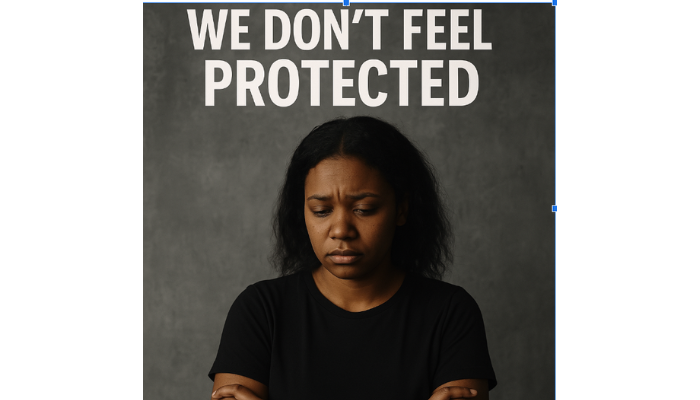
The message from the poll is clear: people do not feel protected. Not by the laws. Not by the systems. Not by society. For many, the risk of coming forward outweighs the hope of getting justice. Until this changes , until there is visible accountability, genuine institutional support, and widespread cultural education, sexual harassment in Nigeria will continue to thrive in silence.