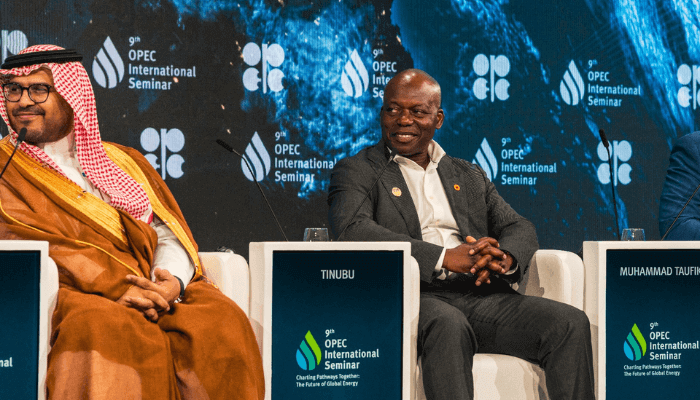
Wale Tinubu, group chief executive of Oando Plc, delivered a pointed intervention at the OPEC International Seminar in Vienna, urging policymakers and global industry leaders to address the “global confusion” surrounding energy policy with fairness, pragmatism, and a focus on Africa’s unique developmental needs.
Speaking during High-Level Roundtable 2: Policies and Regulations – A Just and Realistic Energy Future, Tinubu joined a panel including HE Pedro Miras, president of WPC Energy; Fahad Alajlan, president of KAPSARC; Adrian Binks, chairman & CEO of Argus Media; Majid Jafar, CEO of Crescent Petroleum; Rovshan Najaf, President of SOCAR; and Amrita Sen, Director of Research at Energy Aspects.
In his remarks, Tinubu highlighted the pressing contradiction facing African countries: contributing just 2.7 percent of global emissions while housing nearly 20 percent of the world’s population, a population disproportionately affected by climate change.
“If you’re going to structure something that has a chance of success, then it has to be just in the first place,” he said. “Africa should not be penalized for wanting to lift its people out of energy poverty.”

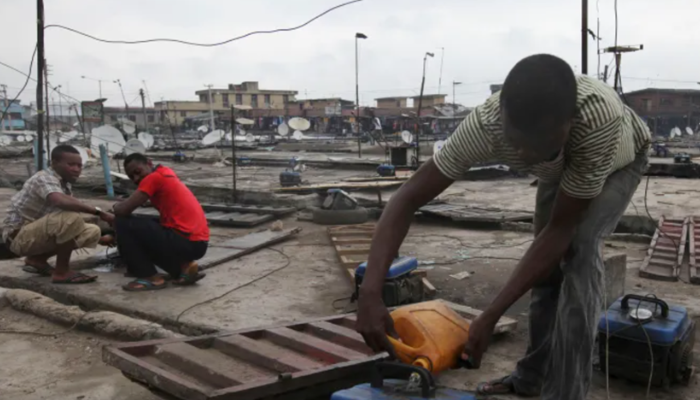
Tinubu called for a global framework of carbon credits and subsidies that enables African nations to develop their resources responsibly, noting that 45 percent of Africa’s population lacks access to modern energy.
“It’s a bit of a shame to say to people who don’t have electricity that they can’t exploit their natural resources, gas, oil, or coal, to reach a basic standard of living,” he said. “That is unjust.”
Read also: Wale Tinubu joins global energy leaders at OPEC high-level roundtable
Confusion and Policy Flip-Flops
Tinubu decried what he termed a state of “global confusion” in energy policy, pointing to inconsistent positions across governments and the private sector. He cited the example of oil majors like BP pulling back from aggressive green targets, as well as ongoing political debates in the U.S. around subsidies for electric vehicles.

“We’ve seen a lot of policy flip-flops,” Tinubu said. “The conversation keeps changing — farmers versus EVs, oil companies versus regulators, profits versus climate goals. We need a holistic policy that is practical, not theoretical.”
The Oando boss emphasized that natural gas should be at the heart of the global transition, calling it an underutilized and undervalued bridge fuel.
“If we converted all the world’s coal plants to gas today, the resulting emissions drop would bring us closer to net zero than any theoretical pathway,” he noted, aligning with earlier points made by fellow panelist Majid Jafar. “But gas is being sidelined. What gets financed gets built — and right now, gas isn’t getting the attention it deserves.”
The role of multilateral institutions
On the matter of climate finance, Tinubu was unequivocal about the crucial role of multilateral institutions in bridging the gap between developed and developing countries.
“They are everything,” he said. “Multilateral institutions must serve as the conduit for OECD capital to be deployed into climate-aligned development in emerging markets.”
He argued that the energy transition is inherently unprofitable in the short term, making it unattractive to private capital without subsidies or guaranteed returns. That, he said, is where multilateral institutions can step in, by taking the long-term view.
“The energy transition doesn’t generate quick profits. So very few will fund it voluntarily. It requires structured financing, incentives, and international cooperation,” Tinubu added.
OPEC
The OPEC International Seminar, now in its 24th year, has evolved into one of the most prominent energy gatherings globally, drawing ministers, executives, academics, and experts from across the value chain. This year’s edition, themed “Towards a Sustainable and Inclusive Energy Future”, has focused on reconciling decarbonisation with energy access, energy security, and economic equity.
Tinubu’s comments struck a chord in a room filled with global heavyweights.
His call for equity in energy policy and practical steps toward inclusive development underscored a growing sentiment: that the energy transition cannot be one-size-fits-all, and must reflect the realities of countries at different stages of development.
“Each and everybody in this room is influential,” Tinubu told the audience. “We must use that influence to ensure the rules of the game are fair, that they create a level playing field and that they allow all continents, including Africa, to develop sustainably.”
As the world moves deeper into the energy transition debate, Tinubu’s voice, grounded in African realities but global in its vision, is likely to remain an important one in shaping future policy conversations.