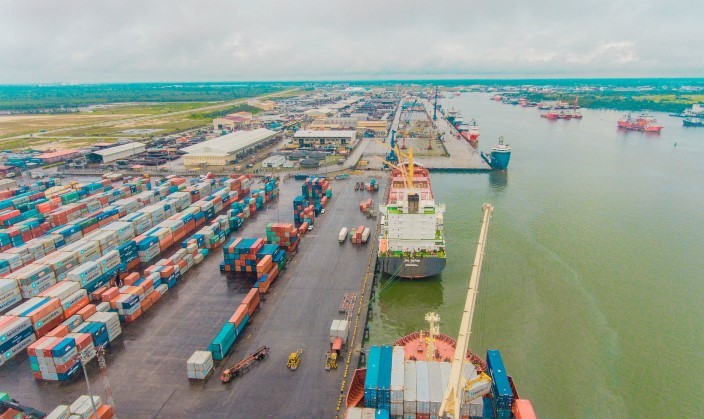
The West Africa Container Terminal (WACT) implementation of an eight-percent increase in its Terminal Handling Charges (THC) and a 100 percent rise in Storage Charges takes effect this month.
The company asserts that the adjustment aligns with regulatory approvals and aims to enhance service delivery, extending the free storage period from three to five days to cushion the impact.
However there has been some kickback by logistics operators who strongly opposed the hike, warning that it will escalate the cost of doing business at the port.
The Africa Association of Professional Freight Forwarders and Logistics of Nigeria (APFFLON), in a letter to the Nigerian Shippers’ Council (NSC), condemned the increase, calling it an economic strain at a time when businesses are grappling with financial instability.

“We unequivocally express our opposition to this planned hike, which will in turn add to the cost of doing business at the port,” wrote Frank Ogunojemite, APFFLON national president.
The association argued that the tariff review contradicts government efforts to lower port costs, as outlined by Adegboyega Oyetola, minister of marine and blue economy.
Read also: Customs agents seek more access cards, decry rising clearing costs at PTML
“The Honourable Minister announced his plans to reduce port costs by at least 25 percent, and here we are with a terminal thinking of increasing its tariff in outright disregard for the Minister’s plans,” Ogunojemite added.
APFFLON has urged the Shippers’ Council to initiate dialogue on an appropriate timeline for any review. “What we should be talking about now is how to facilitate trade, enhance ease of doing business, and deploy cost-cutting measures to reposition our port system, not tariff adjustment.”

The NSC swiftly responded defending its approval of WACT’s new rates, and dismissed claims that the hike was arbitrary.
In a statement on Monday, it assured that the increase underwent rigorous assessments before receiving regulatory sanction.
“The tariff increment implemented by WACT was duly reviewed and approved by the NSC…to ensure that the rates remained within acceptable industry benchmarks and aligned with prevailing economic realities,” the statement read.
The Council further stated that major freight forwarding associations, including the Association of Nigerian Licensed Customs Agents (ANLCA), the National Association of Government Approved Freight Forwarders (NAGAFF), the Association of Registered Freight Forwarders of Nigeria (ARFFN), and the National Council of Managing Directors of Licensed Customs Agents (NCMDLCA), were consulted before the tariff adjustment.
It clarified that the implementation was phased to minimise the impact on port users.
Dismissing APFFLON’s claims as misleading, the NSC asserted that the group had not obtained the necessary regulatory recognition from the Council for the Regulation of Freight Forwarding in Nigeria (CRFFN), rendering them ineligible for stakeholder engagements, “not an act of exclusion by WACT.”
This comes as the ANLCA informed BusinessDay of a convening in Port Harcourt on Tuesday to deliberate on the situation. Sulaiman Ayokunle, senior special assistant on media to ANLCA president Emenike Nwokeoji, indicated that discussions were ongoing and that a resolution might still be possible.
“The meeting will provide a clearer picture of what will happen on Wednesday. We might be able to resolve it on a roundtable. It’s not over yet,” he said.