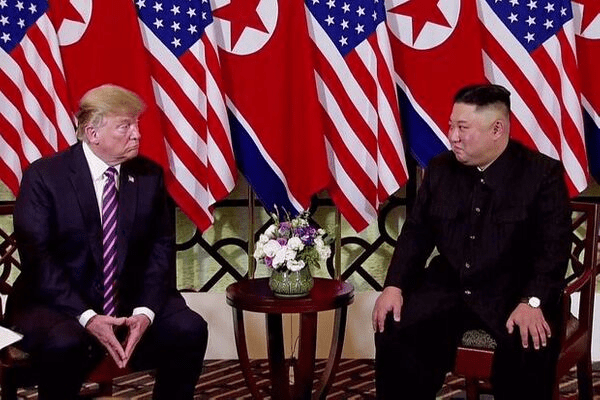
The US and North Korea plan to resume negotiations over Pyongyang’s nuclear programme this weekend, in the first direct discussions over denuclearisation between the sides since the failed Hanoi summit between Donald Trump and Kim Jong Un this year.
Choe Son Hui, Pyongyang’s first vice-minister of foreign affairs, said she hoped the exchange would “accelerate the positive development” of the relationship.
Mr Trump and Mr Kim last met briefly at the demilitarised zone dividing the Korean peninsula in late June, the first time a sitting US president had visited the line dividing North and South Korea. The encounter saw both sides pledge to resume talks within weeks but there has been little progress.
Read Also; China-Nigeria relations face new opportunities for growth – Envoy

Mr Trump met Moon Jae-in, South Korea’s president, at the UN General Assembly in New York last month, rekindling hopes that the talks would resume. Seoul has been pushing for negotiations to restart and welcomed the plan to revive discussions. A spokeswoman for the presidential office said Seoul “is looking forward to seeing the actual progress toward complete denuclearisation and permanent peace regime on the Korean Peninsula at an early stage”.
Talks have stalled since the Hanoi summit between Mr Trump and Mr Kim in February, their second face-to-face meeting after the pair held a historic meeting in Singapore last year.
North Korea said it was willing to restart talks with the US in early September, but hours later began testing weapons, which was described by analysts as a negotiating tactic.
Since May, Pyongyang has undertaken short-range missile and rocket tests, raising fears of a return to military provocation.
The announcement comes against a backdrop of increasing scepticism about North Korea’s intentions.

Analysts said the two sides would struggle to work out a road map towards denuclearisation amid a lack of mutual trust.
“There are much lower expectations for North Korea’s denuclearisation now than last year as we are watching the same old movie again,” said Lee Seong-hyon, a researcher at the Sejong Institute, a think-tank.