The Trans-African Tourism & Unity Campaign’s passage through southern Africa has become more than a symbolic road trip, it’s fast evolving into a continental movement. Led by Ras Mubarak, former Ghanaian MP the campaign has captured attention through high-level meetings, media engagements and grassroots conversations aimed at building one clear message: Africa must open its borders to its own people.
In Botswana, one of the most engaged stops so far, Mubarak and his team were received in Gaborone on September 29 by Moeti Caesar Mohwasa, minister for state president. Their discussions centred on the campaign’s goals of visa-free travel, tourism growth, intra-African trade and unity.
“Your journey is a demonstration of what is possible when Africans come together with shared purpose to break down borders and advocate for a visa-free Africa,” Mohwasa said, according to The Pan Afrikanist.

Mubarak, in turn, praised Botswana’s sustainable tourism and conservation record. “Your story is inspiring. A nation of 2.4 million people standing tall among giants. It shows that with tenacity and purpose, size does not limit impact,” he said.
Read also:Pan-African visa-free campaign targets $3.3trn market, deeper integration
He also urged African governments to act faster than the African Union’s long-term Agenda 2063 framework, which charts development goals through to 2063. “We humbly appeal that governments make commitments — not by 2063, which is 40 years away — but urgently, to create opportunities for our youth and safeguard the continent’s stability,” he said, adding, “A connected Africa is a stronger Africa.”
In Botswana, the campaign’s message reached wider audiences through interviews with Gabz FM and Botswana Television.
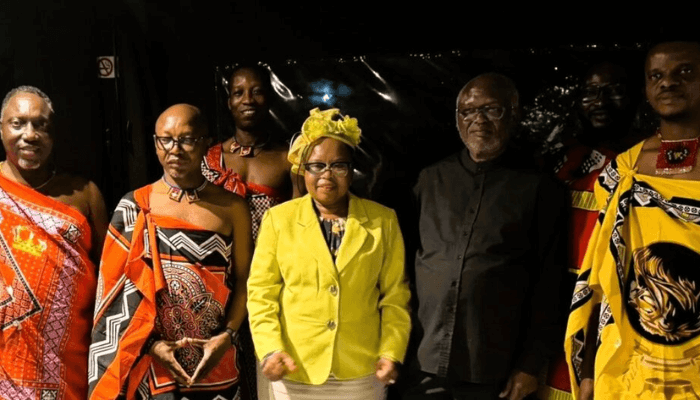
The movement’s next stop, Eswatini, brought further engagement with both government and diaspora communities. Mubarak met members of the Ghanaian and Nigerian communities to discuss shared Pan-African aspirations. “It was a fruitful discussion about the Africa we want,” he said.

Read also:Historic road trip across Africa to push for visa-free travel by 2030
A key highlight in Eswatini was a meeting with acting prime minister and minister of environment and tourism, Jane Mkhonta-Simelane. Government officials expressed support for the campaign’s visa-free vision. Speaking to Independent News Eswatini before leaving the country — the 15th on the campaign’s route — Mubarak described Eswatini as “amazing” and “a hidden gem,” praising its natural beauty, warm hospitality and rich culture.
Earlier in Lesotho, the team had met His Majesty King Letsie III and senior government officials including Shale Sofonea, chief of staff to prime minister Sam Matekane, and press secretary Thapelo Mabote. Discussions in Maseru centred on the role of tourism in building people-to-people ties and economic collaboration.
“A borderless Africa is both achievable and essential for economic and cultural integration,” Mubarak told Lesotho News. “We believe a visa-free Africa can become a reality within the next five years.”
From Botswana’s high offices to Eswatini’s ministries and Lesotho’s royal palace, the campaign’s message is finding resonance, that Africa’s unity depends not on declarations, but on mobility, mutual trust and shared opportunity.
The Trans-African Tourism & Unity Campaign, once seen as an ambitious dream, is steadily transforming into a tangible push for policy change — one border crossing at a time.