…as WHO, AfDB, CABRI train ECOWAS delegates on effective budgeting
The World Health Organization (WHO), in conjunction with the African Development Bank (AfDB) and Collaborative Africa Budget Reform Initiative (CABRI) on Tuesday kicked off the training of delegates from the ECOWAS region on effective utilization of lean resources to achieve greater results for citizens in the areas of health, education and finance.
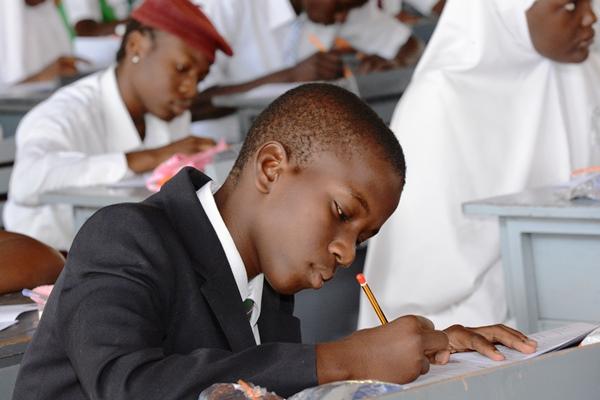
This is coming on the heels of UNESCO data which indicates that there are about 10.5 million Nigerian children that are out of school (OSC), representing the largest population of such OSC anywhere on earth, accounting for about 47 percent of the world’s population of OSC.
The event, which ends of February 23, was declared open by Marcel Alain de Souza, the ECOWAS president, who was represented by Florence Iheme, the organization’s director of humanitarian and social affairs.
Nigerian’s abysmal situation is contrary to the situation in Mauritius, a tiny island country, where pre-primary schools numbered 911 in March 2016 with an enrolment of 28,866 children of whom around 49 percent were girls.
The gross enrolment ratio for the country, which is number of students enrolled per 100 population aged 4 and 5 years, works out to 100 percent with an average of 13 pupils per teacher.
As at March 2016, there were 318 primary schools with 97,300 pupils in Mauritius, of whom 51 percent were boys.
The gross enrolment ratio, or number of students enrolled per 100 population aged 6 to 11 years, is 97 percent and the pupil/teacher ratio is 24.
Also, the gross enrolment ratio, or the number of students enrolled per 100 population aged 12 to 19 years, is placed at 72 percent and the pupil/teacher ratio at 13.
“Resources are shrinking everywhere you go, in government and the private sector they have to make do with less, so the idea of value for money is really at the right time. We must be able to ensure that the little amount of resources that we have goes a long way to producing the results that are sustainable and inclusive,” said Andoh Mensah, AfDB’s country portfolio and operations chief in Nigeria.
He expressed that you can have a lot of money but without the right policy and strategy, you will not go far.
Fabrice Sergent, chief health analyst, African Development Bank Group, said “if you look at the data, the same level of per capita spending, the issue of results delivery is varying fourfold among countries which have the same level of resources, so the idea is to take an inventory of the countries that do best so that we could spread these best practices across all the countries.”
This, according to him, could be achieved by investing in high impact interventions, which are basic investments that can go a long introducing quality of service that is needed for people.
“For instance, it is universally known that the use of impregnated mosquito nets can reduce malaria with direct benefit for the people, but if you look at national budgets, you may be surprised at the size of health budget allocated to mosquito nets in some countries, where more resources are put in central hospitals than in basic interventions,” narrated Sergent.
He also lamented that, in Mauritius, you have free books for school pupils, while there are many other African countries where 10 pupils share one book.
Sergent expressed that over 50 percent of budgets in the region come from the private sector, particularly direct payments from houses, which are wasted through massive inefficiencies, which can be fake drugs or unregulated services.
“We believe that if money is used effectively to produce results, it will encourage more development partners to give money,” he concluded.
According to Helen Barrow, WHO’s senior health financing specialist, “every year, we go through budgeting processes that we believe need to be interrogated further because I don’t believe that we are doing the best allocation to different sectors, especially the health and education sectors, which are critical for human development.”
She frowned at more emphasis placed by people on financial shortfall, expecting greater monetary allocations to sectors instead of looking at outputs and outcomes for which funding should be directed.