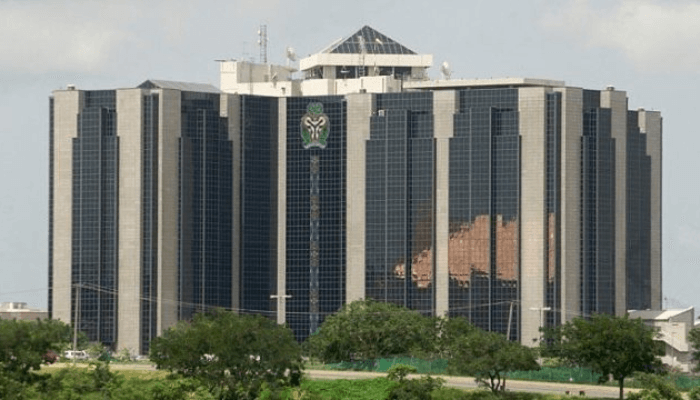
Despite the sharp decline in global oil prices, Nigeria’s external reserves have remained stable at $43.19 billion as of October 31, 2025, according to data from the Central Bank of Nigeria (CBN).
This resilience comes at a time when Brent crude prices have dropped significantly, now hovering slightly above $64 per barrel, posing a serious concern for an oil-dependent economy like Nigeria. The Wall Street Journal’s forecast that Brent crude could fall below $50 per barrel by the end of 2025 further deepens the urgency for strong economic and monetary responses.
The politics and uncertainty surrounding global oil prices continue to weigh heavily on Nigeria’s fiscal revenues and macroeconomic outlook. In anticipation of these pressures, the Olayemi Cardoso-led CBN has moved swiftly to strengthen the country’s economic buffers and sustain foreign exchange (FX) inflows, ensuring stability in the domestic economy despite the downward trend in crude prices.
Read also: CBN sells only N1.1bn OMO bills as high-yield fails to attract bidders

Analysts at United Capital Research, in their fourth-quarter economic outlook, projected that reserves will continue to rise steadily, driven by higher oil export earnings, increased diaspora remittances, and a favourable trade surplus.
United Capital noted that as of September 30, 2025, Nigeria’s external reserves stood at $42.53 billion, the highest in over 44 months, supported by consistent capital inflows, a trade surplus, and diaspora remittances. The firm also attributed the sustained buildup to improving macroeconomic stability and noted that the reserves now cover more than eight months of imports, a development expected to have a positive short-term impact on the naira’s value. The report emphasised that the figure reflects a 30-day moving average, suggesting that actual reserve levels may be higher than reported.
Global oil futures have remained volatile, with Brent futures easing by 0.71 percent to $64.47 per barrel as energy discussions were excluded from the U.S.-China trade truce, leaving the global supply outlook uncertain. This development threatens Nigeria’s 2025 budget, which was built on assumptions of oil production of two million barrels per day and an oil price benchmark of $75 per barrel. With current prices below the budget benchmark, oil revenues are expected to fall short, potentially widening the fiscal deficit to between six and seven percent of Gross Domestic Product (GDP), fueling inflationary pressures and threatening macroeconomic stability.
To mitigate these risks, the CBN has introduced measures to boost non-oil exports, deepen backward integration to reduce import dependence, and streamline diaspora remittances to enhance FX inflows. Drawing from lessons in China’s economic strategy, the apex bank has emphasised that Nigeria’s competitive exchange rate can serve as a catalyst for export-led growth. Businesses are therefore encouraged to focus on sectors such as agriculture, manufacturing, and the creative industries; adopt import substitution by strengthening local production; and prioritise value addition to transform raw material exports into processed goods with higher foreign exchange value.
Highlighting opportunities in the creative sector, Cardoso projected that the industry could generate up to $25 billion annually for the economy. He urged Nigerian creatives in music, film, crafts, and digital content to leverage global platforms and international markets to boost dollar inflows.

The CBN governor has also urged the telecommunications industry to embrace backward integration and reduce reliance on imported components. Speaking recently, during a visit by the Airtel Africa management team led by Group CEO Sunil Taldar, Cardoso stressed that producing key inputs such as SIM cards, cables, and towers locally would help ease FX pressure, create jobs, and strengthen the national economy.
Cardoso noted that over the past 16 months, the CBN has taken deliberate actions to stabilise the FX market, strengthen the naira, and restore investor confidence. With these foundations established, he said, telecom operators must now play their part by aligning with the national push for local value creation. In response, Airtel’s Group CEO commended the CBN’s policy direction and reaffirmed the company’s commitment to supporting financial inclusion and local production through innovation and technology.
Charles Abuede, head of Research at Cowry Asset Management Limited, said the CBN’s call for backward integration is timely and necessary. He explained that the heavy demand for foreign exchange by telecom operators has intensified pressure on the naira. According to him, with better infrastructure and a stable business environment, operators can locally produce key inputs, reducing costs and improving profit margins in the long term.
Creating Economic Buffers amid Reforms
Cardoso has repeatedly emphasised that ongoing CBN reforms have removed major distortions and established a foundation for sustainable growth. Speaking at an investors’ forum held alongside the IMF/World Bank Annual Meetings in Washington, DC, he said bold fiscal and monetary reforms have enhanced macroeconomic stability and increased investor confidence.
The forum, which was attended by major financial institutions including JP Morgan, focused on attracting foreign investors and strengthening market confidence in Nigeria’s economic trajectory. Cardoso also disclosed that the Federal Government plans to issue about $2.3 billion in Eurobonds to refinance the $1.18 billion Eurobond maturing in November.
According to him, the CBN remains committed to maintaining prudent policies that guarantee lasting economic benefits. He projected a near-term growth rate of about four percent, driven largely by expansion in the non-oil sector. Inflation, he added, is expected to ease to around 18.02 percent, while foreign reserves have climbed to a five-year high of $43.4 billion, enough to provide 11 months of import cover.
Cardoso further revealed that Nigeria currently maintains a positive balance of payments position, a sign of strengthened macroeconomic resilience. He credited these gains to the Federal Government’s difficult but necessary reforms, which have brought about a stronger exchange rate, improved FX stability, and declining inflation. He noted that Nigeria’s competitive naira has become a “game changer,” positioning the country as a more attractive destination for foreign direct investment.
Read also: Standard Chartered affirms full compliance with CBN’s N200bn capital rule
Supporting this view, Mohammed Sadi Abdullahi, CBN deputy governor of Economic Policy, said the apex bank has taken decisive measures to prevent speculative activities and strengthen market transparency. “Capital flows that collapsed by over 75 percent during 2019–2020 have now significantly improved, enhancing our external position. We now have deeper and more functional financial markets, with monthly FX turnover rising to $8.6 billion in 2025 from an average of $5.5 billion previously. The CBN is now a net buyer in the market, showing greater confidence in liquidity,” he said.
Building a Resilient Economy
Cardoso reiterated at the annual meetings that Nigeria’s economy has been restructured to become more resilient and self-sustaining, with strong buffers against global headwinds. He noted that the naira has emerged as a competitive currency, and the country is now recording positive trade balances as businesses increasingly shift from imports to exports of locally produced goods.
According to him, this transformation reflects a broader restructuring of the economy toward domestic production and reduced import dependence. He described Nigeria’s new trade dynamics as a turning point, stating that the country now anticipates a trade surplus equivalent to six percent of GDP for an extended period.
“The result of these reforms is that we now have a more competitive currency and a positive balance of trade surplus,” Cardoso said. “We were fortunate to have implemented these tough reforms early enough to create resilience and buffers against potential shocks.”
He acknowledged that while oil remains the most exposed commodity to global tariffs, the impact has been modest. The CBN governor also commended the G-24 for fostering constructive dialogue and collaboration among emerging economies to address global challenges.
In his remarks, G-24 Chairman Pablo Quirno observed that emerging markets continue to face headwinds from sluggish global growth, declining export volumes, and shrinking foreign currency earnings. He stressed the need for stronger multilateral cooperation to support developing economies like Nigeria.
Through these measures, Nigeria, under the stewardship of the CBN, is rebuilding a stronger and more resilient economy. Despite the global oil price slump, strategic policy reforms, non-oil export growth, and local production initiatives have combined to sustain the nation’s external reserves and strengthen investor confidence, a testament to the CBN’s resolve to build lasting economic buffers amid uncertainty.