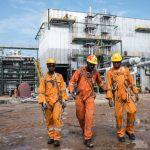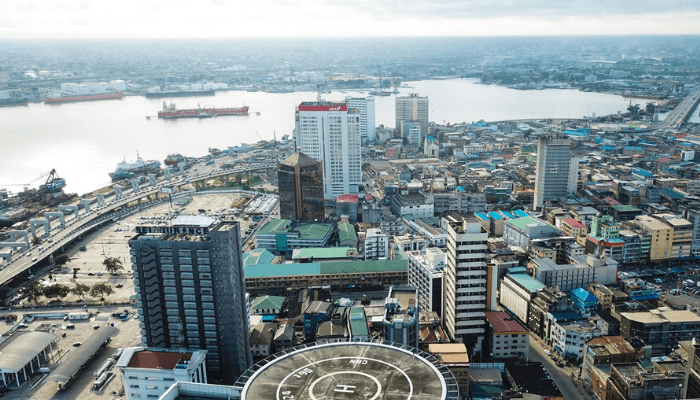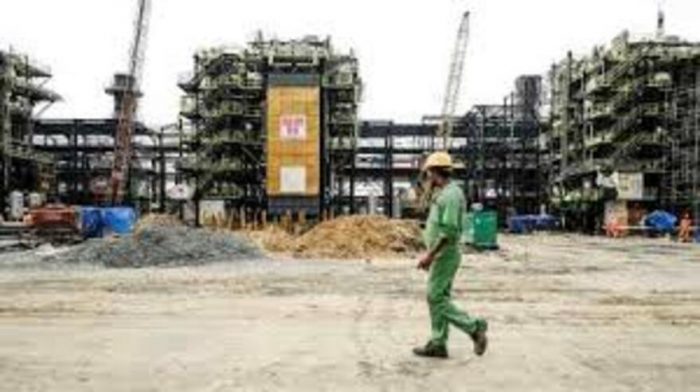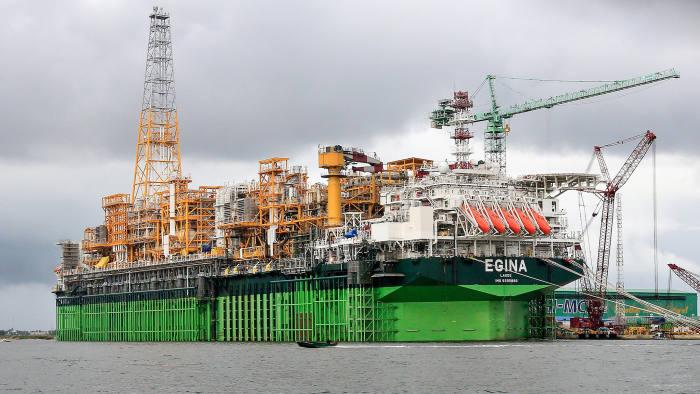
By the end of this year, Nigeria’s oil production could jump by 200,000 barrels a day — about a 10th — if the offshore Egina project, led by French oil major Total, comes online as planned. It is a huge undertaking, coming at a crucial time for Africa’s largest crude producer as its economy recovers from a recession brought on by the 2014 oil price crash. But it is the first project of its size and scope in several years. Analysts say an opaque and archaic system of regulations is a major reason for the lack of investment in the country’s oil sector, the backbone of its economy.
The sector has historically accounted for as much as 80 per cent of Nigeria’s revenues, according to Fitch Solutions. A key piece of legislation, known as the Petroleum Industry Bill, is widely acknowledged as being essential to reforming an often corrupt industry that is crucial to the country’s success. It has been kicking around the legislature for nearly two decades. The latest attempt to pass it involved breaking the industry into parts and passing a section called the Petroleum Industry Governance Bill (PIGB) through the legislature this year. But President Muhammadu Buhari refused to sign it in August. “Nigeria’s huge hydrocarbon resource base represents a real opportunity for international investors,” says Matthew Daffurn, senior associate in law firm Linklater’s energy practice. “However, regulatory and fiscal uncertainty, navigation of the country’s bureaucratic inefficiencies, and political uncertainty around the upcoming presidential election represent real challenges to getting deals done.” Nigeria’s executive branch objected in part because the bill would constrain the power of the president and the oil minister in overseeing and awarding oil licences and contracts, according to Reuters.
Mr Buhari is also Nigeria’s oil minister. The increase in uncertainty in the oil sector after the failure to sign the bill prompted Fitch Solutions in October to raise its fiscal deficit forecast for 2018 from 3.1 to 3.3 per cent — nearly double the government’s target of 1.7 per cent. “The latest delays . . . will undermine operator confidence and constrain oil sector revenue,” Fitch said in an October research note. Annual oil production in Nigeria fell 26 per cent between 2007 and 2017, according to the US Energy Information Administration. The decline is partly due to disruption in the Niger Delta region, which has been hit by civil unrest and pipeline sabotage. But much of it is also down to the simple fact that older fields are not being replaced by newer fields coming on line, says Jubril Kareem, energy analyst at Ecobank.
With Nigeria’s potential for crude production, projects such as Total’s Egina “should come on once a year or every two years — there shouldn’t be this long of a time between projects like this”, he says. Nigeria has not provided clarity and regulatory stability for investors, Mr Kareem adds. “If we’re talking 10 or 20 years ago, there was no discussion about PIGB — anyone looking at the Nigerian oil sector knew what to expect. But right now if you look at it, you don’t know — you don’t know if the current rules you’re using will be applicable next year. Most companies would rather wait for PIGB to be sorted out before making investment decisions.”

The PIGB would have transformed the Nigerian National Petroleum Corporation, the state-run company whose breadth and opacity has long been used to corrupt ends by graft-prone politicians in past governments. NNPC not only acts as a joint venture partner with foreign companies producing on and offshore, it also buys and sells crude, runs the country’s refineries, imports refined products such as petrol and diesel, sells that fuel at subsidised rates to retailers and regulates itself. There are many cases where the state oil company is simply dealing with itself, and it has long been seen as a cash cow for the government. The PIGB is meant to make the NNPC, and therefore the sector, more transparent. It would strip the oil minister of the ability to award, renew or revoke licences — important in a country where past officials have been accused of looting billions of dollars from state coffers.
It would establish a regulator that is wholly independent from the ministry and the NNPC, and break the state oil company up into separate, more commercially focused entities. The version passed by the legislature has come under fire for being marred by typos, loopholes and inconsistencies. In a 2017 note, PwC criticised the fact that the oil minister “still possesses significant powers” under the bill, including the ability to “order any crude oil producer or petroleum marketer to supply products either to the government or a specified licence holder” in the event of a national emergency. But, as the PwC analysts noted, “they say progress is better than perfection”. They added: “While the version approved by the Senate is not perfect by any means, it is progress nonetheless — which is what Nigeria needs right now.”