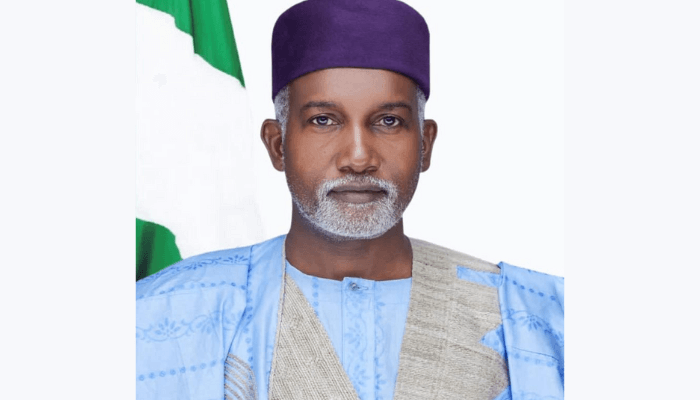
Yusuf Tuggar, Chairman of the ECOWAS Mediation and Security Council and Nigeria’s Minister of Foreign Affairs, has raised alarm over the potential economic consequences of reported United States visa restrictions on West African nations, warning that such measures could hinder trade, investment, and regional prosperity.
Speaking at the 54th Session of the Mediation and Security Council at the Ministerial Level in Abuja on Wednesday, Tuggar described the restrictions as non-tariff barriers that undermine opportunities for mutually beneficial partnerships, especially as the region positions itself as a strategic hub for critical minerals and alternative energy sources.
Tuggar also noted that the session came at a critical moment in the region’s quest for cohesion and resilience.
Read also: How fear of Western influence, visa restrictions stemming exodus for foreign studies

He told delegates that the Council would be deliberating on key memoranda and reports addressing political transitions, such as the one underway in Guinea, and electoral processes scheduled for later in the year in two member states.
Updates were also expected on the security situation in the region, particularly around maritime threats, terrorism, and transnational crime.
The foreign minister revealed that the humanitarian and early warning architecture of ECOWAS was receiving renewed attention, with comprehensive updates expected on the activities of national Early Warning and Response Centres.
He also introduced the Regional Partnership for Democracy (RPD), a new initiative launched in collaboration with the United Nations Development Programme to strengthen democratic governance across the region.
“We must ensure democracy delivers for our people,” Tuggar said, calling on member states to take ownership of the RPD as a homegrown solution to the erosion of democratic values.

On the humanitarian front, Tuggar painted a stark picture of the region’s challenges, ranging from forced displacement and food insecurity to health and climate-induced vulnerabilities, calling for a more coordinated regional response to protect the most vulnerable populations.
The minister also highlighted threats posed by illicit financial flows, terrorism financing, and money laundering. He commended the role of the Inter-Governmental Action Group Against Money Laundering in West Africa (GIABA), while urging members to recommit to building institutional resilience and financial transparency.
In a major development, Tuggar announced the successful completion of the Lungi Military Logistics Depot in Sierra Leone, a project that has been in the works since 2005.
Read also: West Africa Economic Summit 2025 to drive regional integration, says Tuggar
Funded entirely with internal ECOWAS resources, the depot, he said, is expected to play a key role in supporting the regional Standby Force in its counterterrorism operations.
However, it was Tuggar’s remarks on the U.S. visa restrictions that drew the strongest response.
He expressed deep concern over reports suggesting that the United States may be considering broad visa limitations on ECOWAS countries.
“This would be most unfortunate if it comes to pass. We are a region of opportunities.
“We possess critical minerals, even rare earths like Samarium, found in my home state of Bauchi. Visa restrictions are non-tariff barriers to deals. We want to do business with the U.S., but such measures make it harder”, he said.
He emphasised the region’s potential as an alternative energy partner to politically complex or distant producers, asking, “Who takes up the opportunities in our region by allowing our officials, technocrats, and entrepreneurs to travel freely and close the deals?”
Also addressing the session, Omar Touray, President of the ECOWAS Commission, commended the Mediation and Security Council for its decades-long contribution to peace and security in the region.
Touray gave an overview of progress made in dialogue efforts with Mali, Burkina Faso, and Niger following their withdrawal announcements from the regional bloc.
He expressed optimism that direct talks were helping safeguard the gains of integration, especially in the areas of security and development.
Read also: Nigeria strengthens global influence, secures $25bn foreign investments -Tuggar
He acknowledged challenges posed by fake news and misinformation in the region’s political space and highlighted the need for better strategic communication and regional coordination.
Touray also urged ministers to urgently consider the stalled implementation of a regional counter terrorism force, warning that the cost of inaction could far outweigh the financial burden of activation.
Touray called for unity in the face of emerging global and regional geopolitical complexities, and praised the Permanent Representative Committee for its effective collaboration with both ECOWAS and the African Union Peace and Security Council.
He noted that as discussions continue, key recommendations will be escalated to the ECOWAS Heads of State and Government Summit later this year.