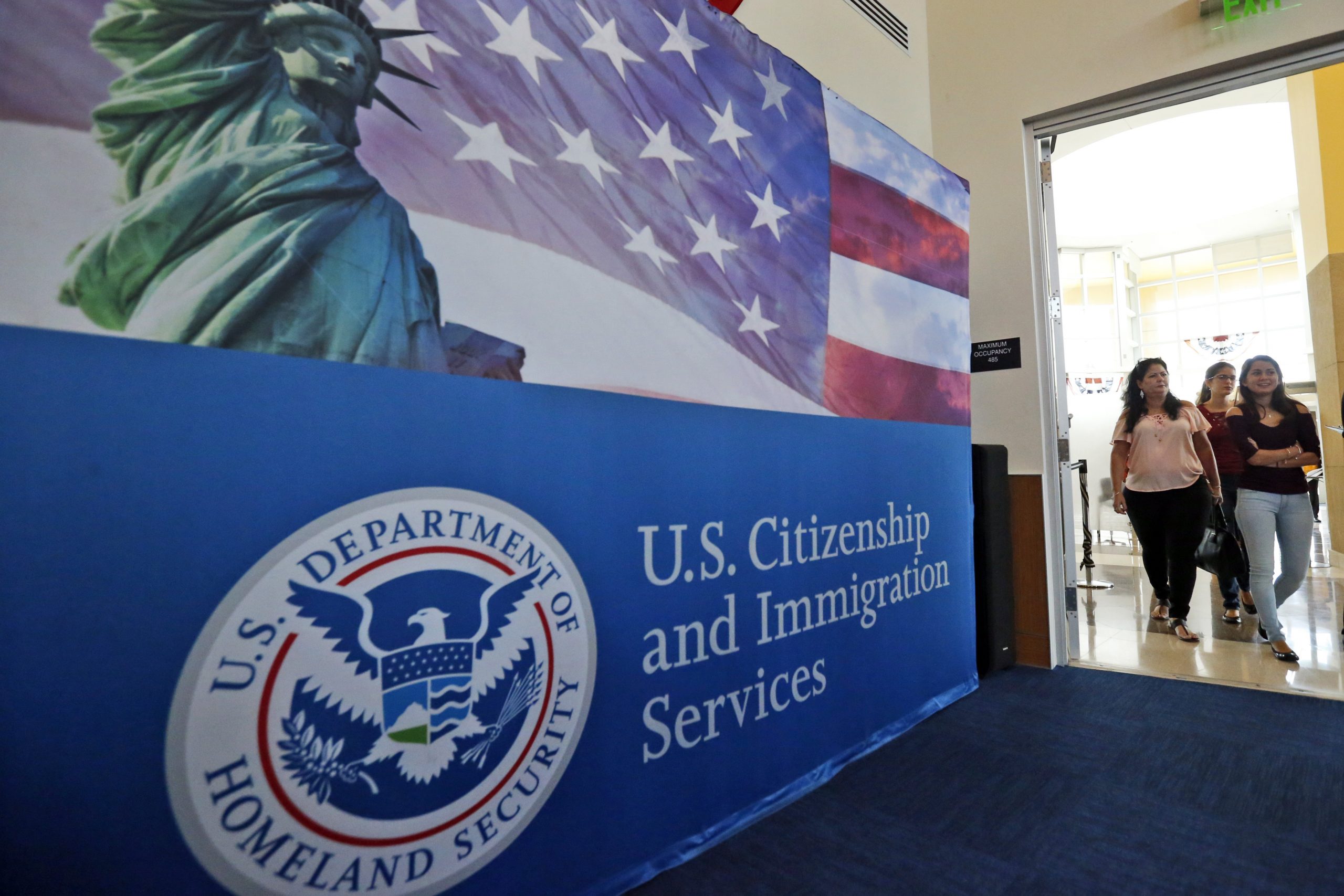
The United States Citizenship and Immigration Services (USCIS) has eliminated the other gender identity option from key immigration forms, restricting applicants to two choices: “Male” or “Female.”
This decision applies to various forms, including those for permanent residency and visa petitions. The change, effective from April 2, 2025, aligns with a recent executive order titled “Defending Women From Gender Ideology Extremism and Restoring Biological Truth to the Federal Government.”
The “Another Gender Identity” category was introduced in 2023 under the Biden administration to make the immigration process more inclusive for non-binary and transgender individuals.
Its removal marks a step towards broader federal policy reforms that limit gender identity options in official documentation.

This decision echoes the recent rollback of the “X” gender marker on U.S. passports, a policy implemented under the Trump administration.
Forms which will be impacted
Several key forms have been revised as part of the USCIS changes:
Form I-485: Application to Register Permanent Residence or Adjust Status
Form I-918: Petition for U Nonimmigrant Status

Form I-485 Supplement J: Confirmation of Valid Job Offer or Request for Job Portability
Form I-485 Supplement A: Adjustment of Status Under Section 245(i)
Form G-325A: Biographic Information for Deferred Action
Form I-134: Declaration of Financial Support
Form I-192: Application for Advance Permission to Enter as a Non-immigrant
Reintroduction of the term “Alien”
In addition to modifying gender identity options, USCIS has reinstated the term “alien” in place of “non-citizen” and “foreign national” across various immigration policies.
This adjustment impacts documentation concerning public charge evaluations, military service waivers, and other immigration-related matters.
The revised policy mandates strict consistency in gender markers across all USCIS-issued travel and immigration documents.
Key documents to be included
The key documents to be checked include;
- Birth certificate as primary evidence: An applicant’s sex will primarily be determined by their birth certificate, issued at or near the time of birth.
- Secondary evidence use: If the birth certificate does not specify a gender, secondary sources such as medical records or historical documents may be considered.
- Mandatory gender fields: USCIS will no longer issue travel or immigration documents with blank gender fields. Each document must list either male or female.
- Uniformity in documentation: Gender markers must be consistent across all USCIS-issued documents to avoid discrepancies that could delay processing.
- Adjudication delays: Selecting a gender marker inconsistent with the birth certificate may require additional evidence, resulting in prolonged processing times for visas or green cards.
- Clarification notices: In cases where discrepancies occur, applicants may receive requests for clarification or supplementary documents from USCIS.