Achu Ochu retired from the public service at the age of 65. However, he could not invest nor manage his income well, which resulted in his children being left without hope and future.
The once promising youngsters were forced out of school into streets because at 65, their father had no plans them.
Ochu’s predicament depicts Nigeria’s situation, and the fate of youngsters across the federation.
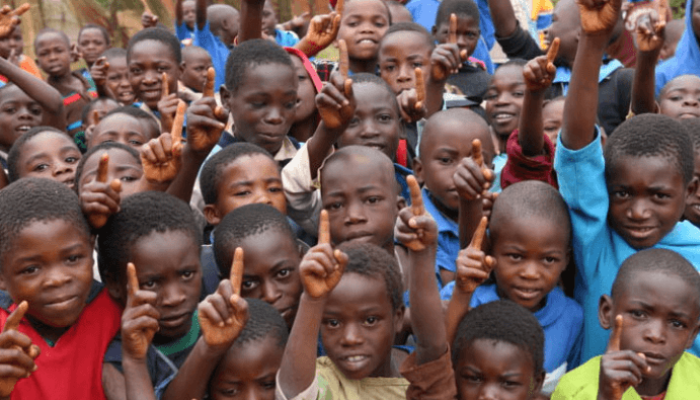
As Nigeria marks 65 years of independence, a silent crisis deepens across its cities and rural communities as about 20 million children roam the streets, denied access to education, opportunity, and a future, according to UNICEF report.

Jessica Osuere, chief executive officer at RubiesHub Educational Services, described Nigeria’s education narratives at 65 as one of lost chances.
Read also: ECOWAS donates ₦26m to support conflict-affected children in Plateau
“After independence, there was hope for growth, but poor planning, poor funding, corruption, and insecurity slowed things down. Sadly, today, we have one of the highest numbers of out-of-school children in the world.
“It’s a pointer that education has not been given the attention it deserves. Our children learn under the most inhumane circumstances,” she emphasised.
Osuere said Nigeria’s progress has been uneven, and the system has failed to keep up with the needs of the people.

However, she warned that no nation rises above the level of its education system.
“The premium put on education determines the rate of growth or level of development of any country,” she said.
Isaiah Ogundele, an administrator, emphasised that Nigeria has a long way to go because the governments are not helping issues.
Ogundele said that Nigerian governments must give priority to education via budget allocation, and ensure the funds are judiciously utilised.
“Nigeria’s education is still below standard. I will score it 55 percent, because of the private sector, and this is appalling.
“The value of education has been eroded because of the youth’s get-rich- quick attitude,” he said.
Yinka Bolarinwa, a public affairs analyst, said Nigeria’s education tells a tale of promise undermined by inconsistency.
“While the nation has recorded significant expansion in access to education since Independence, the sheer weight of unmet needs continues to overshadow these gains,” he noted.
Bolarinwa said in reality, the sector is constrained by chronic underfunding, insecurity in large parts of the North, decaying infrastructure, poor teacher welfare, and widespread poverty that pushes children out of classrooms and into the labour force.
“The contrast with Nigeria’s peers is striking. Countries such as Malaysia and Singapore, which gained independence around the same time, invested deliberately in human capital and have since built innovation-driven economies anchored on strong education systems. Nigeria, by contrast, is still battling foundational literacy challenges.
“A swelling population of uneducated youth fuels unemployment, crime, and instability issues already weighing heavily on the country’s social and economic fabric.
“In essence, Nigeria’s education gap is not merely a developmental issue but a national security concern,” he said.
However, Friday Erhabor, director of media and strategies at Marklenez Limited, believes Nigeria has done fairlywell education-wise.
“I will rate Nigeria 65 percent. The country has done creditably. People may argue, but the best way to know the impact of Nigeria’s education is to look at how well Nigerians that schooled in the country do when they travel out.
“Nigerians are globally competitive, I am not talking of those schooled abroad, but those that received their full education here,” he said.
Read also: FIRS sets up trust fund, employment for children of deceased Afriland staff
Infrastructure, teacher shortage challenges
Experts say that despite various initiatives by the governments, lack of infrastructure and quality teachers is a clog to the goals.
Gift Osikoya, a teacher, said though Nigeria has made progress, it still falls short of its potential education-wise.
“Infrastructure in many schools is poor; classrooms, libraries, and laboratories are lacking. Quality of teaching is uneven due to inadequate teacher training and welfare.
“Private schools are filling gaps, but they are not affordable for many families. Digital learning and technology are slowly being embraced, but internet and power challenges hinder wider adoption,” she said.
The UBE report estimates that Nigeria has a shortfall of over 277,537 teachers across public primary and junior secondary schools.
Besides, unqualified teachers are being recruited to bridge the gap. Poor teacher quality contributes to Nigeria’s poor learning standards by undermining the curriculum, limiting students’ engagement and critical thinking skills.
However, it is not all doom and gloom as Nigeria has also achieved some education reforms.
Key achievements and developments
Nigeria has recorded some expansion in the number of its institutions of higher learning. At independence, degree‑awarding institutions were very few, such as the University of Ibadan, and the University of Nigeria, Nsukka.
As of early 2025, there are about 278 universities in Nigeria besides polytechnics, and others.
Daniel Emenahor, head of higher education at the British Council, said that about two million students graduate from Nigerian secondary schools annually.
This depicts improvement in education enrolment, and literacy compared to 1960.
However, growth in numbers has not always matched improvements in quality, equity, or completion rates.
Read also: Fake drugs are stealing the lives of Nigeria’s children
The way forward
Bolarinwa said Nigeria needs a sustained political will, consistent investment, and strict accountability.
Osikoya urged the government to prioritise education funding, monitoring, and teacher-training, and motivation.
Erhabor advocated introduction of incentives at primary schools such as school feeding.