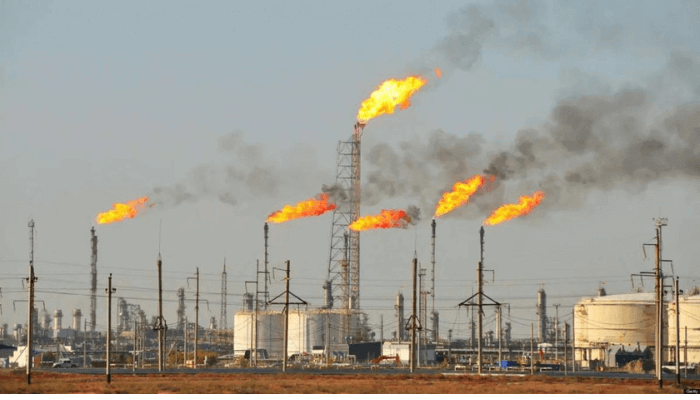
Nigeria’s recent issuance of permits under the Nigerian Gas Flare Commercialisation Programme (NGFCP) is a bold move. The plan promises to capture 250–300 million standard cubic feet of gas daily, cut six million tonnes of CO₂ emissions annually, produce 170,000 tonnes of LPG, create over 100,000 jobs, and generate up to 3,000 MW of power from flare gas, potentially attracting $2 billion in investment. On paper, this is transformative. In practice, it is an ambitious test of Nigeria’s regulatory rigour, project governance, and implementation discipline.
The scale alone raises critical questions. Can Nigeria realistically deliver 3,000 MW from flared gas? Historical experience suggests caution. Past initiatives, from the National Integrated Power Projects to gas-to-power schemes, have fallen short due to weak technical vetting, inadequate financing, bureaucratic delays, and political interference. Ambitious targets are laudable, but without credible mechanisms to ensure delivery, they risk becoming another headline that fades into non-implementation.
Central to success is the selection of partners. NGFCP has licensed 28 companies, but the question of technical and financial competence remains pressing. Flare-gas capture and power generation are complex undertakings requiring advanced engineering, reliable project financing, and strong operational governance. The programme’s credibility hinges on whether these permits went to capable operators or to entities with political proximity but limited capacity. Transparency in the evaluation process, public disclosure of selection criteria, and ongoing monitoring of compliance are non-negotiable. Without these safeguards, the risk of underperformance or outright failure looms large.
Equally critical is the government’s role. For the programme to succeed, federal ministries, regulatory agencies, and state actors must deliver their side of the bargain: timely approvals, enforcement of contractual obligations, and predictable regulatory frameworks. Past projects have faltered when promises, such as gas supply guarantees, infrastructure support, or fiscal incentives, were delayed or diluted. NGFCP’s alignment with the Petroleum Industry Act and Nigeria’s Energy Transition Plan offers a solid foundation, but execution will determine whether the initiative catalyses investment or becomes another cautionary tale.

Implementation failures are the third concern. The energy sector is littered with projects where construction stalled, costs overran, or operationalisation lagged for years. Avoiding these pitfalls requires rigorous project management, milestone-based funding, third-party engineering verification, and accountability mechanisms that link disbursement to progress. International development partners involved, Power Africa, KPMG, the World Bank, and USAID, can provide technical oversight and best-practice frameworks, but domestic institutions must enforce compliance without political compromise.
Another dimension is financial structuring. Mobilising $2 billion in private investment is feasible only if risk allocation is clear. Investors must be assured that gas volumes are secured, payment structures are enforceable, and returns are insulated from currency, regulatory, or political shocks. Incentivising both local and foreign investors through credit guarantees, tax incentives, or co-investment schemes will be critical in attracting serious capital. Without this, the programme risks under-subscription, limiting its scale and impact.
Finally, the broader systemic context cannot be ignored. Gas flare reduction intersects with national electricity planning, transmission infrastructure, and industrial demand. The power generated must feed into a reliable grid, with clear off-take arrangements, to translate the flared gas into real economic and social value. Coordination across the Nigerian Upstream Petroleum Regulatory Commission, the Transmission Company of Nigeria, distribution companies, and project developers is essential. Fragmentation here has undermined similar initiatives in the past.
Nigeria’s NGFCP is not merely an energy project; it is a test of institutional competence, regulatory integrity, and project delivery. If it succeeds, it could transform flare gas from an environmental liability into a multi-billion-dollar economic and power asset, accelerating energy transition, job creation, and industrial growth. If it fails, it risks reinforcing investor scepticism and public cynicism about large-scale government programmes.
For the $2 billion and 3,000 MW target to materialise, Nigeria must combine three imperatives: rigorous partner vetting, government reliability, and disciplined project execution. Oversight must be real, transparent, and continuous. Without these, even the most ambitious targets will remain aspirational. Success is possible but it will demand more than permits and announcements; it will require competence, accountability, and the political will to deliver.