The naira fell to a fresh low in both the official and unofficial markets Monday as dollar liquidity tumbled, testing the Central Bank’s resolve to prioritize building its external reserves over defending the currency.
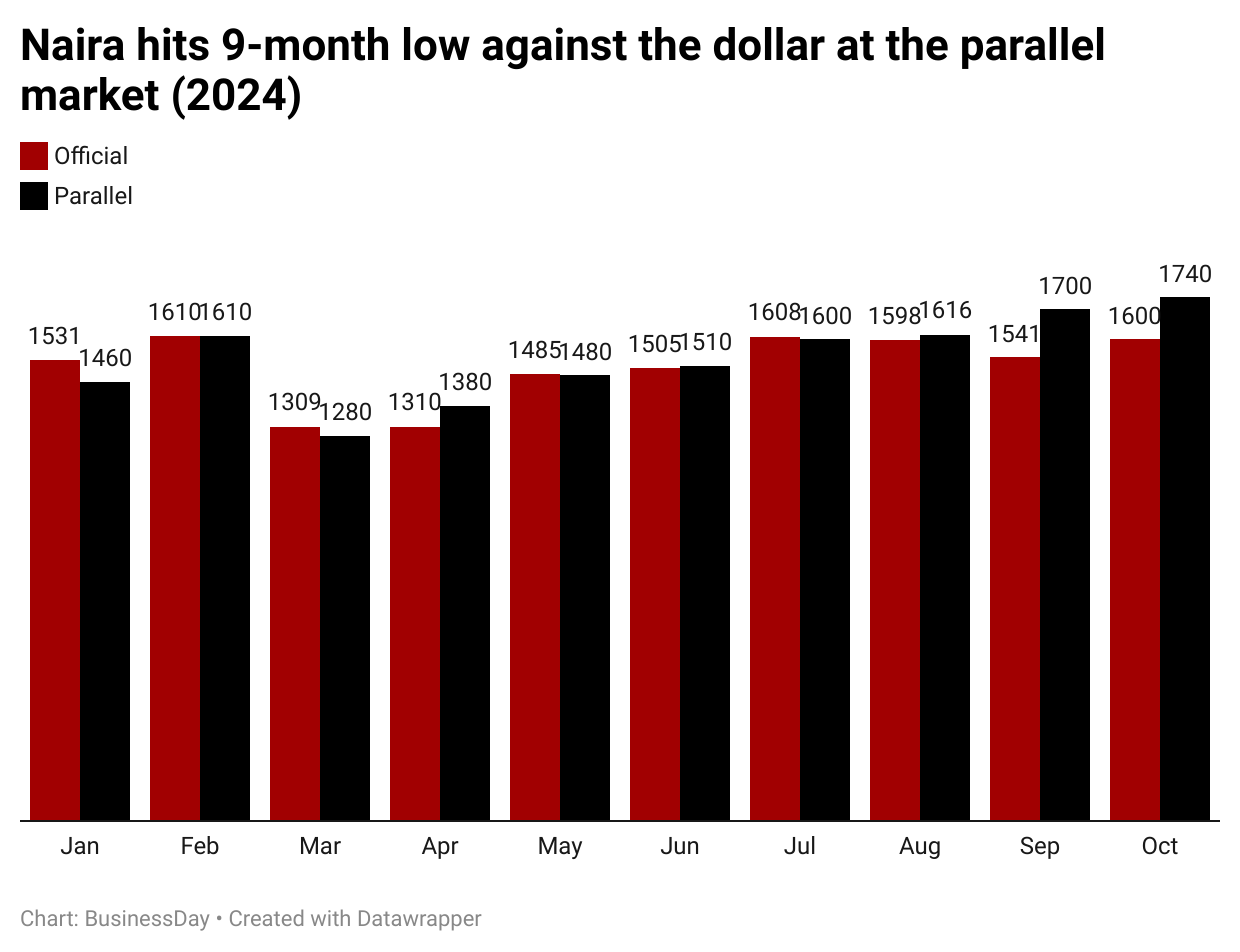
The currency fell to a 9-month low of N1,740 per dollar at the unofficial market Monday and weakened by some 4.3 percent to N1,670.65 per dollar at the official market, the most since October 15.
The naira weakness followed a 72 percent decline in dollar liquidity to $81 million – its lowest level in more than a month.
“The market is not receiving enough supply from the CBN despite FX reserves reaching $40.2 billion,” said Olaoluwa Boboye, an economist at CardinalStone.

Boboye also attributed the current depreciation to the activities of speculators in the FX market.
Liquidity in the foreign exchange market has remained low as Nigeria prioritizes building its external reserves.
According to Olayemi Cardoso, governor of the CBN, Nigeria’s external reserves have grown to $40.2 billion, the highest in two years. The naira has lost even more ground since the devaluation last year.
Wale Edun, the finance minister said at the annual IMF meeting that the organic growth of the gross reserves is as a result of a decision to allow the market to set the exchange rate for the naira, instead of the CBN defending it.
“The gross reserves are being built organically, mainly because we’re just not defending the naira, as used to happen in the past. A billion dollars every month just to defend the naira,” he pointed out, highlighting the high cost of past policies aimed at propping up the currency.

BusinessDay’s analysis shows that the naira has fallen by 19.17 percent from N1,460 per dollar in January 2024, to N1,740 per dollar in October 2024.
“The CBN’s firm policy trajectory is fuelling speculative activity, as high-net-worth individuals hedge against inflation by buying the dollar, leading to a naira depreciation,” Afamuefuna Chukwurah, research analyst, Capital Bancorp plc said.
“This is the end of October, we’re moving into November, approaching December. You would find that around this time, there may be some sort of flight to safety because of the potential volatility that is likely to occur towards the end of the year,” Segun Sopitan, principal partner Woodridge and Scott Consulting said.
After it was named the best-performing currency, the naira saw a change in fortune, emerging as the worst-performing currency in the world in April.
It gained the highest at the end of March, at a high of N1,280/$. However, the gains were reversed and the depreciation has since been sustained.
Before then, the CBN had formalised dollar sales to Bureau De Change (BDC) operators after a three-year break aimed at stabilising the naira and narrowing the gap between the official and unofficial exchange rates.
The CBN sold $20,000 to each BDCs at N1,301/$, to be sold at a margin not more than one percent above the purchase rate from CBN.
The CBN has embarked on several initiatives to ease the sustained pressure on the naira. In its latest attempt, the apex bank signed an agreement with the International Finance Corporation on Monday to facilitate lending to businesses in naira to curb currency risks and increase demand for the local currency.
The IFC plans to invest $1 billion in key sectors in Nigeria over the years, according to a joint statement on Monday.
“The partnership will allow the IFC to manage currency risks and increase its investment in Nigerian naira across priority sectors” including agriculture, housing, infrastructure and energy, the statement read.
The pioneering initiative between the IFC and CBN will unlock much-needed long-term local currency financing for private businesses in Nigeria at economically viable rates, according to Cardoso.
The Central Bank of Nigeria has also employed several strategies to stabilise the naira and keep inflation down like hiking the monetary policy rates by 800 basis points this year, to 26.75 percent, selling dollars to Bureau de Change operators and conducting a Dutch Auction System in August, among other measures.
Analysts expect the official naira rate to stabilise, while the rate at the black market may dip further by the end of the year.