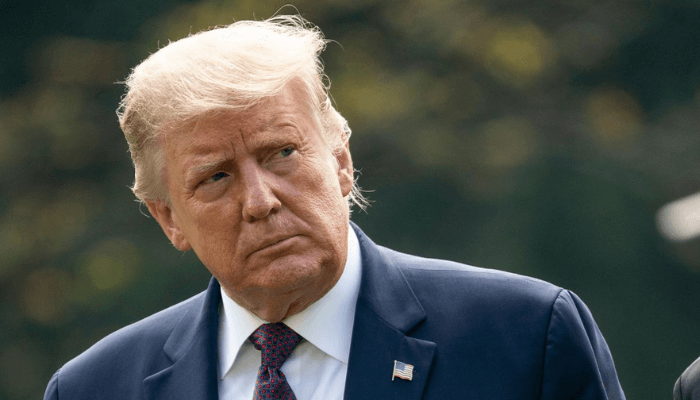
Bola Tinubu, Nigeria’s junketing president, chose the same week that Donald Trump, America’s ultra-protectionist president, unleashed a global trade war to go on a two-week “working visit” abroad. As the world reeled from Trump’s tariff blitz, the deepest and most sweeping in a century, leaders of most other countries were hands on deck at home.
President Emmanuel Macron of France, where Tinubu was hibernating, actively reached out to his fellow European leaders to coordinate the EU’s response. The British prime minister, Sir Keir Starmer, spoke to parliament and met his cabinet to develop an action plan. Most other countries and their leaders similarly weighed their options. But wither Nigeria? Wither Tinubu?
Well, the Minister of Industry, Trade and Investment, Jumoke Oduwole, issued a pathetic statement that was long on the problem but short on the solution! She said President Trump’s tariffs on Nigeria – 10 percent flat tariff and 14 percent “reciprocal” tariff – could cost Nigeria $6 billion annual exports to the US. She added: “For businesses in the non-oil sector, these measures present destabilising challenges to price competitiveness and market access.”
Read also: What Trump’s 90-day pause means for trade

Continuing, she said: “SMEs building their business models around AGOA exemptions would face the pressures of rising costs and uncertain buyer commitments.” But what’s the solution? Is Nigeria prepared to forfeit $6 billion non-oil exports to the US? Should companies change their business models and forget the US, the world’s largest consumer market? How many businesses would disappear and how many jobs would vanish? Oduwole said Nigeria would take the matter to the World Trade Organisation, the same WTO that President Trump has utterly sidelined!
The Minister of Finance and Coordinating Minister of the Economy, Wale Edun, also spoke. He said the government’s Economic Team would meet over the Trump tariffs. As I write, there’s no evidence of such meeting; and if they met, what’s their solution? Just imagine Dr Ngozi Okonjo-Iweala as the Minister of Finance and Coordinating Minister of the Economy. She would be frantically reaching out to people internationally and actively coordinating activities at home, as she did during the oil price crash of 2014 when crude oil prices declined dramatically and rapidly. Of course, she understands the world economy and how global economic crises impact national economies. And, of course, she has long been a technocrat with huge international status. By contrast, Tinubu’s economic ministers are Lilliputians. They lack deep knowledge of international economics and lack international clouts.
“However, the truth is, beyond perfunctory diplomatic niceties, Nigeria has no influential relationship with the US.”
But what about Tinubu himself? Last week, the presidency gleefully circulated a picture of Tinubu shaking hands with a Trump aide, with a story titled: “Tinubu discusses stronger Nigeria-US ties with Trump advisor.” The aide is Massad Boulos, Trump’s senior adviser for Africa. To be sure, Boulos, a Lebanese-born American, is important for three reasons. First, he advises Trump on Africa. Second, he lived and had strong business interests in Nigeria, where he was the CEO of SCOA Nigeria PLC. Third, his son, Michael, born in Nigeria, is married to Trump’s daughter, Tiffany. So, Massad Boulos is President Trump’s in-law. Clearly, therefore, he is potentially a good liaison between Nigeria and the US, assuming he has a special affinity with Nigeria, based on his strong connections with this country.
However, when it comes to international trade, on which President Trump’s approach is rumbunctious, transactional and reciprocal, Massad Boulos’s leverage is weak. Over the past two weeks, several presidents and prime ministers have spoken to President Trump himself or to Scott Bessent, Treasury Secretary, or Howard Lutnick, Commerce Secretary, or Jamieson Greer, US Trade Representative, USTR. The stakes are too high, and the issues too deep, for a chance meeting with a presidential advisor to be a good response to President Trump’s tariff blitzkrieg. In an ideal world, Nigeria, the so-called “giant of Africa”, would have the ear of every major world leader and would be able to speak directly with Trump and any of his top economic ministers to advance not only Nigeria’s interests but also Africa’s. However, the truth is, beyond perfunctory diplomatic niceties, Nigeria has no influential relationship with the US.

But coming to Trump’s tariffs against Nigeria, what’s the context? Well, the context is global. President Trump declared April 2 as “Liberation Day”, when America would free itself from being “looted, pillaged, raped and plundered by friends and foes alike.” So, on that day, he announced two sets of tariffs. The first was a 10 percent blanket tariff on all imports into the US. The second was a “reciprocal” tariff based on the US trade deficits with other countries. To calculate the “reciprocal” tariff for each country, the Trump administration took the US’s trade deficit in goods with that country and divided it by the amount of goods imported into the US from that country. The resulting tariff equals half the ratio between the two. Based on that formula, Trump imposed a 14 percent “reciprocal” tariff on goods imports from Nigeria.
Well, Nigeria’s 14 percent “reciprocal” tariff was among the lowest. By comparison, Trump levied a 50 percent “reciprocal” tariff against Lesotho; 38 percent against Botswana; and 30 percent against South Africa. Nigeria’s “reciprocal” tariff is relatively low because, despite the fact that the US African Growth and Opportunity Act, AGOA, has existed since 2000, Nigeria is Africa’s least beneficiary of the tariff-free scheme. Nevertheless, as Oduwole said, Trump’s 10 percent flat tariff and 14 percent “reciprocal” tariff could cost Nigeria $6 billion non-oil exports to the US annually. Surely, no country that is truly serious about diversifying its economy and promoting non-oil exports can be blasé about such a situation. But what is Nigeria’s response?
On April 9, President Trump suspended the “reciprocal” tariffs for 90 days to allow countries wishing to negotiate with the US to do so and said over 75 countries indicated they wanted to negotiate. Indeed, according to the Financial Times, many countries, including South Africa, were prepared to compromise to safeguard their exports to the US. But Nigeria is missing in action, saying nothing about negotiating a compromise to protect its US non-oil export market.
Read also: Trump’s tariffs to hit Nigeria’s value-added manufacturing, shrink exports – MAN
Yet, Trump has long had grievances about Nigeria’s protectionism. In a tweet after President Trump announced the “reciprocal tariffs”, the USTR complained about Nigeria’s import bans on 25 items. Indeed, the USTR’s 2025 National Trade Estimate Report on Foreign Trade Barriers goes deeper, listing a wide range of tariff and non-tariff barriers that hinder US business interests in Nigeria. That is the crux of the matter, and no meeting with any Trump aide can change President Trump’s mind unless Nigeria addresses his concerns.
In January, I wrote a piece titled “Trumpian World: What Nigeria can expect from Trump’s second presidency” (BusinessDay, January 27, 2025). I said that, given President Trump’s transactional and reciprocal approach to trade, Nigeria could only placate him and enjoy his good graces, if it reviewed its tariff and non-tariff barriers and buy more US goods, especially agricultural products. That remains the case. Nigeria must choose between its own deeply entrenched protectionism and access to the US, the world’s largest consumer market. That’s the critical trade-off. But Tinubu thinks shaking hands with Massad Boulos will change that reality. No, it won’t!