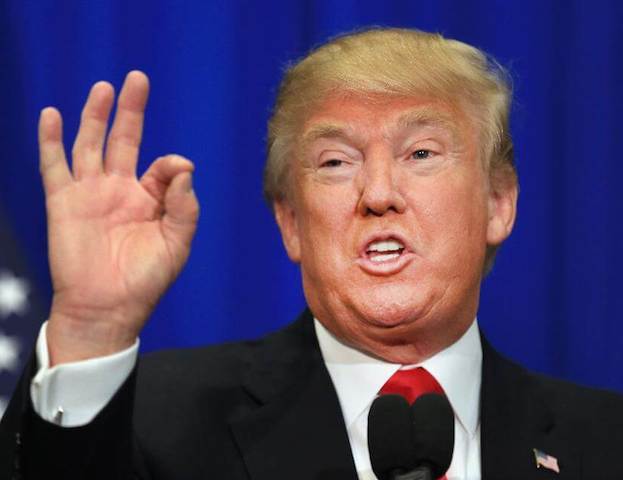
Since his inauguration January 20th, President Trump has gone about radically and tactlessly resetting America’s trade and immigration policies thus upsetting the world, alienating America’s close and traditional allies, and threatening to upset the current global order and America’s place and leadership in the world. Mr Trump signed 18 executive orders and memos in his first 12 days in office. Some of these pulled the US out of the Trans-Pacific Partnership (TPP), a trading partnership among twelve countries, ended the North American Free Trade Agreement (NAFTA) which is a free trade zone carrying more than one trillion dollar Trade a year between Canada, Mexico and the USA, ordered the building of a wall on the border with Mexico and threatened to impose a 20 percent tax on all imports from Mexico to pay for the wall, and restricted immigration and banned citizens of certain Muslim countries from entering the United States. This is besides his vile and contemptible threats to China and the European Union and his putting of Iran on notice over the latter’s launch of missiles.
Clearly, those who thought Mr Trump was bluffing with his ‘America First’ rhetoric on the campaign trials are now having a rethink. Unlike traditional politicians, he is determined to fulfil most, if not all, of his outlandish electoral promises.
Expectedly, his actions have drawn the ire of the world and those countries targeted. Some of these countries, like Mexico and Iran, have been responding in kind (more as a sign of defiance than a potent action to hurt the US), launching campaigns to boycott American goods and also, like Iran, banning Americans from entering their countries. Parliamentarians in the United Kingdom – America’s closest ally – are openly questioning the rationale for a Trump states visit to the UK and openly calling for the cancellation of the planned visit. The leader of the European Union went a step further last week by putting the United States – its long time ally – in a “threat” category, insisting that President Donald Trump is contributing to the “highly unpredictable” outlook for the bloc.
All of a sudden, the United States of America, the so-called bastion of democracy, liberal values and globalisation and the leader of the free world has become a country where freedom of expression, of the press, of free movement are no longer guaranteed; where separation of powers are no longer respected and long-standing institutions that have supported American democracy for long are at the risk of being sidelined or undermined.

Just in his first week in power, President Trump has effectively relinquished his and America’s leadership of the free world. He will soon discover that America’s leadership of the free world isn’t based on America’s awesome military powers alone. It was based, above all, on the liberal values that has served it so well over the years and which it has promoted all over the world since the end of World War II. However, without warning, Donald Trump is rolling back the US’ globalisation and liberal agenda and returning it to its ‘splendid isolationist’ past just because some of its less liberal constituencies are not benefitting maximally from globalisation.
True, it is legitimate to debate whether globalisation has benefitted all peoples equally, but the benefits of globalisation cannot be denied. To deny that is to ignore and deny history. Indeed, the US is the highest beneficiary of globalisation and its great prosperity coincided with the periods when American companies and businesses expanded to markets all over the world.
It is good that Donald Trump has effectively initiated America’s retreat from the world. As Trump strains relationships with key markets and allies all over the world, the US will soon come to realise, albiet in a difficult way, that it has been the greatest beneficiary of economic globalisation and its continued greatness lies in promoting liberal democracy and greater economic cooperation and globalisation.
Since nature abhors vacuum, Germany and Angela Merkel must step forward to take over the leadership of the free world. But unlike the past characterised by unilateralism, the emerging global order may demand greater multilateralism, which will be good for the world.