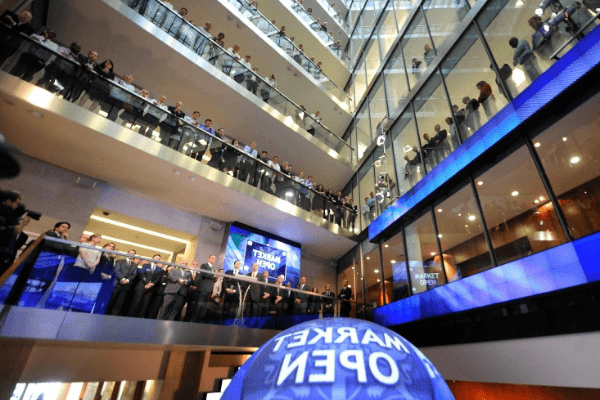
Trainline, the transport-booking app owned by US private equity group KKR, has announced its intention to float on the London Stock Exchange.
The company is aiming for a valuation of £1.5bn, people briefed on the matter said. JPMorgan and Morgan Stanley will lead the sale, which would be one of the largest initial public offerings this year in the UK if it is successful.
Chief executive Clare Gilmartin said: “We are the leading independent rail and coach platform globally, selling tickets on behalf of 220 carriers across 45 countries . . . I am especially proud of the team and culture we have created at Trainline and excited by the global growth opportunity that lies ahead for the business.”
The company, which was bought by KKR in 2015 for roughly £500m, doubled ticket sales from £1.6bn in 2015 to £3.2bn in 2019. It said it had plenty of room to grow in a large, fragmented industry and that online bookings accounted for only 39 per cent of tickets in Europe’s top five markets.

People following the process warned that the timing of an IPO could slip and that there was no guarantee of a successful listing.
Trainline made an operating profit of £10.5m in the year to the end of February 2019 after three years of losses.
The company has acquired a high level of debt since KKR bought it. At the end of February 2018, it had net debt of £577m, more than 10 times the figure before it was sold, with revenue of £178m and a pre-tax loss of £29.4m, according to its accounts.
Chief financial officer Shaun McCabe said the company was targeting a debt level of twice adjusted earnings before interest, tax, depreciation and amortisation, which were £53m in financial year 2019, at IPO.
A potential listing comes at a time when private equity groups have found IPOs an increasingly unpalatable option as executives attribute tough market conditions and a drop in valuations as a deterrent to float businesses.

Private equity groups are also put off by listings because they are obliged to sell business to the public markets in stages — often for a number of years — which allows businesses to benefit from growth but also to be exposed to a slump in trade.
Companies that listed in 2017 and 2018 lost on average 21 per cent of their initial market capitalisation 12 months post-IPO, according to a report by Bain & Company. By contrast, those that went public between 2015 and 2016 gained an average of 105 per cent in value during the same period.
Private equity groups have been ditching listings for sales to one group. For example, CVC sold Sky Betting & Gaming to the Stars Group in a $4.7bn deal last year following speculation that the business would float. London-based Bridgepoint was also exploring a listing of Pret A Manger in New York before selling the business to JAB.