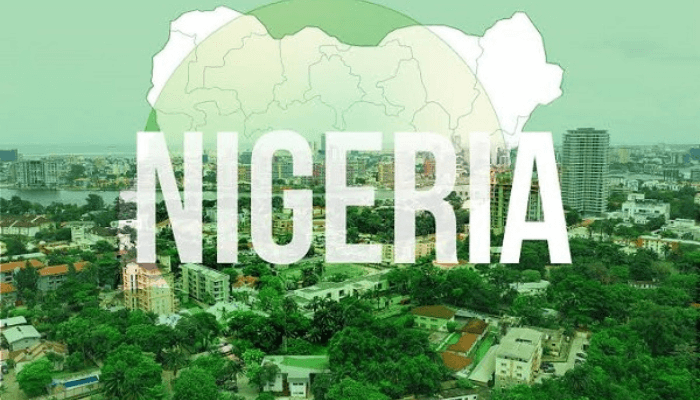
Nigeria presents a paradox of immense potential and persistent underperformance — a nation abundantly blessed yet chronically underachieving. This disconnect between potential and reality raises fundamental questions about the foundations upon which our national project rests. To comprehend Nigeria’s trajectory, we must examine the intricate relationship between our cultural foundations, social structures, and the ideological currents that shape our collective existence.
Human societies continuously evolve under the influence of socioeconomic, political, and technological forces. These forces reshape power relationships, alter self-perception, and redefine identities. By employing the metaphors of cultural looms, social fabrics, and ideological tapestry, we can better interpret the underlying currents driving Nigeria’s complex reality.
The fundamental principles of culture represent the looms from which social fabrics are woven — creating the structures, formations, and dynamics that generate ideological currents forming our national tapestry. A society’s cultural values produce social networks that manifest in attitudes, behaviors, and identity templates. These competing ideologies present choices that affect both interpersonal relations and self-perception in relation to others.
A people’s cosmos emerges from their historical experiences. Our reality shapes our worldview, and we in turn shape our environment through that same lens. The collective experiences and historical memories of Nigerians have become a cultural DNA influencing how we perceive and respond to our surroundings. These cultural foundations establish the frameworks of meaning, understanding, and interpretation that guide our sociopolitical engagements.

The social structures and characteristics of Nigerian society — the division of citizens into natives and non-natives, indigenes and settlers; urban settlement patterns; economic specialization and restrictions — create social fractures and disincentives for cultural assimilation, integration, and nationalism. These divisions perpetuate an environment where cohesive national identity struggles to take root.
Why does Nigeria remain so blessed yet so profoundly underperforming? This paradox constitutes the enigma. Despite its massive population and exceptional human capital, Nigeria remains prostrate after more than six decades of independence. The nation continues to exhibit dependency on former colonial powers, while its people struggle with self-doubt and its leaders often cede too much control to Western institutions. At the core of this enigma lies a lack of philosophical and ideological clarity.
A state philosophy frames the fundamental organizing principles defining the convergence of diverse elements; it regulates operational parameters and permeates the collective mindset. Without this philosophical clarity, national purpose becomes diffuse, strategies muted, and constituent units misaligned. This explains why planning often feels uninspired, public works lack character, and service orientation remains poor despite eloquently expressed but ultimately ignored visions.
Kingsley Moghalu attributes Africa’s underdevelopment to the absence of a coherent worldview, noting that “worldview provides the mindset, mental framework, the psychological infrastructure that motivates, inspires and organizes the thinking and actions of societies”. Similarly, Kofi Awoonor observes that Africa’s “physical dependence is underwritten by a strong superstructure of ideas and concepts, which affirms that we are inferior”.
Three dominant ideologies contend for prominence in Nigerian society. Negritude represents Afrocentricism — resistance to external influence. Negation characterizes Eurocentric or Arabized orientation — uncritical acceptance of colonial ideologies, often the elite predisposition. Adaptation defines youth aspirations for integration and globalization, propelled by popular culture, media, and urbanization.

These ideologies vary across cultures and communities. Evidence suggests waves of syncretism, hybridization, and convergence throughout Nigerian society, potentially indicating an incipient movement toward a cohesive Nigerian identity and emerging nationalism.
To move forward, Nigeria must identify and manage its value spaces, collate value streams, and aggregate national values into a coherent ideology that supports a national vision. This requires systematic research to analyze national values, identify “Nigerianness,” and abstract these elements into cohesive national ethos.
Values management must become integral to political conceptualisation, leadership development, and governance practices. For future generations to escape this enigmatic trap, Nigeria needs more than rhetorical commitments to values — it requires a philosophical framework that strings individual virtues into a coherent national ideology capable of guiding authentic development.
By establishing this foundation, Nigeria can finally harness its abundant blessings and talents toward meaningful progress, transforming from an underperforming giant into a nation that fulfills its extraordinary potential. Only then will the Nigerian enigma begin to unravel, revealing not a contradiction but a coherent path toward national fulfillment.