For decades, Nigeria’s sovereignty has persisted more as a theoretical construct than as an operative reality, independent in flag but dependent in policy, shaped by external prescriptions from London, Washington, and Bretton Woods institutions that prize compliance over true progress. However, in the last two years, beneath public frustration and global scepticism, the Tinubu administration seemed to have adopted a new posture to redefine sovereignty through economic realism rather than foreign approval. Still, sovereignty cannot be measured by bold policy announcements alone. The deeper question remains: what do his reforms mean for ordinary Nigerians?
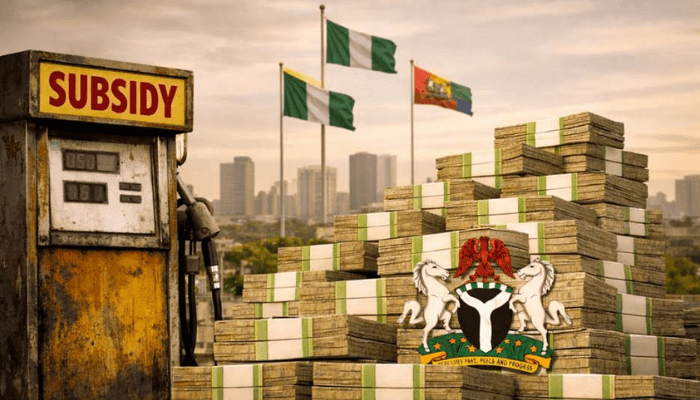
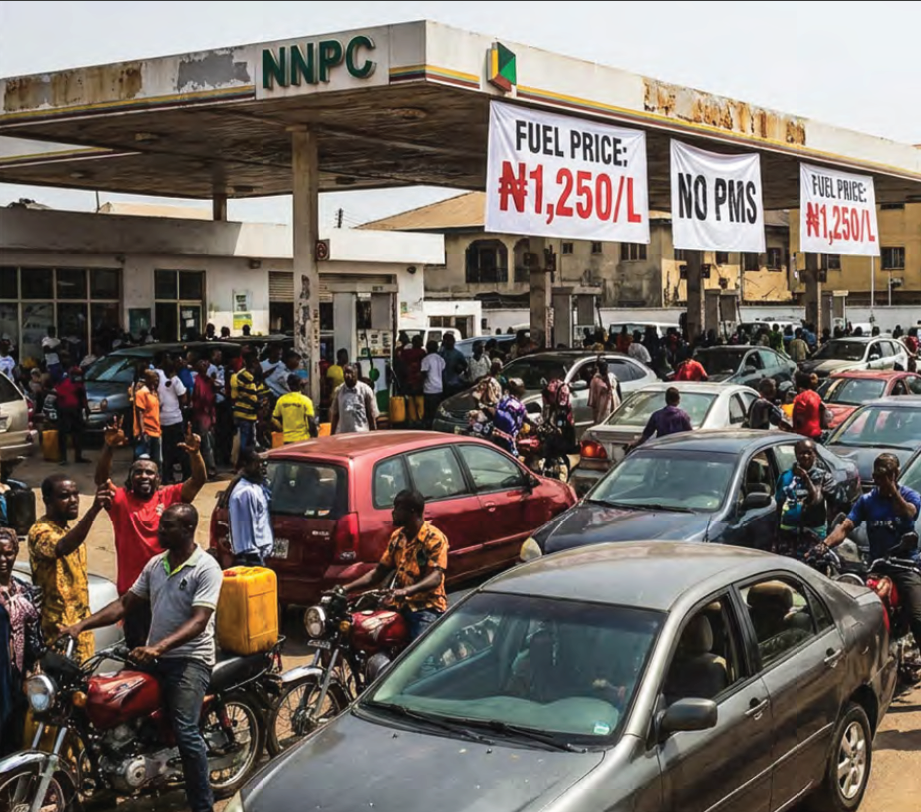
The removal of fuel subsidy in May 2023 was the first unmistakable signal of the new government posture. For decades, fuel subsidy consumed trillions of naira while largely benefiting smugglers, fuel cartels, and the political elite. President Tinubu’s abrupt removal, made without IMF coercion, was presented as a sovereign decision. The World Bank later praised it as necessary for fiscal consolidation, noting that subsidy savings could reach ₦7 trillion annually. However, subsidy removal without shock absorbers deepened the economic pain and suffering of the citizens. Inflation climbed above 28% in 2023, with food inflation exceeding 33%, pushing an estimated 24 million Nigerians into poverty, according to the National Bureau of Statistics (NBS).
Similarly, the unification of Nigeria’s exchange rate in June 2023 was a bold but punishing reset. The naira’s initial depreciation of nearly 40% in six months signalled long-avoided market correction, and foreign-exchange inflows rose by 38%, according to the Central Bank of Nigeria, CBN. The effects for businesses and households were, however, brutal. Import costs surged, school fees for children studying abroad more than doubled, and SMEs dependent on imported input faced existential pressures. While exchange-rate realism strengthened Nigeria’s credibility globally, its domestic translation remained uneven. Reforms that stabilise the state but destabilise the citizen cannot be the final goal of sovereignty.
Diplomatically, Nigeria’s shift from passive non-alignment to calculated multi-alignment has widened its strategic options. Traditional partnerships with the EU and the United States remain intact, but Abuja has been gravitating toward China, the UAE, India, and BRICS+. China’s infrastructure financing exceeds $5.7 billion, while the UAE signed a $2.5 billion investment pact in 2023. By reducing dependence on any single power bloc, Nigeria has subtly expanded its diplomatic leverage. U.S. tariffs and even threats of sanctions now carry less weight because Nigeria receives less than $315 million annually in American assistance, pocket change compared to its ₦28 trillion (≈$44 billion) national budget. Still, sovereignty means little if it does not reduce insecurity, fix failing schools, or stabilise the price of ordinary food commodities.

What this moment demands is not applause for the government’s “quiet rebellion” but an examination of its economic, social, and psychological consequences for Nigerians. Reforms should not only impress investors; they must improve lives. A sovereignty that works only in diplomatic briefings but not in markets, homes, or motor parks is incomplete.
The first task is addressing Nigeria’s crushing cost of living. With over 104 million citizens in extreme poverty, rising food prices, soaring transport costs, and unprecedented rent hikes have pushed families to the edge. Any meaningful reform must prioritise affordable housing schemes, targeted support for the poorest households, and strategic interventions to cut food costs through improved supply chains and local production. Sovereignty means little if citizens cannot eat, live decently, or survive daily expenses.
Businesses require targeted support. A unified exchange rate can unlock foreign investment, but SMEs also need survival tools. Priority forex windows for manufacturers, tax credits for job-retaining companies, and low-interest credit for export-oriented businesses would convert monetary reform into economic resilience. If Nigerians must pay the price of sovereignty, it must also reap its gains.
Real sovereignty demands rebuilding the engines of productivity – power, transportation, and agriculture. Over 85% of Nigerian businesses rely on generators for power. Without reliable energy, reforms are like pouring water into a basket. The government’s 2024 Electricity Act decentralisation must be followed by aggressive private-sector licensing and state-level grid investments.
Diplomatically, Nigeria’s new multi-alignment strategy should be leveraged to create tangible benefits for citizens. Technology transfer, skills partnerships, student visa agreements, and manufacturing alliances, should not merely be content of memoranda of understanding, MOU, announced during international summits and bilateral meetings.

Security is another imperative that cannot be taken lightly. No reform can thrive when thousands of Nigerians are kidnapped annually and more than 60,000 have been killed by violent groups since 2011, according to SBM Intelligence and ACLED. Farmers abandon farmlands, transporters avoid key highways, and businesses relocate or shut down. Sovereignty begins with safety. A digital identity-linked security network, community-policing reforms, and cross-border intelligence cooperation are now indispensable for national development.
Where the government deserves credit is in consistency. As the IMF’s 2024 Article IV noted, Nigeria has broken the pattern of “stop-go” reforms. But consistency without compassion breeds resistance, not sovereignty. The challenge now is to match economic discipline with social cushioning. Sovereignty must be both firm and humane.
Ultimately, sovereignty should not just be demonstrated in policy announcements or diplomatic postures. It should be measured in whether a market woman in Kano, a mechanic in Aba, or a teacher in Ibadan can live with dignity. If Nigeria intends to redefine sovereignty, it must ensure that reforms transform not just the state, but the lives of the people who sustain it.