The budget clock is ticking very fast for President Bola Tinubu’s administration as it juggles 2024 and 2025 fiscal years, leaving a number of developmental projects untouched.
Concerns are already mounting among economists that President Tinubu’s promise to end the nation’s long-running practice of overlapping budgets by March 31, 2026, may be difficult to fulfil, given persistent bureaucratic delays, weak fiscal discipline and deep-rooted inefficiencies in the country’s public finance system.
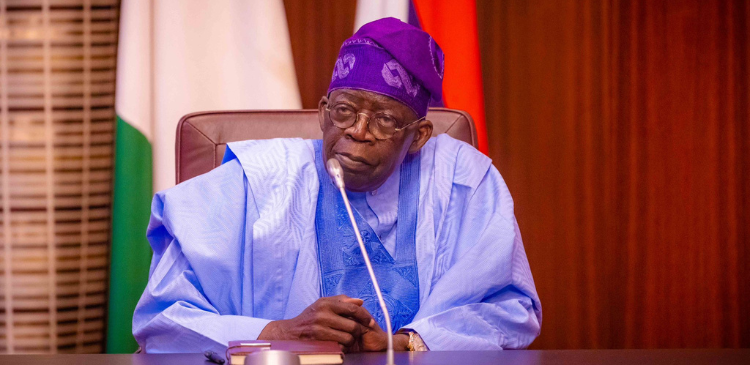
While presenting the 2026 Appropriation Bill to a joint sitting of the National Assembly on December 19, Tinubu announced an end to the rollover of budgets, insisting that Nigeria would return to a single-budget, single-year framework.
“There will no longer be rolling over of budgets,” the President said. “All existing budgets will be concluded by March 2026. Nigeria will operate one budget in one year.”

Read also: ‘2026 budget could trap Nigeria in fiscal time-loop despite gains from reforms’
Unrealistic expectation
Paul Alaje, chief economist at SPM Professionals, said while the administration’s intention is commendable, the realities of Nigeria’s budget execution cycle make the March 31 deadline highly uncertain.
“At the end of the year, we might be able to stop running multiple budgets. But to say that it will happen by March 31, honestly, I have a lot of reservations,” Alaje said.
“Knowing what we know about Nigeria’s budget cycle, especially with the directive that about 70 percent of the 2025 budget may be rolled over into 2026, it is very unlikely that everything will be concluded by that date.”
According to him, delays in procurement processes and institutional bottlenecks within ministries, departments and agencies (MDAs) continue to undermine timely budget execution.

“Tendering for 2025 projects, defence contracts and capital components are still ongoing. These are not things you finish quickly,” he said.
“The bureaucracy often makes some of the President’s wishes impossible to achieve on time. It may not be that the President wants to run multiple budgets, but he cannot run the ministries by himself.
“He has to depend on other people, and that dependency causes delays.”
Alaje added that, based on precedents, the likelihood of extending budget implementation beyond March remains ‘very high.’
“Realistically, we should be looking towards the end of the year rather than the first quarter.”
Similarly, Charles Sani, an economist and public finance analyst, said Nigeria’s persistent budget overlaps are symptoms of a deeper failure of fiscal discipline across both executive and legislative arms of government.
“A budget, by its very nature, is a tool of fiscal discipline,” Sani said.
“If there is no commitment to discipline by the government, the MDAs, and even the National Assembly, then the whole essence of budgeting is lost.”
Sani argued that the routine extension of budgets undermines the legal foundation of the appropriation process.
“The budget is a law. It is approved to start in January and end in December.
Read also: Nigeria faces fiscal chaos as Tinubu breaks budget cycle
“If you keep spending outside that period, then you are no longer operating within the ambit of the law,” he said.
“Ideally, spending public funds outside the approved timeframe should amount to an impeachable or even criminal offence.”
He warned that overlapping budgets weaken planning, distort performance measurement and create room for leakages.
“When you are still running last year’s budget in a new year, planning becomes omnibus. It becomes a situation where agencies feel they can just spend,” Sani said.
“It shows that there is a serious problem with our planning process. Either we don’t know what we want to do at the beginning of the year or we don’t subject projects to proper scrutiny, procurement and tendering early enough.”
Tinubu presented a N58.47 trillion 2026 Appropriation Bill, tagged, the ‘Budget of Consolidation, Renewed Resilience and Shared Prosperity,’ promising tighter fiscal discipline, improved revenue mobilisation and stronger oversight of public finances.
He acknowledged that running multiple budgets simultaneously has weakened implementation and said strict directives have been issued to the Ministry of Finance, the Budget Office and the Office of the Accountant-General to enforce timelines.
Heads of government-owned enterprises were also instructed to meet revenue targets through end-to-end digitisation to block leakages.
Osita Izunaso, chairman of the Senate Committee on Capital Market, said while scepticism was understandable, the President’s public commitment provides a basis for accountability.
“If you go by precedent, there may not be much to be optimistic about,” Izunaso said.
“But with the commitment the President has made, we can hold him to his word and expect capital components to be fully implemented by March or April 2026.”
Izunaso stressed that the true test of the budget lies not in its size but in its impact on citizens’ welfare.
“The key issue is the positive impact of this budget on the lives of Nigerian people,” he said.
“We want to see an improvement in the standard of living. Inflation may be dropping, but people still do not have purchasing power. Even at low prices, Nigerians are struggling to afford a decent living.”
Read also: FG’s N30trn revenue gap puts fiscal management under scrutiny
Overlapping budgets
According to the law, Nigeria operates a January to December fiscal year. In practice, overlapping budgets have become normalised.
The 2023 Appropriation Act of about N21.8 trillion, alongside a N2.17 trillion supplementary budget, was extended multiple times, first to March 31, 2024, then June 30, and eventually December 31, 2024.
Meanwhile, the 2024 ‘Budget of Renewed Hope,’ initially set at about N28.7 trillion, ran concurrently, along with a 2024 supplementary budget.
At one point, four budget instruments were active simultaneously.
The capital component of the 2024 budget was again extended to June 30, 2025, and later to December 31, 2025.
As a result, Nigeria is currently running two budgets side by side: the extended 2024 capital budget and the N54.2 trillion 2025 budget.
The 2025 budget itself has expanded significantly.
Tinubu initially proposed N49.7 trillion in December 2024, but lawmakers passed a N54.99 trillion appropriation in February 2025, with a N13.08 trillion deficit, about 3.9 percent of GDP.
In November, the National Assembly approved an additional N1.15 trillion in domestic borrowing, pushing total spending close to N60 trillion.
For Sani, the timing of Tinubu’s pledge, ahead of a pre-election year, adds another layer of complexity.
“This is a pre-election period. There are contracts to be awarded, political pressures, and incentives to spend,” he said.
Read also: Beyond the tax brackets: Where Nigeria’s real fiscal burden actually lies
“So the question is whether we truly have the political will. It’s a good desire, but desire alone is not enough.”
Still, both experts agree that if the President enforces the policy with the same decisiveness used to end fuel subsidies and unify exchange rates, success remains possible.
“If it is a firm commitment backed by action, it can work,” Sani said.
“But everyone – the executive, the legislature, and the MDAs – must be carried along. Without that collective discipline, March 31 will remain aspirational.”