The Centre for Journalism Innovation and Development (CJID) has raised concerns that independent media in Nigeria and across Africa is facing unprecedented strain, a situation that is placing democratic stability at risk.
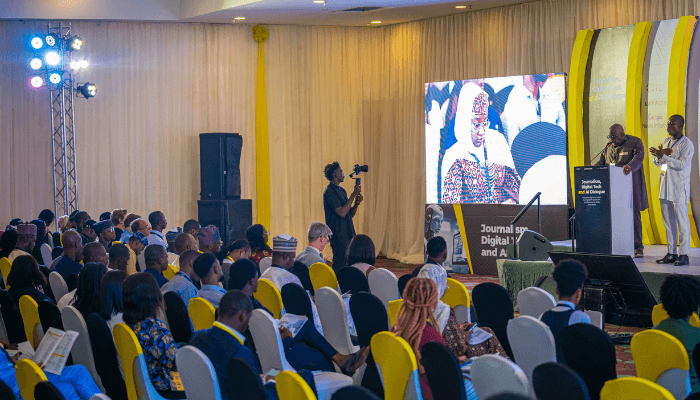
Dapo Olorunyomi, Chief Executive Officer of CJID expressed this concern on Monday in Abuja while addressing delegates at the third edition of the Media Development Conference (MDC-03), a gathering of over 300 delegates, including policymakers, scholars, journalists, innovators, students, and online participants from across ECOWAS, Central Africa, Namibia, and South Africa.
Speaking during his welcome address, Olorunyomi said the pressures confronting media organisations have escalated to a level that now threatens the foundations of democratic governance.
He listed collapsing advertising revenues, dwindling donor support, and increasingly sophisticated forms of censorship, including those enabled by digital technologies, as key factors eroding media independence.

He added that while mis- and disinformation continue to erode public trust and pollute the information ecosystem, the demand for accurate and trustworthy journalism has never been higher.
This contradiction, he said, underscores the urgency of strengthening Nigeria’s media landscape through sustainable funding models, robust digital-safety systems and renewed commitments to editorial independence.
Olorunyomi stressed that democracy cannot function without an independent press. “The media is not a luxury, it is the oxygen of democracy. If we allow it to weaken, all other reforms will collapse,” he said.
He warned that allowing the press to weaken would compromise all other reform efforts, as citizens would be left without the information required to hold leaders accountable, participate meaningfully in governance or defend civic space.
He told delegates that the next decade will determine whether African societies build resilient newsrooms capable of performing their watchdog role or slide into information environments dominated by manipulation, surveillance and foreign-controlled digital platforms.

To avert this, he said, governments, civil society and development partners must commit to supporting public-interest journalism without interfering in editorial processes.
The CJID chief added that innovative business models, AI-supported fact-checking systems, and civic literacy initiatives are essential to counter emerging threats. He said a new generation of journalists must also be trained in data reporting, accountability journalism and digital security to meet the demands of a fast-changing information ecosystem.
Read also: Report flags Anambra, Nasarawa, Bauchi, Ebonyi, Imo as most hostile states to journalists
The Embassy of the Netherlands affirmed its commitment to supporting Nigeria’s media and civil society, describing a vibrant and independent press as central to democratic stability.
Jessica Odudu, Projects and Communications Officer at the embassy, stressed that “the health of any democracy is closely tied to the strength of its media ecosystem.”
She noted that accurate, independent, and courageous journalism is essential for building public trust and safeguarding democratic processes.
Despite the challenges, she praised the resilience and creativity of Nigeria’s media, noting its continued role in questioning authority, investigating stories, and bridging citizens and institutions.