It was Rick Warren, the author of Purpose Driven Life, and an American Christian pastor, who said, “We are products of our past, but we don’t have to be prisoners of it.”
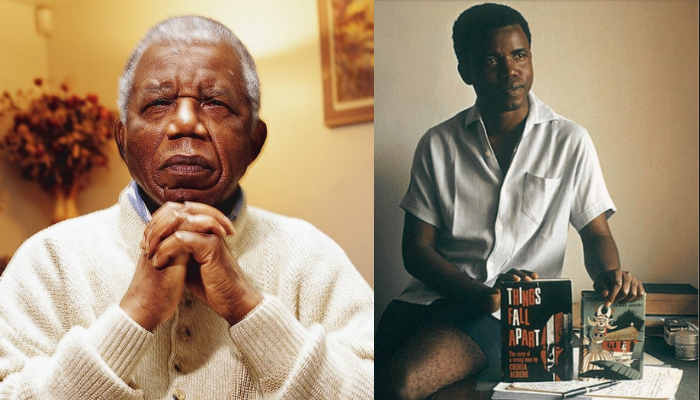
Albert Chinụalụmọgụ Achebe, popularly known as Chinua Achebe, was born on November 16, 1930, in Ogidi town of Anambra State,
Growing up in a little known town of Ogidi, Achebe’s childhood was deeply influenced by Igbo traditional culture and postcolonial Christianity. He attended the local Church Missionary Society primary school and later Government College in Umuahia, in Abia State.
Achebe earned a degree in English literature and history from the University College, Ibadan.

He published ‘Things Fall Apart’, his first novel at the age of 28, while working at the Nigerian Broadcasting Corporation.
The renowned poet and critic, regarded as a central figure of modern African literature, first published Things Fall Apart in London by Heinemann on June 17, 1958. The novel has sold over 20 million copies and has been translated into over 50 languages.
The novel chronicles the life of Okonkwo, the leader of an Igbo community known as Umuofia, from the events leading up to his banishment from the community for accidentally killing a clansman, through the seven years of his exile, to his return. It addresses a particular problem of emergent Africa, the intrusion in the 1890s of white missionaries and colonial government into tribal Igbo society.
Traditionally structured, and peppered with Igbo proverbs, it describes the simultaneous disintegration of its protagonist Okonkwo and of his village. The novel was praised for its intelligent and realistic treatment of tribal beliefs and of psychological disintegration coincident with social unravelling.
Achebe sought to escape the colonial perspective that framed African literature at the time, and drew from the traditions of the Igbo people, Christian influences, and the clash of Western and African values to create a uniquely African voice.

He also wrote other acclaimed novels, including No Longer at Ease (1960) and Arrow of God (1964), which together form the “African Trilogy”.
What Nigerians have to say about the book
Read also: Chinua Achebe, Nobel Prize and African Literature
Nubi Achebo, the director of academic planning at the Nigerian University of Technology and Management (NUTM), described the as interesting to read and impactful.
“I read Things Fall Apart in my school. I went to secondary school in the village, and the story resonated. I witnessed some aspects of the coming of Western civilisation and its impact on rural communities.
“The introduction of Western systems challenged traditional institutions, making life difficult for rebellious locals. The resistance was met with the weight of the law through imprisonment, an alien concept. Many felt emasculated in the new system like Okonkwo did,” he said.
Achebo also emphasised that the book portrayed African culture in a good light against the backdrop of Western civilisation, which tended to portray Africa as a dark place.
“Chinua Achebe’s portrayal is a masterpiece that challenged negative images of Africa and its cultures,” he said.
Jessica Osuere, chief executive officer at RubbiesHub Educational Services, said she read the book long ago as one of her texts for Literature in English, but can still remember some key things in the book.
“It’s a book with a very powerful encounter with culture, history, identity, and tragedy. Okonkwo’s life in the story showed that pride and rigidity can destroy even the strongest of men.
“Fate and choice both shape our destiny. That was clear from his involvement in the murder of a child who called him ‘father’. The book also portrayed how colonialism shattered our rich African traditions and tore communities apart,” she said.
Osuere said that she particularly loved how the storyline celebrates the African oral heritage through the use of proverbs, making the story not just about Africa, but spoken from Africa.
“Chinua Achebe was not just a writer; he was a voice for the African continent. He wrote with clarity, wisdom, and courage. He was a man of great conviction and integrity, judging by how he refused national awards from the government.
“His work remains timeless with immeasurable impact. To me, the book felt like a peep into the future. See where we are today, are things not truly fallen apart?” she asked rhetorically.
Another Nigerian who read the book had this to say about the novel, “Okonkwo, the central character in the story, took things to in his quest to prove his bravery.
“He didn’t want to be seen as a weakling like his father, and took his masculinity rather too far. Okonkwo depicted a man consumed by emotions and sentiments,” she stated.
Paul applauded the literary creativity of the author, which he said depicts how Christianity came into the Igboland, and how the natives viewed the emerging religion then.
“Okonkwo was very ambitious and strong-headed, trying always to be in charge, and such an attitude to me is not good.
“Besides, the novel portrayed the importance of weighing one’s actions before the act. Okonkwo didn’t weigh his action before killing Ikemefuna,” he noted.
Achebe, who died in Boston, USA, on March 21, 2013, at the age of 82, even in his death remains a voice for Africa via his book, “Things Fall Apart”.