Femi Gbajabiamila, an All Progressive Congress (APC) stalwart, is the minority leader of the House of Representatives. He represents Lagos, Surulere I Federal Constituency. Gbajabiamila was elected to the House in 2003, and re-elected in 2007 and 2011. In this interview with PATRICK ATUANYA and BALA AUGIE, BusinessDay analysts, Gbajabiamila speaks on movement of reforms post 2015, prospects for a rancour-free APC presidential primary and his special health project for his community. Excerpts:
Analysts believe that a lot of reforms are being held up in the National Assembly; be it the PIB or the bill to repeal the old railway act that limits private sector participation in rail infrastructure. Should we expect an accelerated movement on reforms post the 2015 election?
Well, first of all you should know that these are very contentious issues that you raise, the PIB and the rest.
There are very many interests whether based on constituency, regions or what have you.

And even in the most advanced democracies, a lot of legislation has always been contentious, that is why you have lobbyists.
So it is not too different from what we have here in Nigeria, especially where interests are sharply divided.
It is better to do things properly rather than rush because people want PIB, and later you start amending and amending the bill and regretting what you have done.
I believe that post election there will be acceleration for the consideration of bills like the PIB.
READ ALSO: The American elections and the destiny of a nation

This is because they are very important, but anything worth doing at all is worth doing well.
We all agree that party manifestos are quite similar. What separates the APC manifesto from all the rest out there?
Well first of all, there are many issues that differentiate APC from other parties, in terms of even the structure of the party itself, the APC is bigger and better and not many parties out there can lay claim to that.
They can talk about providing housing and what have you, but in terms of general orientation, and general philosophy there is a certain level of progressiveness in our party in terms of how we go about such policies.
I think also even though there might be some similarities here and there.
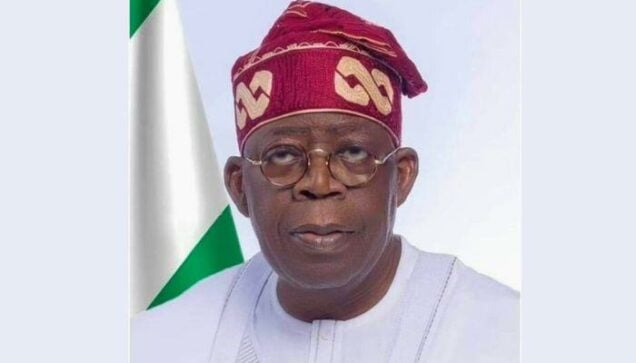
Femi Gbajabiamila
The most important thing is how to get there, the road map to that eventual programme that you are talking about, you know they are different ways they get to a destination and the way we want to get to our own roadmap differs radically from that of the ruling party.
I give you a case in point. For instance we have been talking, shouting at the top of the roof for years that the most important issue in Nigeria today is terrorism.
We have been talking about negotiation and how to approach negotiating with the terrorist, the president and the ruling party said they would never negotiate with ghosts and ruled out that completely but we kept on pushing it and that it is the best way to go.
Here, their road map to security is to fight Boko Haram at and now eventually they are also trying to negotiate but even the negotiation they don’t know how to do it.
They are not doing it properly that is why they choose the wrong people to negotiate with. For us, that is a good case in point.
Every party manifesto holds security and welfare as important, but how do you achieve it, that is where it lies.
Some political commentators are saying that ahead of the 2015 elections that the APC stands a chance, but it boils down to one condition that if they are able to choose a presidential candidate without rancour and one that all other candidates will support. To what extent is the APC ensuring that their primary elections are going to be free and fair?
You know in every contest whether it is sports, or politics there will be some kind of rivalry.
What we have is healthy rivalry and it is permissible in our constitution to have consensus around one person. Now we are going to explore that possibility.
If that does not work then we go to primaries, and I believe all the candidates are prepared to rally round whoever emerges.
Honourable, we have seen a lot of posters and billboards about your larviciding project. We found out that it was your initiation and brainchild. We want to know what exactly the project is all about and what inspired you to commence the project?
Well, the project is a health project and I think health is very fundamental to the well being of every Nigerian. You cannot have any economic or social development without being a healthy nation or people.
What we are doing right now is trying to larvicide the environment with respect to Malaria and other pest borne diseases is not something new. First of all, if you remember in the days of old we used to have health sanitisers in the North, in the East and other parts of Nigeria.
So when this came up, I thought it was a very good idea based on hygiene. The pests such as mosquitoes in the swamps and stagnant water are carriers of major diseases and if there is an opportunity for me to help reduce if not completely eradicate those diseases then I will be more than happy to get involved.
For me that is a direct impact. I am not the commissioner of health, neither am I special assistant health, or in charge of health in the local government; I am a legislator, pure and simple.
But in the Nigerian context, even though you are a legislator, you have the peoples mandate in the areas where you represent to do all you can to improve their welfare. Like I said earlier health is wealth. The benefits might not even be seen, when they sanitise your house and surroundings but they are there and they are very important.
So how has this project funded, you said you are a legislature, is it from personal commitment or other sources?
It is a personal commitment, I don’t have a budget for it, nobody has given me money and said, ‘Okay, for the purpose of this in your constituency utilise these funds’, no.
It is money which I have gathered together, from salaries, from whatever other sources I have, in essence personal commitment.
It is not a constituency project, even for that they do not give us the money for it. I am doing it out of conviction and belief that this is a much needed project for the community.
What milestones would you say have been achieved since the beginning of the project?
I believe from the feedback I received, people have been reacting positively, people are excited and they appreciate what is going on, from what I have seen and heard from field reports from those out there doing this work.
The people are asking a lot of questions. That is a good development and motivates me to do more. I believe so far so good.
Does the project create job opportunities in the community?
It creates job opportunities so far as the company handling the project which is Phosgard Fumigants Nigeria Limited are employing people to do the work, and the bigger they grow, the more the need to employ more people because they have the potential to expand and generate more employment.
There has been talk on how bad Ebola is, but malaria kills thousands of people every year. So what makes this approach different from some of the previous approaches by others trying to solve this problem?
Like I said earlier, this is a direct intervention from the grass-root level. We are taking this to the nooks and crannies of the local government, right at the grassroots where people are most affected.
It cuts across grassroot, middle class, upper middle class and most especially I think it touches every part of the community.
I think that it is different because it is a direct intervention, and there is no process where you have to apply. It is direct from me to the people. So there is no middleman or double middle man.
I think that the direct intervention nature of this is what is different from what has been done in the past.
Is this just restricted to Surulere alone or are you spreading this all across Lagos considering that other local governments may need pests eradicated in their locales?
First of all, we are taking baby steps right now. This is my constituency and they say charity begins at home, so you have to start from your base. You cannot ignore your base and go to another base.
Eventually the idea is for me to expand. I represent Surulere directly, but I have always said I represent the whole of Lagos. So what touches one touches the other.
For now I have started with Surulere, but we hope that we will touch other parts of Lagos eventually. You can call it a pilot project.
Is this going to add a boost to the APC manifesto?
Sure. There are some things you don’t even need to project or use as a campaign tool. There are some things that are visible to the eye and sell themselves for what they are.
Yes in politics you try to get mileage from whatever you are doing, which happens everywhere in the world.
That is what will inform the electorate’s decision based on what they see and hear.
Whether we are consciously making it a part of the APC manifesto is neither here nor there. Now if it comes in by subterraneous means all well and good.
What more can the community expect from you in the years ahead?
I will continue my legislative work; I am not going to rest until we achieve the near utopian place where we want to be that is happiness for the greatest number.