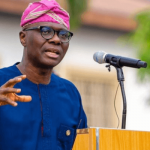
Omolara Svensson Busari, a leading advocate for youth and women inclusion in governance has identified socio-economic barriers such as high youth unemployment and underemployment as factors hindering young people and women participation meaningfully in politics.
While calling for urgent structural reforms to strengthen young people’s participation in Nigeria’s political system, she said systemic obstacles such as high nomination costs, campaign financing challenges, political intimidation, and limited confidence among youth and women should be addressed.
Busari stated this during the APC Youth in Politics Sensitisation 1.0 held in badan, Oyo State. The sensitisation programme, themed “Understanding Our Role in Active Politics,” was convened under the Women and Youth in Active Politics Sensitisation Movement, with support from the Akinyemi Akinpelu Foundation.
The event drew APC stakeholders, youth leaders, political educators, development partners, and aspiring young politicians for intensive discussions on political participation, civic responsibility, and leadership development.

In her keynote address, Busari expressed worry over persistent underrepresentation of young people in governance despite Nigeria being one of the youngest countries in the world, citing recent demographic statistics.
According to her, half of Nigeria’s population is under 18, yet youth occupy barely 6.6% of elective seats nationwide. This underrepresentation undermines political innovation, accountability, and democratic renewal.
The Not Too Young To Run constitutional amendment of 2018, which lowered age requirements for the House of Representatives and State Houses (from 30 to 25) and for the Presidency (from 40 to 35), she pointed out, has not translated into meaningful youth inclusion.
“Reducing age requirements was only the first step. The political system still keeps the youth at the margins through expensive nomination forms, party gatekeeping, poor mentorship pipelines, and lack of financial support.
“How do you tell a young graduate who is struggling to survive to fund a political campaign? Until we fix the systemic issues, politics will continue to favour the wealthy, not the worthy,” she said.

Busari, a farmer, however, introduced practical solutions, including mentorship models, digital mobilisation strategies, coalition-building initiatives, and ready-to-use campaign tools such as three-year roadmaps, KPIs, small-scale budgets, and candidate incubator frameworks.
Describing the resource as a “starter pack for emerging young leaders, reinforcing the movement’s mission to train, mentor, fund, protect, and inspire youth political participation she noted “If young people fail to participate, decisions will continue to be made for them rather than by them. The future they desire must be built with their own hands,”.
Biliaminu Aderemi Ogundele, the former Executive Chairman of Ona Ara Local Government, also in his address, emphasised the importance of youth awareness and active participation in politics
He said, “Youth are the future of the nation. They outnumber all other population categories, yet too many remain unaware of their political roles. INEC defines youth as ages 18 to 35, and it is incorrect for people in their 40s or 50s to claim relevance in youth spaces.
“Young people are agents of change, a reservoir of fresh ideas, and vital mobilizers during elections. They are important for both the present and future of the nation. Unfortunately, many vibrant individuals who could provide good leadership have been sidelined.”
Ogundele further urged Government intervention: “The Constitution should be amended to create a part-time Youth Parliamentary House, which can serve as both an academy and a training ground for emerging leaders. This movement will go around the world. Youth are crucial to our present and future, but the government has not done enough to empower them.”
Rasheed Yinka Folarin, an APC Chieftain, who addressed the gathering, pinpointed the need to recognise genuine youth leadership saying that the “real youth leaders are not defined by age alone, they are agents of change, innovators, and mobilizers. The political system must support them, not suppress them.”