Every household in Nigeria has awakened to the reality of the prices of goods and services spiralling upwards at a troubling rate over the past months, coming on the back of inflationary trends. This is worsened by the struggling naira against other world currencies.
Consequently, the cost of living is rising in leaps and bounds, and more and more Nigerians are finding day by day that more and more basic needs are priced higher above their heads.
President Bola Ahmed Tinubu has tried to repair the economy by discharging the encumbrance of the fuel subsidy as well as artificial controls on the value of the naira. A move that has received economic applause, with experts saying both are worthy moves and would eventually yield good results. They, however, note that in light of these policy changes, things would get worse before they got better.
Read also: Tinubu welcomes Qatar investments initiatives in Nigeria

Meanwhile, thanks to President Tinubu for listening to the trade unions and acceding to their request and approval to extend the retirement age to 65 years or 40 years in service at the 2025 May Day celebration. The celebration also saw the Edo State governor increasing the minimum wage to N75,000. But sadly, about 20 state governors are under pressure for the non-implementation of the ₦70,000 minimum wage as of April. Is this not a shame since the signing of the Minimum Wage Act, 2024, into law?
Looking at the percentage of civil servants to Nigeria’s population, it is estimated that between 10 percent and 15 percent of Nigeria’s working population are civil servants, which means the majority of the workforce is employed in the private and informal sectors.
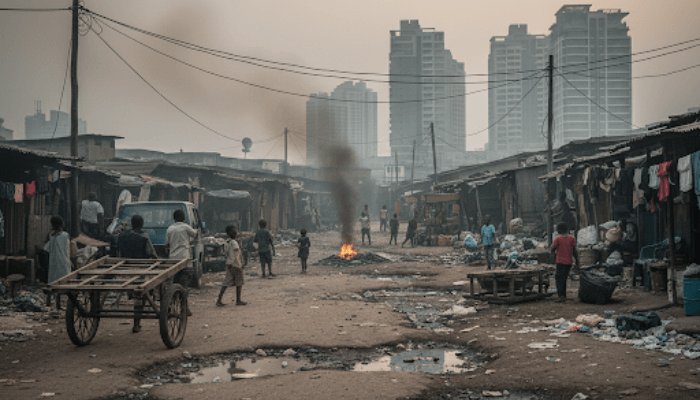
Overall, rising inflation, high interest rates, and naira depreciation have combined to push an additional 13 million Nigerians below the national poverty line this year, according to PricewaterhouseCoopers. The total number of Nigerians living below the poverty line is expected to increase to a projected 33.1 million. The World Bank estimates that 129 million Nigerians are living below the national poverty line, representing 56 per cent of the population, based on the 2024 Nigeria Development Update, which indicates a significant rise from 40.1 per in 2018.
For now, we know there have been deliberations among and between the federal government and other interest groups about means and measures to cushion the expected harsh effects of the policy decisions. There have likewise been some measures taken by the government along these lines and evaluations here and there about their effectiveness.
“Looking at the percentage of civil servants to Nigeria’s population, it is estimated that between 10 percent and 15 percent of Nigeria’s working population are civil servants, which means the majority of the workforce is employed in the private and informal sectors.”

Most impacted by these economic challenges are the nation’s teeming poor, and their most basic and threatened need is food. As is often said, when food is taken out of the poverty equation, the burden gets lighter.
Usually, in Nigeria, food production and distribution would be considered low-hanging fruit with quick fixes, as we are blessed with abundant arable land and able human resources.
Regrettably, food cultivation and distribution here are encumbered by unusual challenges. The contention and crisis between farmers and herders across the country, which has taken a dangerous dimension in recent times in the Benue-Plateau belt, for land to practice their vocations is one of these.
Perhaps even more challenging is the onslaught of the Islamic State West Africa Province (ISWAP), Boko Haram and varied terrorists in the North East, who frequently attack farm settlements, killing, maiming, kidnapping and looting produce and other properties, and forcing farmers to flee their land.
Many of the farmers end up in Internally Displaced Persons (IDPs) camps while their farms lie fallow and unproductive, and the food shortages so caused further shoot up prices.
Read also: Coastal road: Land prices jump, new investment opportunities open
Then again, there is the outmoded practice of one-season farming in Nigeria that grossly undermines food production capacity and prices. This is because farmers in Nigeria have been impacted by the lack of access to water to the extent that there is no real enabling environment for sustainable all-year-round agricultural production, Ibrahim Kabiru, national president, All Farmers Association of Nigeria, once noted.
Despite the push for increased local food production, most dams across the country are still dysfunctional and irrigation schemes are not working. The challenge with the dams in most cases is that their outlets have been clogged and need to be desalted. As a result, most farmers rely on one-season rain-fed agriculture. The farmers will be better served by improvement in the utilisation of existing dams than even building new ones, Kabiru said.
Nigeria has a total of 264 dams with a combined storage capacity of 33 BCM of water for multipurpose uses – 210 are owned by the Federal Government, 34 by the states, and 20 are owned by private organisations, according to the Federal Ministry of Water Resources.
Given the above, it would appear that enhanced food cultivation locally is a low-hanging fruit that can and should be speedily harnessed. What is missing appears to be a firm resolve to rise up to the challenge of conflict resolution regarding the farmer-herder crisis.
We need to resolve the lingering life- and resource-threatening insurgency in the north to allow farmers back to productive activities. It is said that a new and workable strategy has been mapped out for this, but we have not seen it.
We further need to clear the outlets of the nation’s dams of the blockage and other impediments that distort year-round irrigation on our farms.