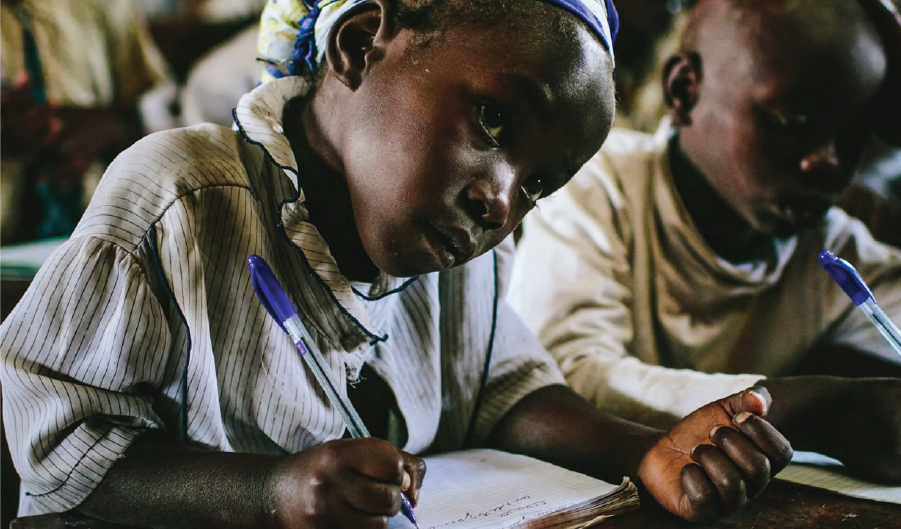
Technology promises to make learning easier, faster, and more flexible. For millions, it has. But for many others like Mary, technology can also deepen exclusion. Digital education is not a neutral force; rather, it operates within social, economic, and cultural realities that shape who benefits and who is left behind. Mary will not be relegated to a mere statistic or a footnote; she is a young woman navigating the promise and pitfalls of distance education in Nigeria. And her journey is anything but distant.
Mary, a young woman from northern Nigeria, moved to the south as a domestic worker. She dreamt of breaking the cycle of poverty and enrolled in a distance-learning programme at a Nigerian university. It sounded perfect: study at her convenience while working. But from the moment she passed her computer-based entrance exam, the system began to fail her.
The institution’s registration process was a hybrid of online and offline chaos. Mary spent hours at the university, waiting in long queues. When she needed to go online, she relied on cybercafés, which were often costly and time-consuming. Her guardians, already stretched thin, grew frustrated. The idea of “learning at your own pace” had vanished.
Her guardians bought her a second-hand laptop, unaware that the real challenge was only beginning. The laptop needed constant internet access, which was both expensive and unstable. It was becoming clear that distance learning was distance in name only. Soon, Mary asked for a smartphone because her laptop was not particularly useful for tutorials organised by classmates on WhatsApp. Her guardians, already stretched, bought one on credit. Then came the cost of a power bank because electricity supply was erratic.

Four weeks into the semester, students were told to prepare for exams. The academic calendar had been compressed; classes had been rushed because the institution wanted to graduate her set quickly and admit another to boost revenue.
E-tutors and facilitators were largely absent. Materials were dumped online with minimal guidance. Mary struggled to keep up, often studying late into the night using her phone’s torchlight. Her guardians had to pay for printed materials because reading hundreds of pages on a small screen was untenable. The cost of tutorials increased, as did reliance on peer-to-peer sessions.
By the end of the year, Mary had failed four courses and barely passed four others. She was overwhelmed by the volume of abstract and technical content. Her domestic responsibilities suffered, and tensions at home escalated. She felt unsupported, her guardians felt burdened, and the institution remained indifferent.
Mary’s experience is emblematic of a broader crisis in digital education and why dropout rates for distance learning globally are unsustainably high. The global celebration of remote learning during the COVID-19 pandemic masked the deep structural challenges in countries like Nigeria. The assumption that digital learning is simply about uploading content and providing devices is dangerously simplistic. Too often, the impression is created that all that is involved in digital learning is to provide computers in CBT halls and load up content online. Digital or distance learning does not occur in abstraction.
Distance learning is not just a technological shift but a pedagogical transformation. It demands rethinking how content is designed, how instruction is delivered, and how learners are supported. Online facilitation requires specialised skills that do not automatically transfer from traditional classrooms. Learners, especially those from marginalised backgrounds, need robust support systems.

Other issues that must be carefully considered and planned for include technical readiness, level of technology access, digital competency of learners and facilitators, the economic situation of learners, delivery modes, safety, security, and cultural context. These issues, which are glossed over in the Nigerian context, affect quality of outcomes in very fundamental ways. In Mary’s case, the lack of planning around these elements led to academic failure, emotional distress, and financial strain.
Technology, for all its promise, is a double-edged sword. It can democratise access or further deepen inequality. The mere availability of devices and platforms does not guarantee accessibility. For the poor, the disabled, and those in remote areas, digital education can be exclusionary.
This, however, is not just a Nigerian problem but a global one. The Nigerian context demands particular sensitivity. Policies must be grounded in local realities, not imported trends. A cost-effective, context-aware, and personalised model of technology-driven education is urgently needed.
Nigeria cannot afford to pursue trends or implement policies that do not respond to its national vision and realities, especially when it concerns the most vulnerable in society. As the country continues to invest in digital infrastructure, it must also invest in empathy, design, and support. Technology should serve people and not the other way round. Let it not be said that a digital future was built where only the privileged could thrive. Let it be said that as a country, we listened, learned, and built something better for Mary, and for millions like her.