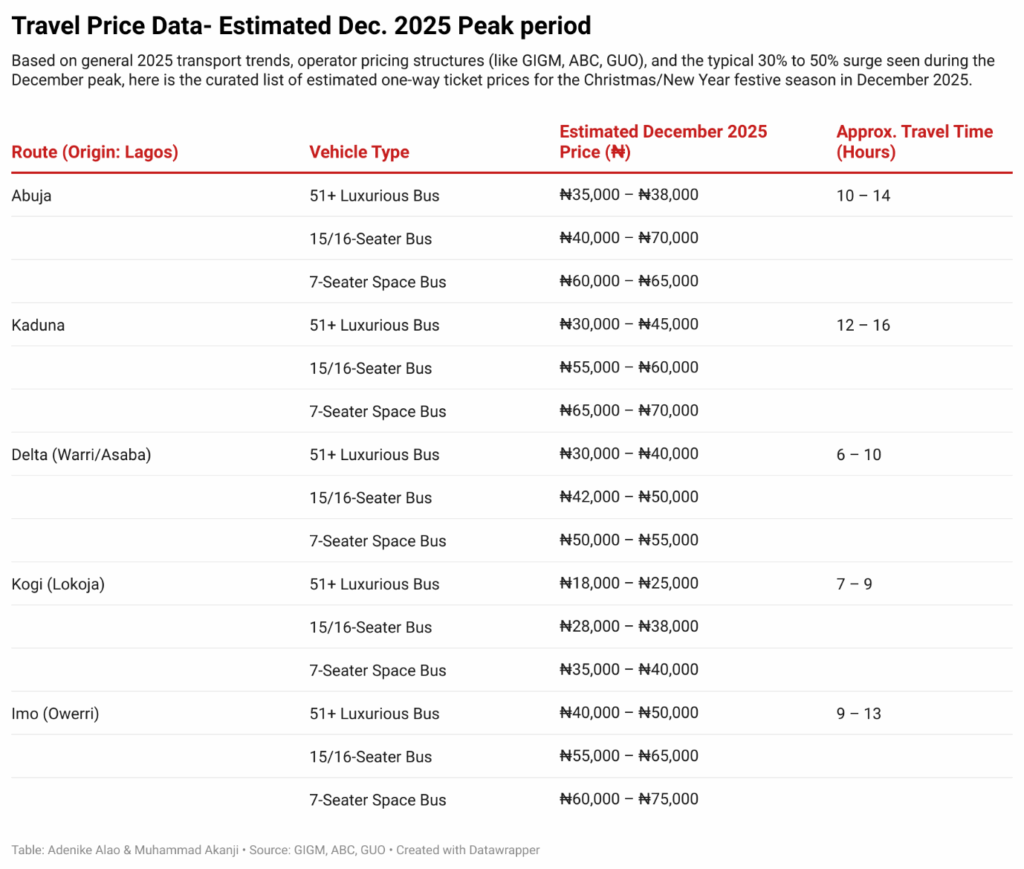
The December travel rush feels familiar, but this year, the excitement is mixed with caution. Travelers are paying closer attention to headlines and reports from major highways, and those concerns are quietly influencing how they plan their trips. Many are choosing to leave earlier in the day, avoid certain routes altogether, or set aside more money for fares that might change as the holiday rush approaches. Bus companies sense the mood and are preparing for slower trips, extra checks, and the possibility of long detours on routes deemed risky.
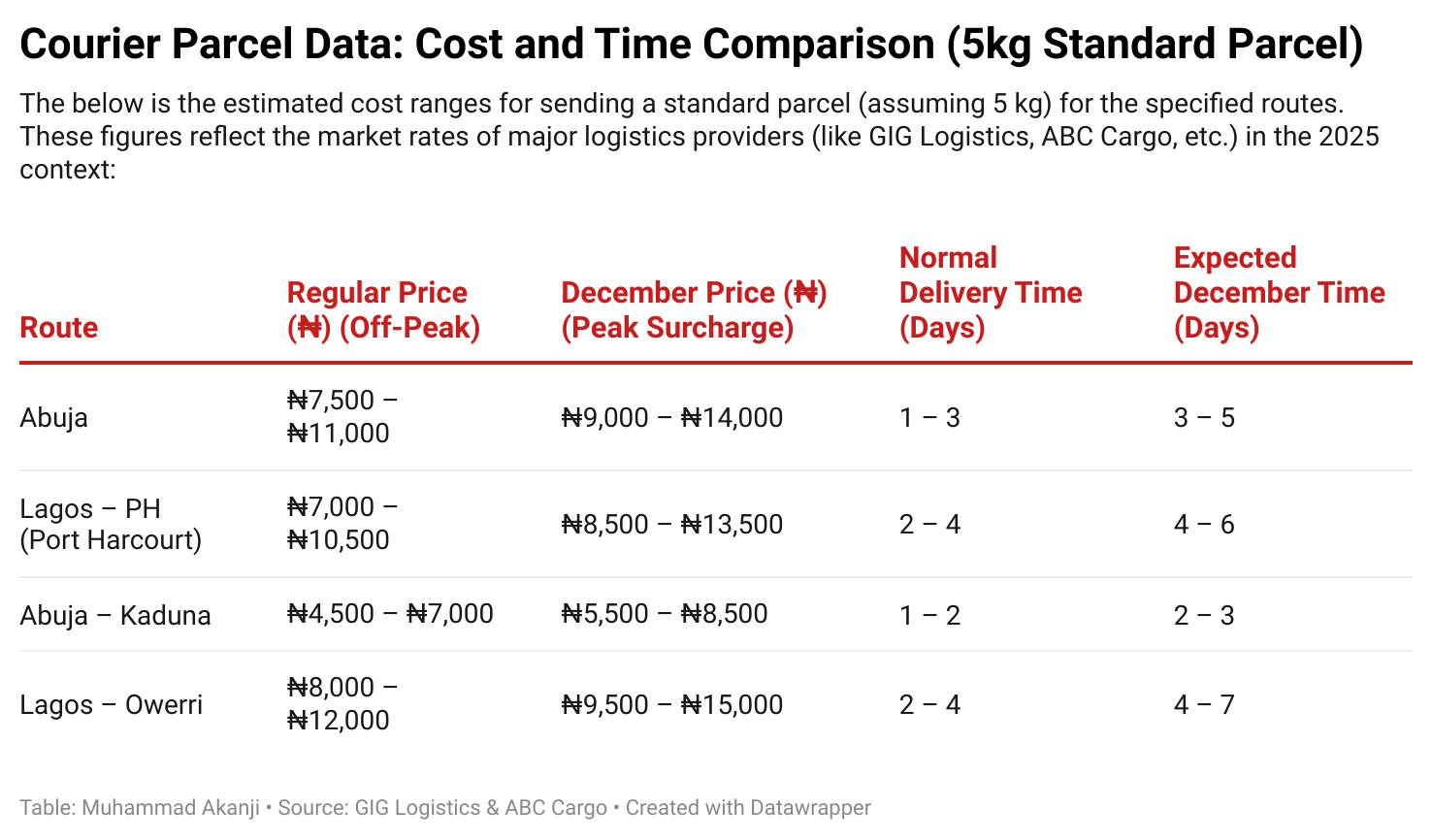
Beyond passenger travel, couriers are preparing for a surge in parcel deliveries. E-commerce orders and year-end business consignments are expected to flood transportation networks, adding extra pressure to already stretched services.
The government has attempted to cushion travel fare hikes in past festive seasons. Measures such as a 50% fare reduction on interstate travel and free train rides were introduced to ease the burden on citizens. Still, the sheer demand for movement keeps transport networks stretched. The demand for movement is certain; families will reunite, businesses will close their books, and celebrations will go on. What remains uncertain is how the state of Nigeria’s roads will shape the experience, determining not only how much people pay, but how safely and smoothly they reach their destinations.

Uncertainty reshapes travel schedules
Bus companies across the country are quietly adjusting their plans as reports from major corridors shape expectations for the December rush. Operators say they are reviewing how their drivers navigate the Abuja-Kaduna stretch, the Lagos-Benin axis, and routes feeding into the South East, where holiday traffic climbs sharply. These decisions influence everything from when buses leave the parks to how many trips can safely run in a single day.
Some companies are preparing for reduced night movement, especially on highways where travellers have expressed concern in recent months. Fewer late departures place more pressure on daytime schedules, and passengers often respond by booking earlier than they usually would. Detours chosen to avoid rough sections of the road also lengthen travel time and increase fuel consumption, which quietly shape the final fare.
Travel logistics agencies are arranging for security personnel on major routes to reassure passengers. While this step addresses safety concerns, it also adds unpredictability to travel schedules. Commuters must plan for potential delays from escorts, checkpoints, or rerouted routes, which can be especially challenging for those hoping to travel on fixed dates.
Ride-hailing services inside major cities face their own December strain. Drivers become selective about the neighbourhoods they enter, narrowing options during the busiest weeks. These patterns suggest a travel season shaped as much by caution and timing as by demand.

Deliveries on edge
Courier companies are preparing for a heavier load than usual as the December rush gathers pace, and early activity already reflects how busy the season could be. Corporate hampers are moving out, gift parcels are being booked for interstate trips, and e-commerce merchants are pushing final sales before the year ends. These patterns typically strain delivery networks, and this year they overlap with concerns on several interstate routes, according to Mordor Intelligence’s Nigeria Courier, Express, and Parcel (NCEP) market report, which projects steady growth driven by festive demand.
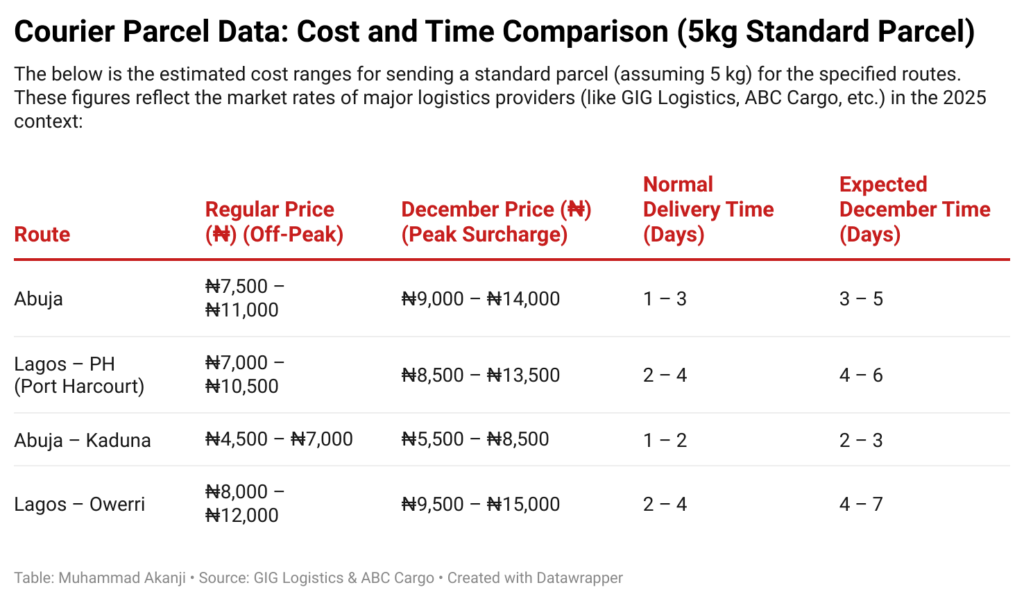
Drivers covering corridors such as North Central and South East may report slower movement at different times due to diversions, checkpoints, or sections where they prefer to reduce speed. These conditions can stretch delivery windows and may limit the number of same-day trips that are practical during the busiest weeks. Courier firms are reviewing a range of options, including high-risk route surcharges, and a few are discussing whether same-day services on specific corridors should be paused if traffic and safety concerns intensify.
Inside cities, motorbike dispatch riders face their own pressures. Heavy traffic disrupts delivery schedules, and riders report rising theft and parcel-snatching incidents during the holiday period. Many now avoid late-evening drop-offs, which means customers wait longer for items that usually move quickly.
These changes suggest a December where individuals and businesses may encounter slower deliveries or higher charges as couriers adjust to the realities on Nigeria’s roads.
Roads Under Watch
Travellers, transport operators, and courier firms are bracing for a December marked by heavy demand and heightened caution. Early bookings already point to crowded buses and rising fares, while concerns about highway insecurity are shaping how people plan their journeys.
Passengers may need to book earlier, avoid night travel, and budget slightly higher for road trips. Transport companies are considering stronger screening, partnerships with local security outfits, and timetable adjustments to keep movement safer. Courier firms, facing a surge in hampers, e-commerce parcels, and interstate deliveries, are leaning on tracking, insurance, and in some cases secured convoys for high-risk zones.
Inside cities, dispatch riders are navigating traffic gridlock and rising theft risks, often avoiding late-evening drop-offs to reduce exposure. Policymakers, meanwhile, have a narrow window to manage hot spots, improve patrol visibility, and clamp down on illegal checkpoints before the season peaks.
If insecurity continues into December, its effects could extend into the first quarter of 2026, affecting travel prices and logistics planning well past the holiday season.