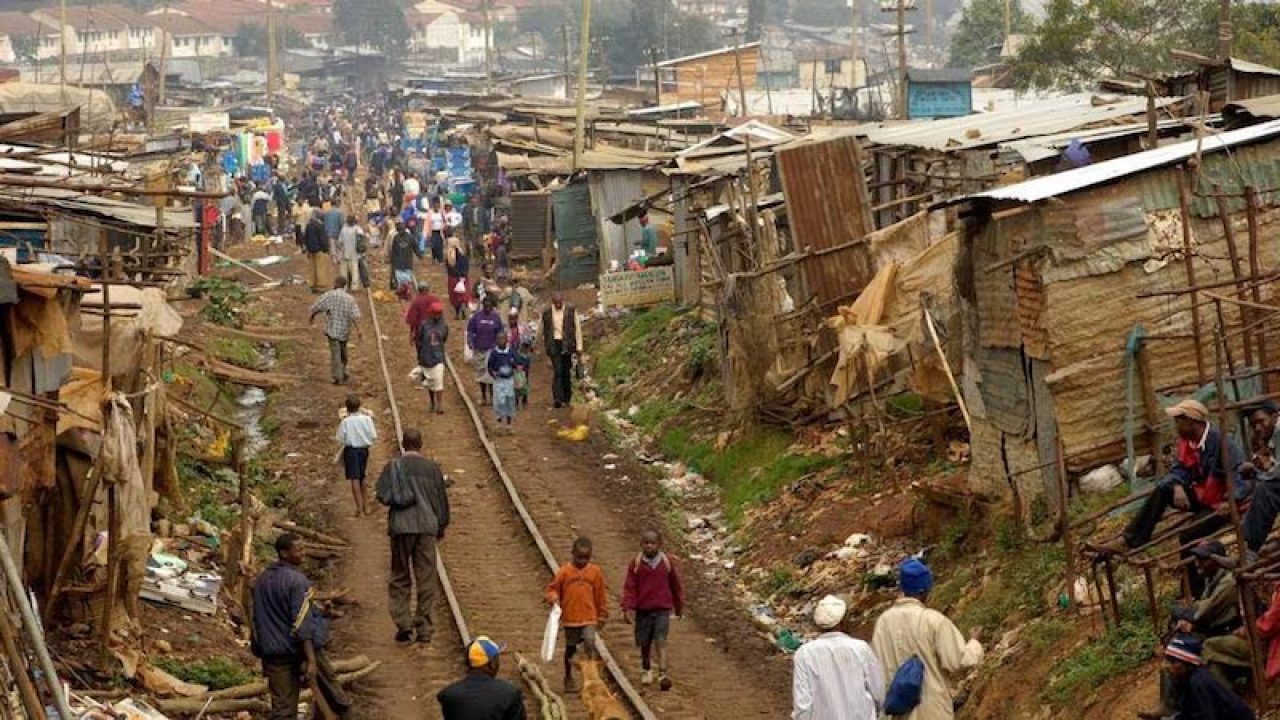
In Nigeria’s villages and farmlands, where red dust rises from rutted roads and children walk miles to reach half-finished schools, poverty is no longer just a statistic—it is a system. Today, 75.5% of rural Nigerians live below the poverty line. That figure is more than a national embarrassment; it is a developmental alarm bell. The vast majority of Nigeria’s population—approximately 45.72% as of 2023 being the most recent (trading economics)—resides in these rural areas. Their deprivation is not peripheral to growth; it is the economy’s broken spine.
Rural poverty in Nigeria is not a recent affliction. It is the legacy of decades of policy neglect, short-term thinking, and systemic dysfunction. Agriculture, the primary livelihood of most rural dwellers, remains trapped in subsistence mode. Productivity is low, techniques are outdated, and access to irrigation, credit, and modern equipment is minimal. “We’ve built an entire economy on the backs of rural people, but never built anything for them.”
Compounding the crisis is inflation. Rising food prices and a collapsing currency have decimated purchasing power. The rural poor are especially vulnerable, spending the bulk of their income on food. COVID-19 worsened the situation, disrupting trade routes and supply chains. Now insecurity—banditry, kidnapping, and farmer-herder clashes—has made farming itself a dangerous venture.
Add to this a lack of infrastructure: roads that disappear in rainy seasons, electricity grids that never arrive, and mobile networks that blink in and out like distant stars. Poor storage facilities cause over 40% of harvested crops to spoil before they reach market. The consequence is a rural economy that works harder, but earns less.

Yet the response from the Nigerian state has been curiously insufficient. Budgets have been allocated, but rarely implemented. “We don’t have a spending problem—we have an execution crisis,” says Dr. Adeosun. Funds for rural development are often misallocated, diverted, or consumed by bureaucratic overhead. Many rural infrastructure projects are abandoned midstream. Flagship programmes like the Anchor Borrowers’ Scheme have been marred by mismanagement and politicisation.
International donor interventions, once seen as a stopgap, have yielded mixed results. Programmes like FADAMA helped improve irrigation and farmer cooperatives. Microfinance schemes spurred pockets of rural entrepreneurship. But sustainability remains elusive. Too often, these efforts collapse when donor funds dry up. Without local ownership, even the best-designed projects unravel.
One of the most glaring gaps lies in essential services. Rural education is a shadow of its urban counterpart. Schools are few and far between, teachers are underpaid, and learning materials are absent. Girl-child enrolment drops dramatically after puberty, driven by early marriages and cultural expectations. Healthcare is equally dire—clinics without doctors, medicine, or even electricity. Traditional healers fill the gap, but not always the need.
Financial exclusion is another frontier. Banks are reluctant to establish branches in areas they deem unprofitable. Collateral is scarce, and mobile money has yet to achieve meaningful penetration. Without finance, rural entrepreneurs cannot scale. Farmers remain trapped in low-risk, low-return cycles.
Rural-to-urban migration, this has been a big contemporary trend as it continues to shift population concentration thereby leaving the rural areas to further decline in any developmental potential. Individuals who push for these migrations are driven by various factors, including the search for better employment, business opportunities, and education. In Nigeria, rural-urban migration has seen a significant increase over the years, with urban areas experiencing a rise in population from 16% in 1960 to an estimated 49% in 2019 (medcrave). This time span indicates the long overdue neglect of the rural areas.

Despite this bleak terrain, seeds of hope exist. Across the country, grassroots models have quietly delivered results. Cooperative farming groups like RIFAN allow farmers to pool resources and negotiate better prices. Community microfinance schemes offer low-interest loans based on trust and group accountability. Agro-processing hubs—simple plants turning cassava into garri, or rice into packaged goods—create jobs and reduce waste.
The problem is scale. These models remain localised and unsupported. Government could change that. Grants for cooperatives, incentives for private sector partnerships, and policies to strengthen market access would help replicate success. But support must be smart—not another top-down scheme, but a scaffold for bottom-up growth.
The dimensions of rural poverty are also gendered and generational. Women, who form the backbone of agricultural labour, own less than 10% of farmland. They face discrimination in access to finance, extension services, and inputs. Youth, disillusioned by limited opportunity, flock to cities in search of jobs that rarely materialise. Rural-urban migration has turned villages into labour-starved settlements and cities into overcrowded slums.
Policy must confront these realities head-on. Land reform is essential to empower women economically. Microfinance should be targeted, not generic, with products tailored to rural female entrepreneurs. For youth, the solution lies not in handouts but in skills. Agri-tech, drone farming, and e-extension services could rebrand agriculture as a tech-savvy and profitable pursuit.
The path forward requires coherence, commitment, and courage. As Dr. Adeosun notes, “Tackling rural poverty isn’t charity—it’s economic strategy.” A comprehensive rural agenda would include mechanised agriculture, road and power infrastructure, rural broadband, and transparent budgeting. Conditional cash transfers can incentivise school attendance. Telemedicine can bring healthcare to remote areas. Agent banking and digital wallets can reach the unbanked.
Most of all, governance must improve. Projects should be tied to measurable outcomes. Monitoring must be independent. Corruption must be prosecuted. Without accountability, even the best plans will rot like unsold tomatoes in a sun-baked market stall.
If Nigeria wants to grow sustainably, it must grow inclusively. That means turning its face—not its back—toward the village. Rural Nigerians are not just statistics. They are farmers, artisans, traders, and teachers. They are also the future.
Neglecting them is no longer an option. The real road to development begins in the places where Nigeria’s roads too often end.