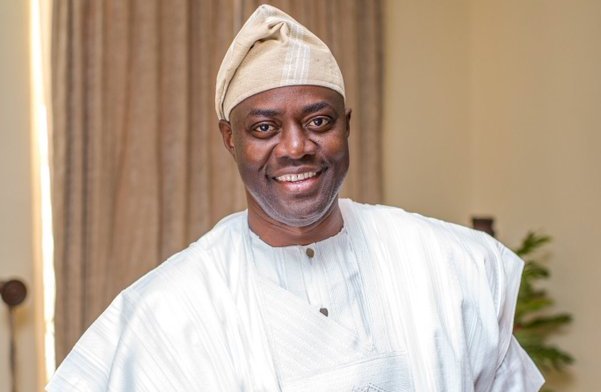
It is a commendable act of bravery that Oyo state governor, Seyi Makinde, publicly and fully declared his assets at a time when most public officials, including the president and vice president, hide behind the law to avoid making their full asset declaration public.
The existing law only requires government officials to file a written declaration of their assets to the Code of Conduct Bureau (CCB). It doesn’t require them to make it public. However, with the freedom of information law, it is expected that interested individuals, the media and civil society organisations can request for the asset declarations of government official, interrogate them and hold them accountable in and out of office. But in reality, the CCB has stoutly refused to respond to legitimate requests for declaration of assets of public officials except in cases of political witch-hunts.
This gives room for politicians to circumvent the law by making anticipatory and false declarations or even not making any at all. Of course, except in cases of witch-hunt, the CCB lacks the capacity to verify the claims of public officials; the media and civil society that should ordinarily verify these declarations are not allowed to. This defeats the very essence of declaration of assets by public officials. Is it any wonder then that all corruption cases that have come to light involving public officials came out only because they have fallen out of favour politically?
Of course, public declaration of assets is one of the safeguards against corruption. That is why the World Bank recommends that all countries embrace it to deter officials from perpetrating corruption. In countries where public declaration of assets is compulsory, there is a noticeable decline in cases of public sector corruption.

With the exception of former president Umaru Musa Yar’adua and Ekiti state governor, Kayode Fayemi who declared his assets after leaving office, no public official has made full public declaration of his/her assets. Although president Buhari promised to publicly declare his assets in 2015, when the time came, he and his vice president, Yemi Osinbajo demurred and instead released only snippets from their declaration forms making verification of their claims difficult. The president hypocritically refers all those asking for full public declaration to the CCB, where they are certain to meet a brick wall.
Makinde however, has chosen to thread the path of honour and transparency by going beyond the stipulations of the CCB law – and that is why he must be commended. Although the law allows public officials to make their declarations within three months of assumption of office, he submitted his before assuming office. By publicly declaring his assets, he has put himself in the public eye, making it difficult for him to get away with cases of conflict of interest. His companies are now known and difficult to benefit from contracts from the Oyo state government without public outcry.
This is why Nigerians haranguing him over the value of his declared assets miss the point. Poverty is not a virtue, as we have seen in the last five years. No law prevents the rich or successful from vying for public office. Besides, only very few public officials since 1999 have publicly declared their assets. The governor therefore deserves commendation for threading that path of honour and transparency. What is more, those who have issues with the value or veracity of his declared assets are free to interrogate his claims now and when he leaves office.
Truth is, the asset declaration law as it is in Nigeria does not serve any purpose because it does not deter officials from engaging in corruption and does not allow for leaders to be held accountable. Government officials continue to engage in open and blatant corruption, accumulation of wealth from state coffers and they often go scot free except in cases where they fall out of favour politically.
If the government is really interested in curbing corruption and enthroning accountability in governance, then it must amend the law to make public declaration of assets compulsory. Until then, public officials should emulate the Makinde example by voluntarily making their asset declarations public to promote good governance and accountability.

Christopher Akor