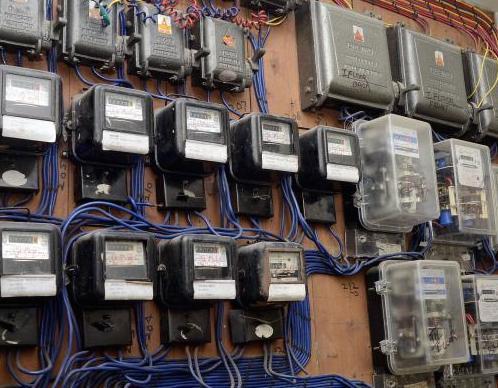
The Meter Reading, Billing, Cash Collection and Credit Management for Electricity Supplies Regulations 2007 requires electricity distribution Companies (DisCos) to bill customers on the actual reading of the Meters on the customer’s premises and base an unmetered customer’s bill on estimated energy consumption in accordance with a method approved by the Nigerian Electricity Regulatory Commission (NERC). Consequently in 2012, NERC issued the Methodology for Estimated Billing Regulations to provide the method to be adopted by DisCos in the estimation of electricity bills. By that Estimated Billing Regulation, the three (3) categories of customers allowed to be estimated are: those with faulty meters; those who have meters, but meter readings could not be obtained; and those customers without meters.
Ideally, by the NERC Regulation for Connection and Disconnection Procedure for Electricity Services, connection of a customer to electricity supply should be upon the installation of an appropriate meter. Unfortunately, there were challenges for the DisCos to comply with this requirement which necessitated NERC’s order in May 2013, mandating the implementation of the Credit Advance Payment for Metering Implementation (CAPMI) scheme to bridge the metering gap. Unfortunately, the initiative which allowed customers pay for meters and get refunded via deduction of the amount paid from the energy bills was terminated at the last quarter of 2016. The Metering gap continued to increase due to the non-cost reflective tariff, which hampered the ability of the Discos to fulfill their metering obligations. Another major reason for the huge metering gap was due to the difficulty faced by DisCos in funding their metering plans (especially through debt instruments) under a regulated (capped) CAPEX budget. The ability of the Investors and the DisCos to take on more debt has been largely constrained by their prolonged exposure from acquisition and working capital loans, respectively.
In view of this, NERC issued a Meter Asset Provider Regulations 2018 mandating all DisCos to engage the services of Meter Asset Providers (MAPs) (persons/entities granted permits by NERC to finance, procure, supply, install, maintain and replace meters) to close the metering gap currently in existence. The project was to be implemented and completed within a period of three (3) years after the completion of the MAP procurement process. To ensure compliance with the scheme, NERC was required to issue an Order within 120 days of the commencement of the MAP Regulations, which will aim at capping the bills of unmetered customers to address the issue of estimated billing.
NERC issued a Consultation Paper on the Capping of Estimated Billing for Unmetered Electricity Customers on November 19, 2018 for review and deliberations amongst key stakeholders within the Industry and in the same vein proposed three (3) methods for capping estimated bills as follows:

- Method 1 involved capping estimated bills based on the projected average monthly consumption of each tariff class in the MYTO model;
- Method 2 involved the use of the average energy consumption based on information from prepaid vending in each tariff class in a franchise area to set the cap for the estimated billing of unmetered customers in that tariff class; and
- Method 3 involved the use of the average energy consumption based on information from prepaid vending in each tariff class within a Business Unit of a Disco, to set the cap for estimated billing of unmetered customers within that Business Unit
On February 24, 2020, NERC issued an Order on the Capping of Estimated Bills in the Nigerian Electricity Supply Industry (the Order). The Order specifically focuses on customers on the R2 and C1 categories. All customers have been categorised based on the quantum of electricity consumed by such customer and are billed according to their categories. These categories include:
- Residential: This category involves premises used for residential purposes only and are further classified as R1, R2, R3 and R4, with R1 being the lowest consuming customer of less than 50kWh per month, R3 and R4 being the low voltage and high voltage Maximum Demand (MD) customers.
- Commercial: This category involves premises for purposes other than residential and are further classified as C1, C2 and C3 with C1 being the lowest consuming customer and C2 and C3 being the low voltage and high voltage MD customers
- Industrial: This category involves premises used for manufacturing and further classified as D1, D2 and D3
- Special Customer: Involves premises for religious purposes, government and teaching hospitals, government research institutions, education institutions etc. this category is further classified as A1, A2 and A3.
- Streetlights known as S1.
The Order’s focus on R2 and C1 customers is explained by NERC’s assumption of compliance with their past directives mandating DisCos to meter all MD customers within their network and the fresh directives within the Order that all customers on higher tariff classes be metered by April 30, 2020.
The key highlights of the Order are as follows:
- The Order repealed the Methodology for Estimated Billing Regulations, since the Order now prescribes new methodology.
- The Order adopted method 3 proposed in the initial Consultation Paper in generating the cap for each of the DisCos.
What this means in simple language is that each DisCo cannot bill an unmetered customer within a particular franchise area beyond the stipulated cap. Taking Yola Electricity Distribution Plc as an example, the Order puts the electricity consumption cap on customers within the R2 single phase category within Bulumkutu Business Unit at 181/kWh. To calculate the maximum monthly estimated bill Mr. X, an unmetered R2S customer who lives within Bulumkutu Business Unit can be charged, Yola DisCo will multiply same by the tariff per kWh for the R2S consumers which is N23.25. Hence, Yola DisCo cannot bill Mr. X more than 181 X N23.25 = N4,208.25.

- The Order is to take effect from February 20, 2020
- DisCos are mandated to meter all A1 customers by April 30, 2020 and customers in R1 category are not to be billed above N200 per month
- Customers on higher tariff not metered by the DisCos by April 30, 2020 are exempted from paying on estimated bill.
- Any customer whose current estimated bill is below the cap proposed by the Order must remain so without any increase
- In the case of faulty meters that require repairs, the Disco is to replace within two (2) working days and the bill to apply for the specified period is an average of the customer’s last three (3) months vending or billing (in the case of a prepaid or post-paid meter respectively).
- Any customer that refuses to be metered must be disconnected from electricity supply.
Part of the objectives of the Order have been stated to include improvement of customer satisfaction and reduction of high collection losses in the NESI. However, whether the Order would serve or mar the intended purpose is another matter for consideration.
Although, the intention behind the Order is admirable as it is considered as a means to expedite metering of customers which has been long overdue, but the question is how realistically fast can the DisCos meter these customers especially considering the financial and change in fiscal policy challenges that have hindered the smooth implementation of the MAP Scheme. Considering that most of the customers within the DisCos’ network are the affected R2 and C1 customers, it simply means that the cap will have a huge impact on the revenue of the DisCos. The first port of call is the fairness or otherwise of the method adopted in generating the capped estimation (based on average vending which cannot be a true reflection of the consumption of an estimated customer) and the set effective date.
If the DisCos are unable to bill for the actual electricity consumed, which in actual fact will push the commercial losses of the DisCos higher, they will definitely be unable to fulfil their financial obligations towards the Market participants especially the NBET/GenCo, TCN and the Market Operator. What may signal further concerns for the implementation of this Order is the possibility of load rejections by the DisCos as a way of reducing their potential Market debts and frequent system collapse which will be caused by the rise in system voltage.
The above notwithstanding, it is important for DisCos to adopt measures that will assist in fast tracking the implementation of the MAP Scheme as a way to cushioning the potential negative effects the Order may have on their business operations and in fact remedy the perceived financial injustice that estimated billing provokes.
Kofo Olokun-Olawoyin
Kofo is the Author of the fast selling book “The Nigerian Electricity Supply Industry- Post Privatisation Realities, Trends and Challenges”. She can be reached on ko@kofoolawoyin.com or kofo.olokunolawoyin@gmail.com