As far back as 1932, an American president by name Franklin D. Roosevelt used the phrase “the fortune at the base of the pyramid”. He was addressing his countrymen on radio about what he called the forgotten man. According to Roosevelt,”these unhappy times call for the building of plans that rest upon the forgotten, the unorganized but the indispensable units of economic power…that build from the bottom up and not from the top down; that put their faith once more in the forgotten man at the bottom of the economic pyramid.”
By this the President called on his compatriots in the building of what is today the world’s greatest democracy, to make their national plans based on the needs of the common man at the bottom of the economic pyramid. A learned journal article by C.K. Prahalad and Stuart L.Hart, two distinguished professors at the Universities of Michigan and North Carolina respectively, gave the idea a global outlook. It was titled “The Fortune at the bottom of the pyramid” and published in 2002. Prahalad eventually wrote his bestseller on the same subject, two years later.
We can therefore see very clearly that great leaders and thinkers have long since recognized the place of the poor marginalized members of society; the bottom 4 billion people of the world at the base of the pyramid, in the construction and, if not properly managed, the destruction of society.
The fortune at the base of the pyramid later became the rave thing in graduate schools of management. Multinational corporations, with the requisite capital and technology, were encouraged to explore the vast opportunities thrown open to them by the presence of large populations of poor people in many developing countries, and even beyond. Many entrepreneurial achievements, including the massive growth in microfinancing, championed by Grameen Bank, are traceable, in large part, to the discovery of the opportunities and fortune at the base of our societal pyramid.

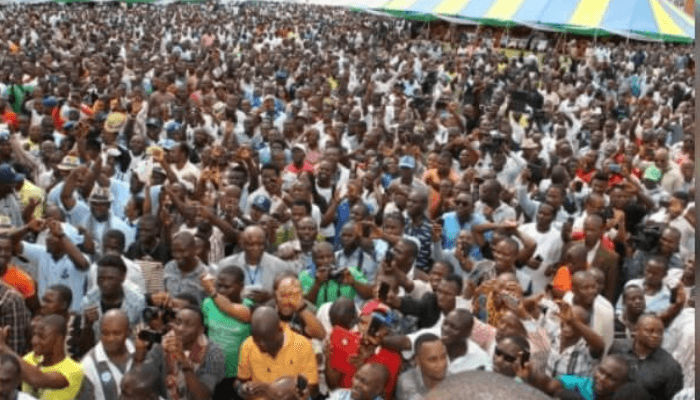
The base of the societal pyramid is actually the informal sector – that largely unorganized, overly boisterous and hardly bankable part of the economy, often regarded as the underground or illegal economy. Unfortunately, for some countries like Nigeria, which have squandered their growth and development opportunities, this sector is actually the dominant economy, with well over half of their population domiciled in it.
Nigeria is actually a large pyramid, with a massive bottom that literally protrudes and projects menacingly across her borders to the eternal intimidation of her less endowed but more purposeful neighbours. These neighbours must be feeling like one seated next to an oversized co-passenger in the economy class of an airplane. They must, from time to time, deal with the negative consequences or what economists call externality of abundant flesh seeking refuge in the neighbour’s territory as the airplane rocks in the clouds.
Evidently, Nigeria’s standards of leadership would do with some tonic, having been declining since independence. In many states since the return to democracy, each succeeding governor has been worse than the one before him. It will therefore be unfair to Nigerians to say that any of its past governments earned the grade of A. President Obasanjo may have done his best but he frittered away the opportunity to write his name in gold through the power sector. He had all the support to succeed. And now we have a change, which could pass for a still born if the current economic summit ends and nothing changes. There is hardly anyone who thinks that the economy is working except people in the Ministries of Finance and National Planning. And labour has just announced officially that the economy is on stop. On top of that private cattle farmers are allowed to destroy other farmers’ crops across the country while government watches as though it is part of the plan of change.
The consequence of the current economic state is that the informal sector, the base of the pyramid, has been growing like wild fire. Every Nigerian sacked by Boko Haram joins the pyramid at the bottom. Every farmer whose home and crops are ravaged by cows and cowboys becomes a destitute and joins the pyramid, also at the bottom. It is said that the Fulani herdsmen who lead the cattle to ravage and destroy other farmers’ goods do not own the cows. The cows are said to usually belong to wealthy people who can afford to buy land for their cattle farming. This is what cattle farmers in the rest of the world do.
Today, the fortune at the base of the pyramid looks more like a misfortune. The original inhabitants of the bottom of the pyramid, those targeted by President Roosevelt and Prahalad, were not destitutes. They were also not refugees. They were normal hardworking people engaged in normal economic activity. That is why the technical language for them is the economically active people. These are people with mind and brains like any other person and they are busy working out their existence. Every wise nation or government (read self-preserving) should focus on the sector to make it part of the engine of growth it is meant to be.

At the moment, most poor people in Nigeria are no longer economically active. They are mostly refugees who have no place to hide. Refugees are certainly not economically active. All the people displaced by the disasters we are experiencing are rendered economically impotent. How does one begin to seek a livelihood when one does not have a place of abode? This pyramid does not appear to have much fortune around its bottom anymore. What one sees is more like a misfortune at the bottom of the pyramid about to swallow it, if we continue to the way we are going.
The National Policy on Micro, Small and Medium Enterprises, 2015, proposes to help informal operators to formalize their businesses through simplified registration and other propositions. While many of the strategies proposed are either weak or a restatement of what we already have, some are just wishful thinking. But it is good that someone is proposing some enduring support for the MSMEs. For example, one of the strategies is to ease access to land by reviewing the Land Use Act and removing rules and procedures that discriminate against women in holding title rights. Viewed against the recent debate on gender equality at the Senate one wonders if there is coordination in government policy. The Senate probably did not read the policy or out rightly disowned it.
How do you encourage people to legitimize their businesses when nothing has changed for the better? All the troubles that made them informal in the first place – lack of every humanly imaginable public utility, for example- are getting worse. Well there seems to be light at the end of the tunnel, which hopefully, is not the headlight of a locomotive engine. The President has promised to deliver about 10,000 megawatts of power by 2019. I believe him. I have no reason to doubt him because he is not running for office this time.
Essentially, the informal sector is growing rapidly while the formal sector is on stop. That is not a good thing. What we advocate for the informals is a protective environment that allows them to continue to serve as a last line of defence for those structured to the periphery of the economy, and as a buffer for the formal sector. We advocate a beneficial linkage between them and the large corporations that would provide them both contracts and market for their output. Government should learn that allowing Nigerian youths to mass at the bottom of the pyramid without help is the source of many of our current misfortunes.
Emaka Osuji