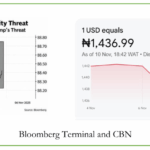
Nigeria, already contending with long-standing foreign exchange (FX) pressures, rising inflation and an urgent need for structural reform, the current clampdown on digital asset platforms presents both a challenge and an opportunity. Rather than simply focusing on punitive action, policymakers must use this moment to craft an ideal framework, one that preserves financial stability, supports innovation and restores confidence in the naira.
In recent months, the Central Bank of Nigeria (CBN), under the leadership of Olayemi Cardoso, and the Securities and Exchange Commission (SEC) have intensified scrutiny of cryptocurrency-exchange activity in Nigeria. Authorities allege that some operators may have facilitated parallel trades or peer-to-peer (P2P) transactions denominated in naira, potentially contributing to distortions in the FX market.
“With a regulated digital asset ecosystem, a clearly defined legal and regulatory framework for virtual asset service providers (VASPs), where players are licensed, supervised and aligned with FX policy, would also be achieved.”
Significantly, between July 2023 and June 2024, Nigeria processed roughly $59 billion in crypto transactions, ranking it second globally after India.
The CBN also recently announced gross external reserves at more than $43 billion, its highest level in several years, offering a window to stabilise the FX market.

Moreover, Nigeria’s FX landscape has improved. The current account surplus for 2024 was reported at over $17 billion, with projections for 2025 exceeding $20 billion.
These facts reflect progress but also underscore the need for a clear, coherent policy regarding digital assets to ensure one puzzle piece does not undermine the effort.
In the ideal scenario, Nigeria would achieve monetary and FX stability. A stable naira, minimal divergence between official and parallel-market rates, and robust reserves providing import cover of 10 – 12 months. Current data suggest reserves are at about $43 billion, enough for about 11 months of imports.
With a regulated digital asset ecosystem, a clearly defined legal and regulatory framework for virtual asset service providers (VASPs), where players are licensed, supervised and aligned with FX policy, would also be achieved. As recently noted, the SEC and CBN are collaborating to clarify mandates: the SEC to oversee licensing of VASPs and the CBN to safeguard monetary stability.
Read also: Nigeria’s crypto boom masks wealth flight as billions flow offshore

Innovation with protection would enable players to embrace blockchain fintech and stablecoins in a way that complements the naira rather than substitutes it. A complementary regime where digital assets spur remittances, payments innovation and financial inclusion but not FX speculation.
And with transparent enforcement, when infractions occur, there would be consistent enforcement that protects the rule of law and does not create regulatory overhangs for business. The way Nigeria’s approach will affect foreign investor confidence significantly.
Above all, public trust and inclusivity would be enabled when communication by regulators underscores the national interest: sound FX markets, inclusive growth, and digital participation for all Nigerians, rather than messages that focus only on ‘crypto risk or currency sabotage’.
To progress from the current state to the ideal, Nigeria must pursue several concrete steps, such as clarifying regulations and coordination. The overlapping responsibilities of CBN (monetary policy) and SEC (capital-market regulation) have created ambiguity. The 2025 regulatory agenda, delimiting roles for the SEC (licensing and supervising VASPs) and the CBN (monetary stability and payments oversight), must be operationalised.
Also, license and supervise crypto platforms, as companies wishing to serve Nigerians must register, meet due diligence standards and subject themselves to the rules of the FX market and KYC/AML requirements. Platforms that were operating outside this framework are precisely the fear regulators cite. For example, Nigeria froze bank accounts of some USDT sellers in 2024 under FX manipulation concerns.
In addition, integrate digital assets into the FX strategy, not against it. While crypto flows are large, authorities must channel them into productive FX integration (remittances, formal payments) rather than allowing P2P speculation that undercuts naira demand. This means monitoring flows, identifying harmful trading pairs (e.g., naira–stablecoins via P2P), and shutting down those that threaten FX stability. Nigeria’s earlier move to delist naira pairs on certain exchanges is a signal.
Preserve innovation and financial inclusion. Stablecoins anchored to naira, fintech innovation and blockchain-driven payments infrastructure are not the enemy; they are potential allies. For example, Nigeria’s regulated stablecoin initiative (cNGN) under the 2025 Investments & Securities Act is one form of such innovation. Policymakers ought to support such initiatives, provided they are transparent and compliant.
Strengthen data-driven oversight and transparency. The CBN’s recent disclosure of reserve levels and FX statistics is a good start. Continued transparency on crypto flows, P2P volumes and FX market metrics will build stakeholder trust. In turn, enforcement actions (e.g., fines or sanctions) must be proportionate, transparent, and consistent to avoid perceptions of unpredictable arbitrage.
Importantly, engage with stakeholders and build confidence.
Crypto platforms, banks, fintechs, remittance firms and regulators must be brought together. Dialogue reduces surprises, creates co-regulatory frameworks and ensures that the larger economy is protected without killing innovation.
Arriving at the ideal scenario is not just technical; it is strategic. Nigeria’s ability to stabilise the naira, deepen reserves, and broaden its economic base will hinge on modernising its financial architecture, including digital assets. In rejecting or mismanaging crypto flows, Nigeria risks two things: one, missing out on fintech-driven growth; two, allowing unmonitored flows to undermine FX stability.
The current crisis around alleged manipulation is a wake-up call. Yes, platforms may have exploited weak regulatory environments; yes, the naira has been under pressure. But real progress will come when Nigeria builds institutions that can both support innovation and ensure stability.
Ultimately, the success of Nigeria’s FX regime, or any major economic reform, will rest not on blaming a single actor, but on establishing clear rules, transparent enforcement, and an environment where innovation serves broader national objectives rather than destabilises them.
If Nigeria can align the crypto-economy with its macroeconomic goals, it will not just tame the risks; it will harness a powerful growth vector for the future.