Reflecting on Nigeria’s Second Republic, one cannot help but be struck by the truly transformative period witnessed in Ogun State under the leadership of Chief Victor Olabisi “Bisi” Onabanjo (1979–1983). As a devoted disciple of the great Chief Obafemi Awolowo, Governor Onabanjo skilfully and creatively brought the progressive ideals of the Unity Party of Nigeria (UPN) to life. In my view, his administration stands as a shining example of purposeful governance, establishing benchmarks in public health, infrastructure development, and economic growth that continue to resonate today.
A trusted lieutenant: Timothy Aina Odeyemi’s pivotal role
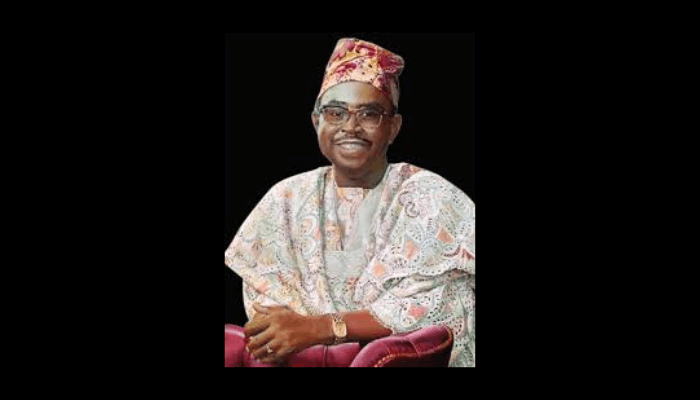
A figure of particular importance within this dynamic government was Timothy Aina Odeyemi, a man whose service as commissioner in both the health and trade and industry ministries speaks volumes about the trust and high regard Governor Onabanjo held for him. This dual responsibility underscores Odeyemi’s exceptional competence and unwavering commitment, making him, in my estimation, a cornerstone in the delivery of the administration’s most significant and lasting achievements.
Revolutionising healthcare access: The free healthcare programme

Without a doubt, one of the most courageous and impactful policies enacted under Governor Onabanjo was the provision of free healthcare for all citizens. Under the astute guidance of the Ministry of Health, then ably led by Timothy Aina Odeyemi, Ogun State bravely offered unfettered access to a comprehensive range of medical services. From crucial surgeries to essential maternity care, vital child immunisations to critical accident and emergency services, and even necessary prescription medications – all were made available without charge. This policy, in my firm belief, fundamentally reshaped healthcare access, particularly for the most vulnerable in our society, and rightly earned national recognition as a standard for public health delivery.
Investing in grassroots health: Primary healthcare and mobile clinics
Driven, I believe, by Odeyemi’s deep commitment to equitable health development, the administration wisely invested heavily in establishing primary healthcare centres throughout our rural communities. Furthermore, the introduction of mobile clinic programmes demonstrated an innovative approach to bringing medical care directly to those in remote areas. These initiatives were a clear reflection of the UPN’s focus on grassroots development and were implemented with a commendable dedication to public health equity.
Laying the foundation for tertiary care: Teaching hospital infrastructure
The foresight of this administration is perhaps most evident in their initiation of what would later become the Olabisi Onabanjo University Teaching Hospital (OOUTH) in Sagamu. As commissioner for health, Odeyemi’s close collaboration with the university’s medical faculty in planning this vital tertiary healthcare and training institution was, in my opinion, crucial. Moreover, the simultaneous upgrading of general hospitals in Ilaro and Ota with modern equipment and expanded services established a significant precedent for state-level medical infrastructure development.

Building for prosperity: Development of modern markets
Under his leadership as Commissioner for Trade and Industry, the government wisely invested in the construction of modern markets in Ijebu-Ode (Ita Osu Market) and Abeokuta (Oba Lipede Market). These were not just mere trading spaces; they provided organised platforms for our traders, injected much-needed vitality into local economies, and effectively integrated our rural producers into urban supply chains. Even today, these markets stand as testaments to that vision, remaining among the busiest and most iconic commercial hubs in our state.
Seeding industrial growth: State-owned industrial projects
Commissioner Odeyemi, with a clear eye towards the future, oversaw the establishment of several state-owned enterprises aimed at fostering industrial growth within Ogun State. Gateway Pharmaceuticals in Ijebu-Ode was a strategic move, producing essential drugs locally and directly supporting the earlier public health objectives. The Omo Wood Complex in Ogbere and the brick-making plant in Lapeleke were intelligent initiatives to add value to our natural resources and create much-needed employment opportunities. The Agro-Service Centre in Odeda played a vital role in supporting our agribusiness sector, effectively linking our farmers to crucial value chains. These initiatives, in my considered opinion, were foundational in paving the way for Ogun State’s later emergence as a significant industrial center in Nigeria.
Connecting commerce: Infrastructure for trade and investment
Recognising the undeniable link between infrastructure and economic activity, the administration astutely prioritised the upgrading of key roads connecting production areas to markets. Furthermore, the establishment of Gateway Hotels in Abeokuta, Ota, and Ijebu-Ode served as a catalyst for hospitality, tourism, and essential business networking.
A lasting testament to vision and dedication
In conclusion, Timothy Aina Odeyemi’s contributions across the critical sectors of health and trade were, in my firm conviction, indispensable to the overall success of Bisi Onabanjo’s administration. His exceptional blend of deep policy understanding and strong administrative capabilities made him a vital pillar during what I believe was one of Ogun State’s most celebrated and impactful political eras. The legacy of that administration, built upon bold healthcare reforms, significant infrastructural advancements, and a commitment to grassroots economic empowerment, continues to profoundly shape Ogun State’s development narrative. Governor Bisi Onabanjo’s “golden era” of governance, as I fondly remember it, was undoubtedly made possible by the dedication and foresight of loyal collaborators like Timothy Aina Odeyemi – men who served with distinction and whose contributions offer a blueprint that remains remarkably relevant to modern public policy considerations.
Usman Lawal, a public affairs commentator, writes from Abeokuta.