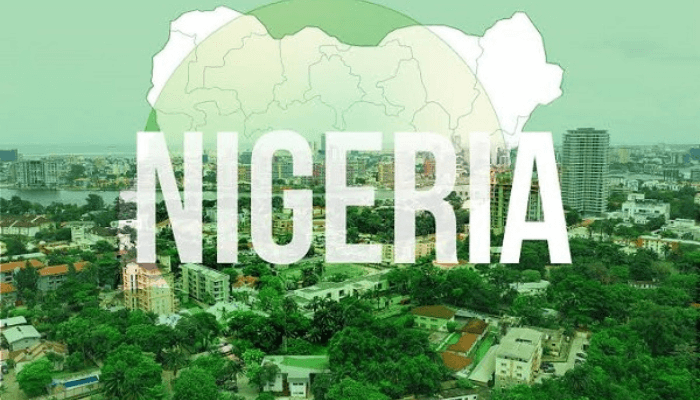
Many now agree that the government’s primary responsibility is security. Less frequently discussed, yet equally vital, is the government’s role in ensuring the equitable distribution of wealth and economic opportunities across social classes and ethnic nationalities, as this directly impacts national stability. Since the 1970s, Nigeria’s government has pursued a deliberate policy aimed at incorporating Nigerians into the nation’s key industries. This initiative began with the Nigerian Enterprises Promotion Decree (NEPD) of 1972/76 (now the Nigerian Enterprises Promotion Act) and was further strengthened by the establishment of the Nigerian Content Development and Monitoring Board (NCDMB) in 2010. The NEPD mandated majority Nigerian ownership in strategic business sectors, while the NCDMB ensures that capacity, skills, and value remain within local communities.
“Nigeria must swiftly balance the benefits of vertical integration with preserving a diversified economic base.”
This intentional policy is clearly reflected in the involvement of local businesses across the oil and gas value chain. From filling stations and depots to transportation and downstream trading, Nigerians from diverse ethnic groups, including Igbo, Hausa, Yoruba, and ethnic nationalities from the oil-producing states, have generated wealth and built thriving enterprises in the downstream oil sector. Today, Nigerian technocrats increasingly manage and acquire onshore assets as international oil companies divest, while gender inclusion initiatives are bringing more women into both upstream and downstream roles, providing a compelling case study of diversity, equity, and inclusion in action.
The private sector’s crowning achievement is the Dangote Refinery. Commissioned in May 2023 and built at a cost exceeding US$19 to 20 billion, it alone can process 650,000 barrels of crude daily, making it the world’s largest single-train refinery. Capable of significantly impacting refineries along the western and southern African coastlines, it stands as both a powerful asset and a potential disruptor.
Read also: Economic reforms and their impact on the citizenry

Yet, with such scale comes risk. The refinery threatens businesses cultivated through fifty years of deliberate inclusion policy, from independent marketers and transporters to depot owners and station operators. If the Dangote Refinery becomes the dominant or sole supplier, local networks and small businesses risk being sidelined.
How can Nigeria profit from the refinery’s advantages while preserving the entrepreneurship and inclusion intentionally fostered over decades?
I propose two strategic reforms:
1. Decentralised product distribution: Government policy must ensure that refined products are not exclusively distributed via Dangote Refinery’s truck loading bays. Creating multiple distribution channels through vessels and accessing other existing marine depots along the coast is a strategic imperative for the country. Independent distributors—including major marketers, private depots, and local transporters—should have access to loading points at coastal or riverine terminals under transparent and non-discriminatory terms. This preserves value generation across states and empowers SMEs rather than undermining existing businesses.
2. Preventing over-concentration: In the short term, domestic supply, particularly of PMS, will undoubtedly come from the Dangote Refinery, with importation as the alternative. However, creating competition within the distribution network, which already exists, is essential. No single company or individual should control both supply and distribution. The Federal Competition and Consumer Protection Commission (FCCPC), alongside the Nigerian Midstream and Downstream Petroleum Regulatory Authority (NMDPRA), must actively ensure competition within distribution markets. Safeguards should include anti-monopoly measures, supplier diversification, and open-access mandates.
Meanwhile, Dangote Group is rapidly scaling and vertically integrating operations. Beyond acquiring oil fields upstream, it has moved into transportation with the acquisition of 4,000 trucks and is expanding into retail, initially by setting prices for dedicated retail partners. As of early 2024, the refinery was achieving up to 85 percent capacity and targeting full operation by mid-year. However, challenges such as crude supply constraints, currency volatility, and accusations of monopolistic practices have surfaced. Nigeria must swiftly balance the benefits of vertical integration with preserving a diversified economic base.

Nigeria has earned its status as a regional energy powerhouse through systemic, intentional inclusion. The Dangote Refinery can indeed be a national asset, provided it is managed not as a monopolistic colossus but as a catalyst for mutual growth.
By separating supply and distribution, decentralising distribution, and enforcing competition safeguards, Nigeria can achieve a balanced outcome: maximising national benefit from large-scale projects while preserving the entrepreneurial ecosystems that support social stability and economic resilience.
This represents the true compromise, balancing scale with fairness and ambition with equity, keeping Nigeria’s energy expansion open, inclusive, and fundamentally Nigerian.