Businesses put an awful lot of effort into meeting the diverse needs of their stakeholders. But they’re not paying enough attention to one ingredient that’s crucial to productive relationships with those stakeholders: trust.
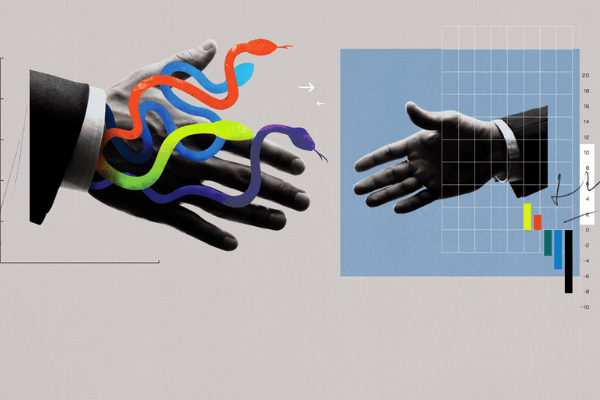
Trust, as defined by organizational scholars, is our willingness to be vulnerable to the actions of others because we believe they have good intentions. When we decide to interact with a company, we believe it won’t deceive us or abuse its relationship with us. But our willingness to be vulnerable also means our trust can be betrayed. And over and over, businesses have betrayed stakeholders’ trust.
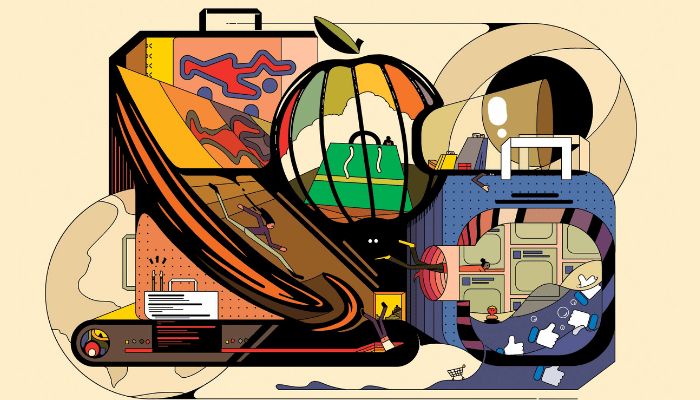
Consider Facebook. In April 2018, CEO Mark Zuckerberg went before Congress and was questioned about Facebook’s commitment to data privacy after it came to light that the company had exposed the personal data of 87 million users to the political consultant Cambridge Analytica, which used it to target voters during the 2016 U.S. presidential election. Then, that September, Facebook admitted that hackers had gained access to the login information of 50 million of its users. The year closed out with a New York Times investigation revealing that Facebook had given Netflix, Spotify, Microsoft, Yahoo and Amazon access to its users’ personal data, including in some cases their private messages.
Volkswagen is still struggling with the aftermath of the 2015 revelation that it cheated on emissions tests. United Airlines has yet to fully recover from two self-inflicted wounds: getting security to drag a doctor off a plane after he resisted giving up his seat in 2017, and the death of a puppy on a plane in 2018 after a flight attendant insisted its owner put it in an overhead bin. In the spring of 2019 Boeing had to be forced by a presidential order to ground its 737 Max jets in the United States, even though crashes had killed

everyone aboard two planes in five months and some 42 other countries had forbidden the jets to fly. Later the news broke that Boeing had known there was a problem with the jet’s safety features as early as 2017 but failed to disclose it.
Betrayals of trust have major financial consequences. In 2018 The Economist studied eight of the largest recent business scandals, comparing the companies involved with their peer groups, and found that they had forfeited significant amounts of value. The median firm was worth 30% less than it would have been valued had it not experienced a scandal. That same year another study, by IBM Security and Ponemon Institute, put the average cost of a data breach at $3.86 million, a 6.4% increase over the year before, and calculated that on average each stolen record cost a company $148.
Creating trust, in contrast, lifts performance. In a 1999 study of Holiday Inns, 6,500 employees rated their trust in their managers on a scale of 1 to 5. The researchers found that a one-eighth point improvement in scores could be expected to increase an inn’s annual profits by 2.5% of revenues, or $250,000 more per hotel. No other aspect of managers’ behavior had such a large impact on profits.
Trust also has macro-level benefits. A 1997 study of 29 market economies across one decade by World Bank economists showed that a 10-percentage point increase in trust in an environment was correlated with a 0.8-percentage-point bump in per capita income growth.
So our need to trust and be trusted has a very real economic impact. More than that, it deeply affects the fabric of society. If we can’t trust other people, we’ll avoid interacting with them, which will make it hard to build anything, solve problems or innovate.

Companies can’t build trust unless they understand the fundamental promises they make to stakeholders. Economically, people count on them to provide value. Legally, people expect them to follow not just the letter of the law but also its spirit. Ethically, people want companies to pursue moral ends, through moral means, for moral motives.
What this looks like varies with each kind of stakeholder. To customers, economic value means creating products and services that enhance their lives; to employees, it means a livelihood; to investors, it means returns; and to society, it means both fulfilling important needs and providing growth and prosperity.
Of course, expectations can vary within a stakeholder group, leading to ambiguity about what companies need to live up to. Investors are a prime example. Some believe the only duty of a company is to maximize shareholder returns, while others think companies have an obligation to create positive societal effects by employing sound environmental, social and governance practices.
To judge the worthiness of companies, stakeholders continually ask four questions:
— Is the company competent?
— Is the company motivated to serve others’ interests as well as its own?
— Does the company use fair means to achieve its goals?
— Does the company take responsibility for all its impact?
If stakeholders don’t believe a company will produce positive effects, they’ll limit its power. Part of the reason we have trouble forgiving Facebook is that its impact has been so enormous. The company might never have imagined that a hostile government would use its platform to influence an election or that a political consulting firm would harvest its users’ data without their consent, but that’s exactly what happened. And ultimately, what happens on Facebook’s platform is seen as its responsibility.
Companies should carefully define the kind of impact they desire and then devise ways to measure and foster it. They must also have a plan for handling any unintended impact when it happens.
Pinterest, the social media platform, offers a good counterpoint to Facebook. In extensive community guidelines, Pinterest details what it doesn’t allow, explaining that it will “remove hate speech and discrimination, or groups and people that advocate either.” The company trains reviewers to screen the content on its site to enforce its guidelines. Every six months it updates the training and guidelines, even though the process is time consuming and expensive.
In fall of 2018, when people in the anti-vaccine movement chose to use the platform to spread their message, Pinterest took a simple yet effective step: It banned vaccination searches. Now if you search for vaccinations on the platform, nothing shows up. A few months later, Pinterest blocked accounts promoting fake cancer treatments and other nonscientifically vetted medical goods.
The company continues to work with outside experts to improve its ability to stop disinformation on its site. Pinterest understands that, given its estimated 250 million users, its platform could be both used and abused, and has taken action to ensure that it doesn’t become a vehicle for causing harm.
Building trust depends not on good public relations but rather on clear purpose, smart strategy and definitive action. It takes courage and common sense. It requires acknowledging — and, if necessary, remediating — all the impact your company has, whether intended or not.
It’s not always possible to make decisions that completely delight each of your stakeholder groups, but it is possible to make decisions that keep faith with and retain the trust they have in your company.