Every generation has grappled with the meaning of truth. From oral traditions passed down across generations to the printed word that ignited revolutions, truth has always been central to human progress. Today, that age-old struggle has shifted to a new and volatile battleground: the digital sphere.
The internet has democratised information like never before, further amplifying voices from every corner of the globe. Yet, in this abundance, clarity is harder to find. The shift from scarcity to surplus has altered the balance of trust. Carefully vetted journalism now competes with content served by algorithms designed not to inform, but to captivate. Social media, once hailed as a force for empowerment, has morphed into a conduit for misinformation and manipulation. What appears on one’s feed may not be the result of rigorous reporting, but of algorithms optimised for outrage, controversy, and clickbait. The consequences of these are not theoretical; they are lived experiences shaping our politics, public health, and even our daily conversations.
Artificial intelligence has intensified this crisis. Generative models can now produce convincing articles, images, and videos that blur the line between fact and fiction. A speech that was never delivered, a photograph that never existed, or a study that was never conducted can circulate with alarming credibility.
Unlike traditional propaganda, which required significant resources, AI-enabled misinformation is scalable, cheap, and hyper-targeted. With just a few keystrokes, reality can be manufactured and tailored to reinforce biases. This raises unsettling questions: If anyone can fabricate truth with a few keystrokes, how do we protect it?

The implications are profound. Elections, once grounded in public debate and verifiable platforms, are now vulnerable to digital distortions engineered to sway opinion in subtle but decisive ways. Public health crises become harder to manage when conspiracy theories drown out scientific consensus – a phenomenon the world witnessed during the COVID-19 pandemic, when misinformation spread faster than the virus itself. Deep-fake videos and synthetic media now threaten journalism, diplomacy, and even personal relationships. The danger is not only that people will believe falsehoods, but that they will come to doubt everything, creating a corrosive cynicism in which truth no longer matters. And when truth collapses, so does democracy.
History offers a relevant perspective. The invention of the printing press in the 15th Century sparked fears that unregulated pamphlets would destabilise kingdoms and corrupt faith. Radio was once mocked as a dangerous tool of demagogues, especially in the wake of fascism’s rise in the 20th Century.
Each technological leap brought disruption, yet societies adapted. Regulations were introduced, professional standards were established and cultural norms evolved to reinforce trust. This only means one thing – we have been here before and will always find a way forward as usual.
Media literacy can no longer be treated as optional; rather it must be seen as a civic necessity. Just as we teach mathematics and science, we must equip students with the skills to interrogate sources, verify claims, and recognise digital manipulation. The ability to “read” the digital environment must now be treated as essential to democratic survival, just as literacy once was in the age of print. Citizens must be trained not just to consume information, but to challenge it critically, to discern context, intent, and credibility.
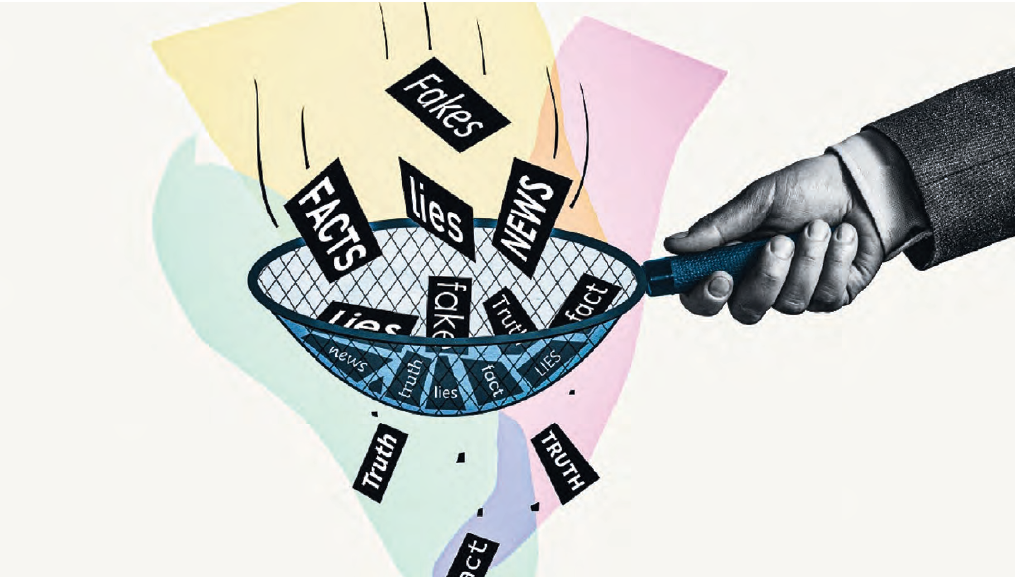
Platforms that profit from information distribution must also bear responsibility. It is not enough to remove harmful content after fact-checking. These platforms must build systems that reward reliability over virality, and transparency over engagement metrics. Algorithms cannot continue to privilege outrage over accuracy; credibility must count as much as clicks.

Governments face a delicate task. The line between protecting truth and curbing free expression is thin and politically tense. Heavy-handed censorship risks eroding liberties. But inaction leaves citizens exposed to manipulation that undermines democracy itself. Striking this balance will require collaboration between the state, civil society, academia, and the private sector. Accountability frameworks must be created that demand transparency from platforms without crossing into censorship.
The defence of truth cannot be outsourced. It begins with us as individuals, communities and institutions. We must choose to value accuracy even when it challenges our preferences. We must reward integrity even when falsehood flatters our biases. In an age where digital tools can manufacture reality, truth must be treated not as a given, but as a shared responsibility.
The battle over digital truth is not one we can afford to lose. If we surrender to cynicism, we risk a society where nothing is trustworthy and everything is relative. The truth is, we cannot stop misinformation and falsehoods from being fabricated, but we can strengthen our collective immune system against them. This means informed citizens, responsible platforms, accountable governments, and institutions that prize credibility over convenience. If we rise to the challenge by educating ourselves, demanding accountability, and reaffirming the value of fact over fabrication then we can ensure that truth remains not just a casualty of technology, but its ultimate safeguard.