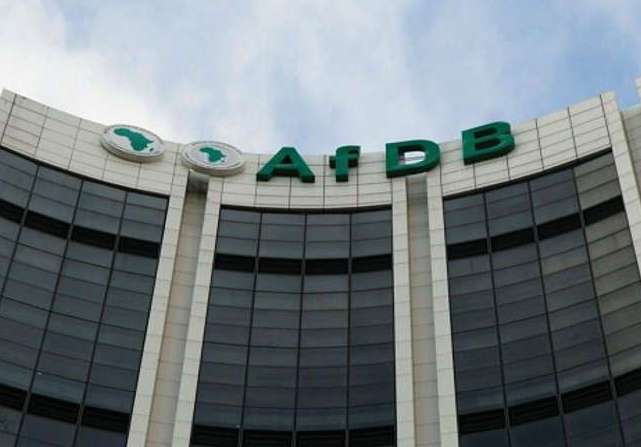
Of all the institutions that the African continent and its energetic leadership have established to facilitate its reform efforts to achieve continental transformation and empowerment for Africans at the turn of the 21st century, the African Development Bank (AfDB) stands a world apart in terms of its vision, institutional resilience, partnerships, and courage to pursue significant innovations and policy that have continued to impact Africa’s development dynamics. Since its establishment in 1964, and for over five decades till date, the African Development Bank (AfDB) has consistently being in the forefront of assessing, articulating and delivering development insights and paradigms on the African continent. A very clearly crafted mission statement announces that the objective of the AfDB is “to spur sustainable economic development and social progress in its regional member countries (RMCs), thus contributing to poverty reduction.” And to be able to achieve this, the AfDB recognizes the dynamic power of institutional innovation and collaborations. It has therefore constituted itself into a critical core of dynamic partnership with other institutional powerhouse on the continent, from the African Capacity Building Foundation (ACBF) to the African Export-Import Bank (AFREXIMBANK). The AfDB is one initiatives-rich institution that is constantly reflecting on multiple levels of development possibilities for Africa.
However, and since the coming of its new president, Akinwumi Adesina, a new sense of intellectual boldness and initiatives have been offloaded into the existing development thinking of the AfDB. Under its new leadership, there is now an increasing concern with the governance variables on the continent, and the challenge of enabling and empowering good governance that could serve as the fundamental basis for the democratic experiment in Africa. The most recent of these new initiatives, which the president signaled in his acceptance speech, is the AfDB High5s—critical elements that are considered to be key to transforming the development efforts in Africa. These High 5s are: Light Up and Power Africa, Feed Africa, Industrialize Africa, Integrate Africa, and Improve the Quality of Life for the People of Africa. The energetic engagement with development, which the AfDB represents, through its even more energetic leadership, represent a deeper need to unravel the dynamics of governance and its connection with leadership. This is very core of the development predicament: the challenge of transforming policies into those specific and transforming initiatives that, all together, constitute good governance that is felt tangibly by Africans.
Central to the High 5s and their achievement, and as the leadership of the AfDB recognizes, is institutional leadership and its influence on performance and productivity. The usual trajectory in leadership studies is to focus on individuals as the drivers of governance and development. I will be adding another dimension to this tradition which has the capacity to deepen our understanding of the imperatives of good governance. This is the leadership of nongovernmental organizations like think tanks as the instigator of governance in Africa. Though these institutions operate a different organizational structures and agenda from formal institutions like the AfDB, I believe that they provide a very strong framework of experience from which we can learn and move the development and democracy agenda forward, adequately strengthened by the organizational and institutional capacity of the AfDB itself in the struggle to institutionalize and capacitate development on the continent.
The fundamental issue that concerns me is the role of the AfDB, and African think tanks, in facilitating and establishing policy advisory systems (PAS) that will allow governments and nongovernmental organizations to work together as strategic policymaking partners. PAS are critical to the effort to define and redefine the governance trajectory all over the world. Governance is concerned with government’s ability to put policies and resources together in creative ways to empower the people. The traditional understanding of governance dynamics has usually been anchored on government and state actors as occupying the “commanding height” of determining governance variables. However, by the 80s and 90s, there was already considerable unease about the capacity of the modern state, standing alone, to entirely oversee the policy making processes and facilitate efficient and effective service delivery to the populace. From this period, governance failure characterized most African states. In fact, the Failed State Index (FSI) is constituted around the inability of state government to achieve governance goals and objectives. In the 2018 FSI, the usual suspects top the list of 178 states:South Sudan (1st), Somalia (2nd), Central African Republic (5th), DR Congo (6th), Sudan (7th), Chad (8th), Guinea (13th), Nigeria (14th), Ethiopia, Guinea Bissau, Kenya, Burundi, Eritrea (15th to 19th), Niger (21st), Cameroon (23rd), Uganda (24th), Cote d’Ivoire (26th), Mali (27th), Republic of Congo (29th), Liberia (30th). The list goes on.

Governance failure has however led to a radical rethinking of the governance space to allow nongovernmental and nonstate actors to have a deeper intervention that was not possible before. Leadership has now been transformed into a shared responsibility that entails a framework of partnership that constitutes both the government and nongovernmental organization into a PAS. Governance performance is now circumscribed by five significant governance indicators, each with different outline of governance dynamics and concepts to be measured. These are: The World Bank’s Worldwide Governance Indicator (WGI) and Country Policy and Institutional Assessment (CPIA), Overseas Development Institute (ODI)’s World Governance Assessment (WGA), Mo Ibrahim Foundation’s Ibrahim’s Index of African Governance (IIAG) and United Nations Economic Commission for Africa’s (ECA) African Governance Report (AGR). What is measured include: accountability, political stability, control of corruption, rule of law, structural policies, human rights, social inclusion, regulatory quality, institutional effectiveness, and so on.
The think tanks play a very prominent role in the understanding of nongovernmental organizations. As policy institutes, think tanks are characterized by its research and advocacy orientation that, most of the time, is also coloured by specific ideological perspectives. A think tank could be described based on its source of funding or operational framework—independent and non-profit, affiliated to a university, created by corporate concern, state sponsored, regionally created or personally affiliated. As usual with Africa, where think tanks are flourishing in the West—from the Council on Foreign Relations in the UK to the Brookings Institution in the United States—Africa’s hostile regulatory and political environments constitute one of the cogent factors that have made it difficult to tap into the organizational capabilities of think tanks. There is therefore a sustainability crisis already with 30% of African think tanks are already in a terrible state, another 30% are fragile and failing.
The fact therefore is that Africa is ‘under-think tanked’, if that language is permitted. Whereas the United States has close to 2000 think tanks with over 400 in Washington D.C. alone, including the number one think tank in the world, the Brooking Institution, Nigeria has 51 think tanks, South Africa, 92, Kenya, 56, Israel, 69, on and on. Unfortunately, many of the Nigerian think tanks are think tanks in name, and going by global rating, Nigeria is not really regarded as a knowledge hub in spite of the intimidating array of global intellectuals and high-end human capital it habours. In terms of taking think tanks to next levelhowever, there is a lot of lesson to learn from the fate that befell highly rated think tanks with such intimidating future as the Development Policy Centre (DPC), Ibadan and the Centre for Advanced Social Science (CASS), Port Harcourt, with respect to how think tanks could outlive their founders.
Tackling good governance in Africa therefore requires establishing and consolidating an adequate PAS that will bring the governments and NGOs into a tight and mutually efficient and strategic policymaking partnership. Strategic policymaking makes reference to an open sphere of policy conversation and learning that allows governments to draw from the policy strength and capabilities of think tanks. In this context, the PAS refers to “an interlocking set of actors, with a unique configuration in each sector and jurisdiction who provided information, knowledge and recommendations for action to policymakers.” The policy advisory systems can be categorized according to the policy content provided. The two dimensions of this policy content are “procedural versus substantive” and “short-term reactive versus long-term anticipatory”. These two dimensions produce four types of advice: (a) pure political and policy process advice (short-term reactive and procedural), (b) short-term crisis and fire-fighting advice (short-term reactive and substantive), (c) medium to long-term policy steering advice (long-term anticipatory and procedural), and (d) evidence-based policy-making (long-term anticipatory and substantive).
The first act of goodwill to the development effort is for various African governments to wade into the sustainability crisis of the African think tanks by easing the regulatory environment in ways that strengthen these organizations. Regulation and regulatory procedures are the key to the functional success of the PAS and the policy environment. And outside of a total liberalization policy, governments have a crucial responsibility in ensuring that due diligence is observed in the policymaking process. The second challenge for the revitalized think tanks to commence a process of integrating themselves into the policy advisory system by being an integral part of the strategic policymaking atmosphere. Fundamentally, the capacity of think tanks or policy institutes to become strategic partners in intelligent policymaking in the policy advisory systems must be coterminous with the availability of certain critical organizational features that could facilitate the delivery of the evidence-based policymaking that is long-term and anticipatory. Three of these features are significant: (i) a strong focus on building research capacity and maintaining intellectual credibility; (ii) a considerable level of organizational autonomy, including the ability to move quickly from one issue to another, without facing too many internal or external organizational constraints on decision-making processes and issue prioritization; and (iii) a proactive stance with a focus on future challenges. For all of this to make sense, a whole range of issues limiting the sustainability of think tanks must be tackled head on. One is the factor of meritocracy in public appointment. Two, is the chronic anti-intellectualism amongst civil servants and their disdain for rigour and research-based inputs usually dismissed as theoretical in policy work, day to day. Again researchers need training themselves to recognize that the language of papers meant for promotion is not the language of policy briefs and policy papers.The resentment between these two key actors in the policy making process need strong intellectualized administrative leadership of the Simeon Adebo-type to redress as part of drive to take strategic policymaking partnerships to next level.

With the foregoing, we arrive back at the essentially responsibility of the AfDB. I see this responsibility as that of the establishment and optimization of the policy advisory systems. This is because the AfDB is uniquely placed as a mediator between African states and the NGOs. Th first challenge of the PAS is political. PAS depends solely on government’s willingness to act from the recognition that strategic policymaking is critical to good governance, and that think tank are worthy partners. The AfDB is also faced with the challenge of identifying and mobilizing those think tank that have proved their efficiency and strategic relevance in organizational terms. Much more important, however, are the structural difficulties of the policy cycle within which the major actors are to work.
The first structural difficulty involves the hostile relationship between politicians and public servants, divided by different and contradictory interests. While the politicians are concerned about political capital deriving from policies that wins even if not properly designed, civil servants are concerned with the complex details of policy design, implementation and management.The second structural issue concerns systemic hindrances to innovativeness. On the one hand, public servants and policymakers may not properly understand what constitutes innovation or innovativeness. On the other, there may also not be sufficient incentives by the system to exploits the crucial dimensions of innovation—especially invention and experimentation—in ways that transform policies. The third structural difficulty concerns the management of institutional memory by public servants. This problem inevitably ties in with the wrong approaches often taken to the learning process in the policymaking dynamics.
The AfDB is therefore tasked with the core responsibility of consolidating the policy advisory systems in member states that will lead to the adoption of a flexible, intelligent and innovative policymaking process that is capable of meeting the policy challenges Africa confronts in the twenty first century. Such a policymaking process must be forward-looking, evidence-based, outward-looking, evaluative, inclusive and holistic with the capacity to be creative. This, for instance, will require not only the modernizing of the policymaking frameworks of member states, but also professionalization of the various policymaking structures.
Under the ardent enthusiasm and intelligent leadership of Akinwumi Adesina, the High 5s, and the AfDB’s reform-mindedness, we can sincerely hope for a steady unraveling of the development challenge in Africa. And the AfDB itself already realizes the significance of the governance space and the imperative of collaborative partnership which defines its own operational dynamics.
- Being paper presented at the African Development Bank (AfDB)/Institute for Development Studies, UNN, Enugu Campus, on ‘Achieving 5s of AfDB: Role of Think Tanks and other Knowledge Institutions’ in Enugu on 11-15 March, 2019)
Tunji Olaopa
Prof Olaopa is
Executive Vice-Chairman, Ibadan School of
Government &Public Policy – ISGPP, Ibadan
tolaopa2003@gmail.com