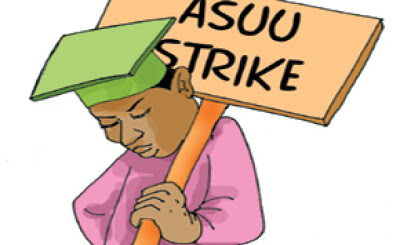
The one-week warning strike by the Academic Staff Union of Universities’ (ASUU) had received full compliance from members across tertiary institutions in Nigeria, disrupting academic timetables and the financial budgets of parents in the process. Some students who were supposed to graduate this November would have to wait until January to do their clearance in some universities.
Use of industrial action by the Academic Staff Union of Universities (ASUU) appears to be ineffective as negotiation tool and it remains to find out what method of dialogue with the Federal Government of Nigeria will be more effective. The Union has used this method since 1999 to date losing over 48 months of productive work in the process.
“Since November 2015 the ASUU has written several formal letters to the Federal Government of Nigeria requesting for negotiations, these requests were not honoured by the FGN. Strikes are not good for the University system because they disrupt the academic calendar but it appears this is the only language the government understands” said Tunde Fatunde, a professor of foreign languages at the Lagos State University.
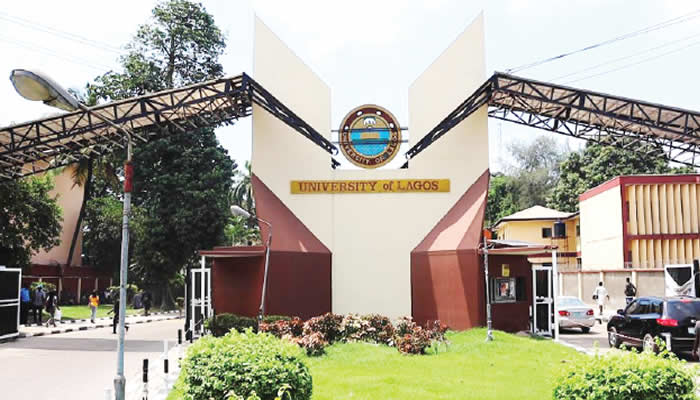
This does not seem to be the view of every university lecturer. Some lecturers contend that ASUU should take the plight of students seriously when making decisions to go on strike. “There are good and dedicated academic staff members in tertiary institutions and I respect them. Now, the flip side of the coin is that there are many who do not really mind whatever happens to students. I never supported ASUU strikes when I was younger and more radical because of some principles and I am not about to start doing so in my old age” said Ike Mowete, a professor of Electrical and Electronics engineering at the University of Lagos.
Whilst the one-week warning strike lasted amid deepening recession, parents came under severe pressure because their financial forecasts were disrupted by the strike. The supplementary admission list for some universities would not be released until the strike is over putting strain on family budgets and potential sources of revenue for universities.
Some families that had budgeted for their children to graduate this year or come on vacation next month are having to re-evaluate their budgets in light of the current academic strike with attendant discomforts and worries given the current economic down turn and rising cost of essential commodities.
“I am really disappointed about what is currently going on. I was supposed to have graduated this November but this will not happen until January. This was not part of my initial plan. My upkeep allowance is spent and my parents are not in the position to help out since I am only one of six children, all still in school at various levels of basic, secondary and tertiary. This is personally devastating” said Oluchi Nnamdi, a final year student at the Benue State University, Markurdi.
Interactions with some parents who volunteered comments showed growing unease and worry. For some parents waiting to get their children into school, they are worried that the uncertainties and possible longer wait brought by the ASUU strike would erode they money have saved for the purpose. Those whose children are already in school are concerned that the ASUU strike has the potential of doubling what they had estimated for this academic session.
“My daughter is waiting for the supplementary admission list into the University of Nigeria, Nsukka. The release of this list is likely to be unduly elongated by this strike. You know, what worries me most is that we have as a family made lots of sacrifices to save the money required for the admission process and eventual tuition fees. Now, with this strike I do not know what to think, if we spend this money on food it will not be funny” said Onome Udong, a vegetable trader at the Kirikiri market, Apapa Local Government Area.
Seven years ago, 2009, the FGN and the ASUU in what has become a landmark event met to re-negotiate the 2001 FG/ASUU Agreement and enter into a workable Agreement. The committee constituted for this agreed that the essence of the re-negotiation were a follows.
To reverse the decay in the University System, in order to reposition it for greater responsibilities in national development; to reverse the brain drain, not only by enhancing remuneration of academic staff, but also by disengaging them from the encumbrances of a unified civil service wage structure. Others were to restore Nigerian Universities, through immediate, massive and sustained financial intervention and to ensure genuine university autonomy and academic freedom.
The next landmark mark event in the chronicle of these negotiations and re-negotiations was in 2013, when the FGN signed a Memorandum of Understanding (MoU) with the ASUU, which restructured the 2009 agreement. Under the 2013 FG/ASUU agreement, the FGN was required to provide the sum of N1.2 trillion with an annual disbursement of N220 billion to redeem the agreement already reached. As at Thursday, under the ‘Payment of fractions of staff entitlements’ ASUU said “the 2009 FGN-ASUU Agreement Implementation Committee has submitted a report of the outstanding balance of N66 billion (2009 – 2013) in addition to N62 billion (2014 – 2016) this comes to an unpaid balance of N128 billion.
The Single Treasury Account (TSA) has now been named as one of the reasons for the strike recently. An aggregation of the thoughts of university dons who accepted to talk to BusinessDay on this could be captured in Fatunde’s response.
On how the TSA affects university autonomy, the professor of foreign languages added that “the software for the TSA is general and rigid and does not capture the peculiarities of universities. When we get grants from home and abroad, it does not capture it. Others elements are leave of absence, and sabbaticals, the software cannot capture these statutory practices that have been established in universities. We need a special template that would capture the requirements of the universities. The TSA software has been built around general bureaucracy.”
STEPHEN ONYEKWELU