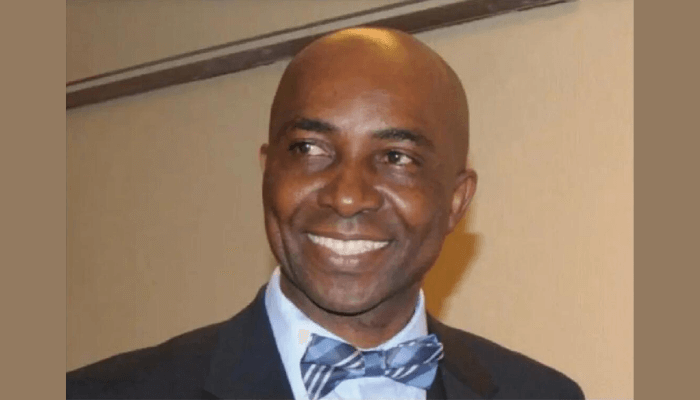
In accordance with the provisions of the Joint Revenue Board of Nigeria (Establishment) Act, 2025, President Bola Tinubu, last Tuesday, announced the appointment of John Nwabueze as the tax ombudsman.
This is also in alignment with the government’s ongoing reforms in its tax and revenue administration framework.
Nwabueze’s office, as Nigeria’s first tax ombudsman, is expected to strengthen transparency and accountability within the tax system, while enhancing confidence in tax administration and providing a structured mechanism for the fair and impartial resolution of disputes between taxpayers and revenue authorities.
According to the Joint Revenue Board of Nigeria (Establishment) Act, the Tax Ombudsman is expected to serve as an independent and impartial arbiter to review and resolve complaints relating to tax, levy, regulatory fee and charges, customs duty or excise matters. He will review complaints against tax officials and authorities and resolve them through mediation or conciliation by adopting informal, fair and cost-effective procedures.

He is to receive and investigate complaints lodged by taxpayers regarding the actions or decisions of the tax authorities, agencies or their officials; enter and inspect any premises or place where any tax authority, agency or official performs any function or duty under any law, imposing taxes, levies, charges and fees for the purpose of carrying out an investigation.
“The ombudsman is mandated to ensure that disputes are managed in an efficient, impartial, and non-adversarial manner, thereby safeguarding the rights of taxpayers against the arbitrary or abusive exercise of authority by tax officials,” the presidency said in a statement.
By restoring citizens’ faith in the Nigerian tax system, the new ombudsman holds a key to unlocking greater voluntary compliance, which is a boost for the government’s revenue drive through the fiscal reforms.
Speaking with BusinessDay, Paul Alaje, chief economist at SPM professionals, commended the appointment, which he described as swift. He emphasised the need for urgency in constituting the team of the ombudsman, stating that the implementation of the tax laws, which is expected by January 2026 may come with challenges that will require expertise of the team.
Read also: Tinubu appoints Nwabueze as Tax Ombudsman

“The Act made provision for an ombudsman and swiftly that has been appointed. So, now, the man came with his own pedigree, which I think is important to state. However, he needs to quickly constitute his team because the challenge ahead is going to be interesting. Why so? Is because of pressure that will come from taxpayers in the reality of the new tax laws.
“And I can envisage back-to-back requirements, not just for the Federal Inland Revenue Service (FIRS) as it is, even in customs and everything that has to do with tax payments and I believe he is going to have a very long day ahead. And I can tell you that based on his antecedents, I expect him to perform on his duty.”
Nwabueze also has the duty to safeguard the rights of individual and corporate taxpayers, while also promoting a culture of compliance among the taxpayers. He is expected to serve as a watchdog against any arbitrary fiscal policy of the government or by any of its agencies and report such policy to the National Assembly.
Muda Yusuf, chief executive officer of the Centre for the Promotion of Private Enterprise (CPPE), said Nwabueze must prioritise a broad-based feedback mechanism to cushion the impact of the new tax laws on Nigerians, especially the informal sector. He noted that engagement on the tax reforms had been predominantly at the elitist level, leaving market traders, small business owners, and those with limited formal education largely in the dark.
Yusuf stressed that the imperfections within the current tax legislation would only become clear once the implementation phase begins in January 2026, making the ombudsman’s role crucial for achieving fairness and equity.
“The tax laws are not perfect and there’s no legislation that is perfect. The imperfections in the law will begin to manifest when the implementation begins in January. So, he should be open enough for feedback from Nigerians – from the corporate world, from citizens on those gaps that may exist when implementation starts.
“It is very important that there is also fairness and equity, because the tax laws have a lot of assumptions, and those assumptions can only be tested when practical implementation begins. So, he must have a very wide network for feedback in real time on what the citizens feel, not just only the corporates, people in the informal sector, the illiterate and all of that.”
Yusuf noted that the informal sector forms a major part of the Nigerian economy, posing a challenge for the ombudsman and his team during the implementation of the tax law. For him, the ombudsman’s challenge is ultimately to make the entire process inclusive and ensure the inherent assumptions in the tax laws are tested against the realities of the market to prevent undue hardship.
To mitigate potential public dissatisfaction, Yusuf said that Nwabueze must build a wide network for feedback in real time to capture the concerns of all segments, particularly those not fully on board with the enlightenment process. This, he said, is vital to addressing the gaps in terms of education and how the new taxing regime will be adapted to the informal economy.
He also stressed that the ombudsman must ensure the speedy resolution of complaints, avoiding the slow-moving bureaucracy that frustrates informal sector operators who do not keep records.
“We have a very big informal sector. Many of them don’t even have information; they don’t even know what is going on about all these tax reforms because the engagement is at the elitist level. And when you are talking of the Nigerian economy, the Nigerian economy is close to 50 percent informal.”
For Uche Uwaleke, professor of Finance and Capital Markets, the establishment of the Office of the Tax Ombudman marks the beginning of a new era in the relationship between taxpayers and revenue authorities – one built on trust, due process and mutual respect.
He explained that this is one of the citizen-centred measures under the new tax reform laws to protect taxpayer rights and ensure that Nigeria’s tax administration serves the public interest, supports enterprise, and upholds justice in all fiscal matters.