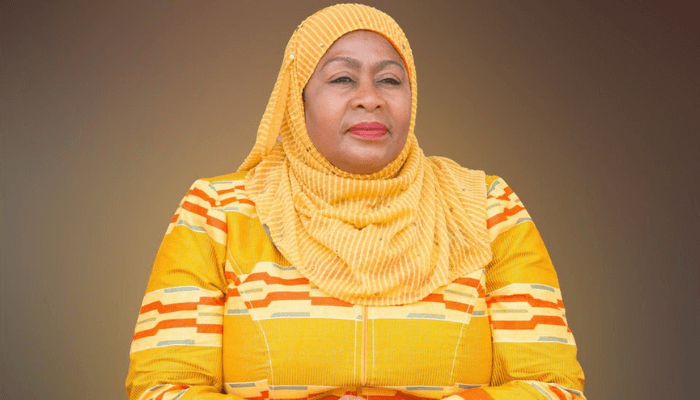
When Tanzanians head to the polls on October 29, few expect surprises. President Samia Suluhu Hassan, the country’s first female leader and head of the long-ruling Chama Cha Mapinduzi (CCM), faces what is shaping up to be a one-sided election.
For the first time, Hassan is standing as a presidential candidate in her own right, four years after she took over from the late John Magufuli in 2021. But the playing field is hardly level. Tanzania’s two biggest opposition parties, Chama cha Demokrasia na Maendeleo (Chadema) and the Alliance for Change and Transparency (ACT-Wazalendo), have both been barred from contesting the vote. Their leaders, including Chadema’s Tundu Lissu, are either in detention or disqualified, effectively clearing Hassan’s path to a new five-year term.
Read also:John Magufuli, Tanzanian President dies of suspected COVID-19 complications
A one-party legacy
Tanzania operates under a first-past-the-post system, with the president and vice president jointly elected by simple majority. Since independence from Britain in 1961, CCM and its predecessors have dominated national politics. The party traces its roots to Julius Nyerere, the independence hero still revered across the country. For decades, it has cultivated an image of unity, stability and continuity.

From 1977 to 1992, Tanzania was a one-party state. Even after the return to multiparty democracy, CCM has never lost an election. Magufuli’s re-election in 2020 by a disputed 84 percent margin reinforced the party’s unbroken hold on power.
Samia’s quiet consolidation
When Hassan assumed office after Magufuli’s sudden death, she was seen as a bridge figure, cautious, conciliatory and pragmatic. Her early gestures, including lifting bans on opposition rallies and easing restrictions on the media, earned her international praise. Diplomats lauded her as a reformer capable of steering Tanzania away from the hardline politics of the Magufuli years.
Read also:Nigerian First E&P eyes Tanzanian gas in broader push for growth
But the mood has shifted. As the 2025 election nears, critics say Hassan’s reforms have stalled or even reversed. Human rights groups accuse her government of overseeing abductions and harassment of opposition members. Chadema leader Tundu Lissu has been in prison since April, charged with treason after calling for electoral reforms. In October, former diplomat and vocal government critic Humphrey Hesron Polepole went missing, adding to fears of renewed repression.
The Independent National Electoral Commission (INEC) has also faced sharp criticism for disqualifying opposition candidates. Luhaga Mpina of ACT-Wazalendo, once a member of CCM, was barred on procedural grounds after a party member challenged his nomination. “This decision is shameful,” said Ado Shaibu, the party’s secretary general. “It raises serious questions about the independence of the electoral commission.”

A vote without suspense
Hassan and her running mate, Emmanuel Nchimbi, were cleared to contest the presidency in early October. The field includes 17 candidates, but none from the country’s main opposition forces leaving Hassan to face only minor challengers. With over 37 million registered voters, the outcome may look democratic on paper, but analysts say the real contest lies in Zanzibar, where opposition support has traditionally been stronger.
“She will win and build on work from her first term which will enable her to do more” said Jervin Naidoo, a political analyst at Oxford economic Africa.
Reform or regression?
Hassan insists her government is committed to upholding human rights and democratic values. On social media, she has called on her party to “maintain unity to ensure victory” and to “serve citizens with God’s guidance.” Yet for many Tanzanians, the optimism that greeted her presidency in 2021 has given way to scepticism.
Read also: Air Tanzania commences Lagos-Dar es Salaam flights
Her rule has been marked less by confrontation than by careful control, a style some describe as “soft authoritarianism.” If Magufuli ruled by fear, Samia has relied on pragmatism and quiet discipline to consolidate power.
Tanzania remains East Africa’s most populous nation, with one of the fastest-growing populations globally. Its political direction and the credibility of its electoral institutions, will shape not only its future, but also its standing in a region still balancing democracy, stability and strongman politics.