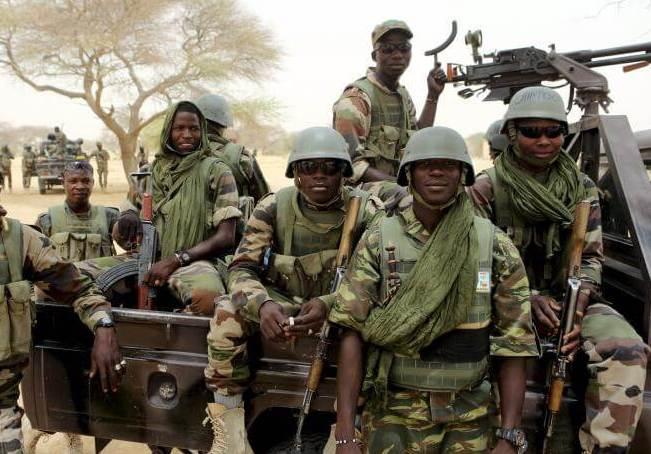
The Nigerian Army announced on December 24, the cheery news that the last stronghold of the dreaded Boko Haram terrorist group has fallen. For a group that has been globally recognised as one of the most brutal terrorist organisations in the world, this is in no doubt great news. President Buhari has been quick to congratulate the Nigerian Army for making this possible, pronouncing the terrorist group “effectively” defeated.
But is this really the end of Boko Haram? Going by the antecedents of the group, it would be too early to celebrate its demise. Significant strides have been made against the group, going by the fact that residents of Maiduguri could celebrate Christmas for the first time in many years, without the fear of a bomb going off. That is worth celebrating.
However, despite the optimism of the military, history instructs that this does not look like an “effective end” for the group. Despite the fall of the Sambissa forest, there is no evidence that the two key leaders of the Boko Haram have been captured or liquidated. Boko Haram splintered into two factions in September 2016 with one faction controlled by the notorious Abubakar Shekau and a new faction controlled by Abu Musab al-Barnawi, who is said to be the son of the founder of Boko Haram, Yusuf Ali and is recognised by the now embattled ISIS.
None of the two known leaders of Boko Haram has been captured, despite the fall of what is said to be the last stronghold of the group. “Camp Zero,” which fell this week, was suspected to be occupied by the Abubakar Shekau faction. Shekau, who has been “killed” several times by the Nigerian army was not captured with the fall of camp zero. This means that he is either on the run, as claimed by the army, or possibly has abandoned camp well ahead of the army’s coming.
Another sign that this may not be the effective end of Boko Haram is the fact that the fall of Sambissa forest has not resulted in the release of the remaining Chibok girls in captivity. Before now, there have been unconfirmed rumours that the Chibok girls were held in Camp Zero. But now, Camp Zero has been captured and there is still no sign of the remaining Chibok girls. This means that the Chibok girls are being held somewhere else, and wherever the Chibok girls are being held is likely to be the new “stronghold” of Boko Haram, since the girls are considered a prized asset for the group and most likely command the highest form of security and protection for the sect.
There are also signs that Boko Haram is changing tactics, perhaps in response to the increased attacks on its strongholds. In the last two months, Boko Haram has successfully ambushed and killed three senior military officers of the rank of lieutenant Colonel and a fourth one has gone missing since October after a Boko Haram attack. On 13 December, Improvised Explosive Devices (IEDs) planted by Boko Haram killed Lieutenant Colonel Otos Umusu Commander of the 118 Task Force Battalion in Borno State. He was the only recorded victim of the attack based on the media reports. His death brought to three, the number of senior commanders killed by Boko Haram in a space of about two months, the highest casualty figures of senior commanders ever recorded since the war against Boko Haram began in 2009.
The other two officers that have been reported killed recently include; the very popular Lieutenant Colonel Abu Ali killed 4 November, and Lieutenant Colonel B. U. Umar, killed 15 November. Lieutenant Colonel K Yusuf went missing on 16 October and the army is yet to confirm his return to their ranks. Boko Haram mainly killed these officers by ambushing them and their troops, an indication that the group is returning to its former mode of guerrilla warfare. The targeting of senior commanders also looks like an attempt to demoralise the rank and file.
Besides the attacks on senior commanders, the group has been able to successful carry out suicide bombings in the last one month, with the December 10 suicide attack in Madagali, Adamawa State, killing a reported 45 people and injuring about 33 more. Since that attack, the Nigerian Army has been able to stop other suicide attacks in Maiduguri. But the attacks signal Boko Haram’s preference once more for its original mode of causing social havoc through suicide bombings and targeted killings of high profile figures.
The fact that the two leaders of Boko Haram are yet to be found, the Chibok girls are yet to be rescued and the successful attacks against senior military commanders of the Nigeria army are clear signals that Boko Haram is yet to be “effectively” defeated.
There is a high possibility that Boko Haram may have relocated to other strongholds in the vast Sambissa forest or even outside Nigeria, from where they could still stage attacks. And as the Nigerian Army also warned, some of them may have relocated to the cities, following the destruction of their camps in the forest. Only very high level of intelligence could stop these elements from carrying out their evil plans.
There are also signs that the dynamics of the security environment are changing in West Africa. The pressure placed on ISIS in Syria, the uprooting of ISIS in Libya means that there are a lot of extremist sects looking for new locations from which to ply their evil trade. Security sources fear that West Africa’s relatively weak military and porous borders be attractive for these sects. Both the US, the UK are working closely with West Africa allies to ensure ISIS does not establish a new stronghold in West Africa.
So basically, while it is worthy to celebrate the fall of Camp Zero in Sambissa, the security threat faced by West Africa has been elevated from both the partial displacement of Boko Haram and the displacement of ISIS. Nigeria faces a whole new level of security threat in 2017 which the intelligence agencies must be prepared for. Boko Haram is weakened but its extremist ideology lives on, and it has many potential foot soldiers on the run and willing to die but only if they can take others along. The attacks in high security Europe only show how difficult it is to stop these attacks or extinguish the ideology.
Takeover of Sambissa forest- Is it the end of Boko Haram?





Kano DisCo workers suspend strike after deal with management
The management of Kano Electricity Distribution Company says its workers have suspended the ongoing industrial action following what it called…

Access Bank Lagos City Marathon holds April 10
The 2021 edition of the Access Bank Lagos City Marathon has been moved from February 13, 2021, to April 10,…

Nigeria, South Africa, two others exit EU–FATF high-risk list
Nigeria, South Africa, Burkina Faso and Mozambique have been removed from the European Union’s list of “High-Risk Third Country Jurisdictions”…

1000x Incoming? Zero Knowledge Proof Could Be the Only Presale That Matters While IPO Genie and Blazpay Fall Flat
Crypto markets have stayed active in January, with the total market cap sitting near $3.2 trillion and steady liquidity keeping…

Court dismisses FG’s criminal case against Natasha Akpoti-Uduaghan
An Abuja High Court has dismissed the criminal charges brought by the Federal Government against Natasha Akpoti-Uduaghan, who represents Kogi…

Spartans.com Stuns the World With a One-of-a-Kind MANSORY Koenigsegg Jesko Giveaway
Spartans.com, a cryptocurrency gaming platform known for rejecting traditional bonus systems, has launched a global giveaway campaign featuring a one-of-a-kind…