Experts at the ongoing Nigerian Economic Summit (NES27) have said lack of synergy among the political and economic players has posed a setback to Nigeria’s national development.
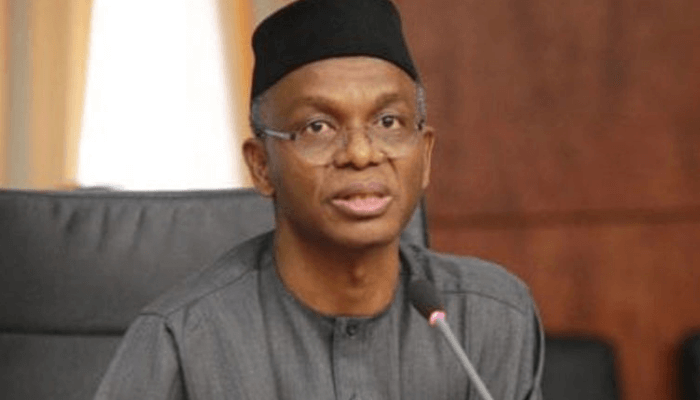
Speaking during a panel discussion titled ‘Mobilising for Political Economy’ on Tuesday, Nasir el-Rufai, governor, Kaduna State, stressed the need for a level of consensus among the economic and political elite about what should be the basic minimal in the country.
According to El-Rufai, the attitude and belief that politics is a dirty game have continually pushed many Nigerians from participating in politics, which has created an avenue for less competence hands to flood the Nigerian political space.
He said, “I have seen a level of disconnect between the political and economic elite. We discovered that those at the economic class just want to do their business, make their money and live in Banana Island. But however strong your business is, without a functional political system and competent public service, that business will collapse.

“There should be a level of consensus between the economic and political elite about what are the basic minimal and work on them continuously.”
Read also: NES: Proper coordination of fiscal, monetary policies ‘ll attract FDIs to Nigeria
Speaking further, the governor noted that Nigerian political system was populated with people without pedigree, adding that the current quality of people in political parties in Nigeria do not believe in democracy.
He said Kaduna State managed to improve its Internally Generated Revenue (IGR) because his government was deliberate in appointing only the best and brightest into public service rather than rewarding politicians with appointments.
“We need competent people in political and public services, but this is not the case in Nigeria and things will not work. Unless the best and brightest hands are in the political system, the outcome will be sub-optimal and terrible.

“This is why I keep appealing to the educated, the experienced, and the accomplished in Nigeria to please come into political parties. Let us have a mass of decent people in politics, everything else will follow. But if we allow our political system to be populated by people with nothing to lose, this country will never achieve its potentials,” he said.
Chairman, Africa Initiative for Governance, Aigboje Aig-Imoukhuede, noted also that the Nigerian society was basically divided into five components that include the politicians, civil servants, business people, intellectuals and the military.
According to Aig-Imoukhuede, the political environment of any society consists of interplay of the identified classes, hence the need for synergy among all players.
“When you speak about politics, there is no single individual but the reflection of the connective interplay of all the individuals that determine what the political position will ultimately be.
“And therefore, if there is a failure in the system, it is a collective failure. National building is a very deliberate exercise, which involves great risks and sacrifices. And that is the path that we must take,” he said.