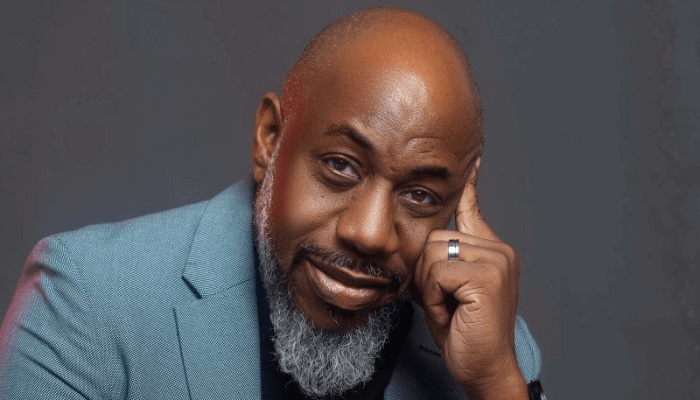
Jordan Belonwu is the founder and creative director of Belonwus, a full-service creative consultancy and multidisciplinary studio. Since establishing Belonwus in 2021, he has led the studio in crafting impactful, end-to-end creative solutions for a diverse portfolio of forward-thinking clients. His leadership has shaped brand experiences for companies such as Onboard, Paystack, Octa, Sporting Lagos, Bamboo, Zap, Grey, Casava, and many others, in this interview with KENNETH ATHEKAME he spoke on the current state of the Nigerian creative industry and how the Creative communities in Nigeria are increasingly collaborating with policymakers and private sector investors to foster more sustainable and resilient creative economies. Excerpts:
What sparked your interest in the creative industry, and how did your journey lead to founding Belonwus?
I studied Fine and Applied Arts at the University of Benin, with a major in Art History. While still in school, I became really interested in graphic design and that interest became a focused practice. I began working on branding and that exposure shaped the foundation of my career. After graduating, I worked briefly as a founding designer at a fashion retail company, Garmspot, and before transitioning into advertising through a role at an advertising agency. Not long after, I got headhunted to a start and lead the design team at a Bamboo, a tech startup. I worked at Bamboo for nearly two years, helping shape the brand and scale it’s design and advertising function before I decided it was time to take the next step, lead a larger team, purse more ambitious work and to build something of my own. That decision led to the founding of Belonwus a design consultancy, and we’ve been growing ever since
How did your experiences at Bamboo and Octa influence your vision for Belonwus?

As a founding designer at Bamboo I wore many hats, immersing myself in the startup ecosystem, while gradually building out the design from the ground up. Within a year, I rose to become Creative Director for Brand focused on shaping the team’s foundation, and understanding what it truly takes to build a design studio that works. Over time, I saw firsthand how brand and strategy was closely intertwined with marketing and product, and how important those cross-functional collaborations are. Those cross-functional collaborations sharpened my understanding of how design drives market dominance when embedded across departments.
Later, as a freelance Creative Director at Octa, I led Nigeria’s first nationwide campaign for the brand. That experience taught me what it takes to execute large-scale campaigns, how to lead teams, hire the right talent, work efficiently, track performance, adapt global brand identities, and most importantly – how to craft culturally relevant advertising within the Nigerian context.
You’ve worked with both startups and established companies—how has this range shaped your creative approach?
Working with startups and heritage brands has helped me understand the importance of brand equity and the need for agility with startups and more importantly, when to apply which. Our creative approach always shifts depending on who we’re working with.
With startups speed is everything. Things are often loosely structured, and the main goal is often market entry or capture through bold differentiation. So, the creative process leans more towards, clarity, velocity and impact. We focus on building a distinct compelling version of the story, stripping things down to their core making the identity loud enough to breakthrough. We adapt quickly, building systems as we go refining things as we move.

Working with established companies, the process becomes more layered. There’s more structure, more people involved and usually more at stake. The focus shifts to refinement and cohesion making sure the new direction ties to the brand’s existing history, evolving it without losing its core. Stakeholder management becomes more central and there’s more rigor around brand systems.
In both cases, we always move with clarity, especially during research, grounding our approach in deep understanding the client’s appetite, refining the taste level and executing with precision. So whether it’s a startup or an established company, our approach is always rooted in thoughtful design and storytelling, only adjusted for scale, context and speed.
Belonwus is described as a full-service creative consultancy. How do you define its mission and role within Nigeria’s creative ecosystem?
At Belonwus, we with brands as true partners and one of our biggest strengths lies in the breadth of work we can deliver. From strategy, to full scale brand design, we’re able to unlock brand value every step of the way. Whether it’s crafting a compelling brand strategy and tone of voice, designing, drawing pixel perfect system icons for an app, or designing and fabricating experiential pop ups around the country, we’re in the big ideas as much as we’re in the tiny details. This includes to production design for brand commercials and physical brand merchandise experiences. Our versatility is not just a service offering, its in our ethos.
When we describe Belonwus as a full-service creative consultancy, it’s more than just a label. It’s a reflection of our mission towards shaping the creative ecosystem. At our core, we’re building a company that allows creativity to thrive, a space where the best people can do the best work of their lives and be paid well enough to live with dignity. But beyond that, our mission reflects in the value we create for our clients. If we’re able to bring together great talent and help them do great work, it naturally translates into stronger outcomes for the brands we work with. The bottom line grows as a result of thoughtful brand and design strategy, and the work begins to shift the broader narrative around what design can do, not just for companies, but for individuals and even for the nation at large. As we create opportunities for creatives and deliver results for clients, we’re also building a generation of creatives and new designers who think systemically about brand, storytelling, and impact.
Your mantra is “more new, less déjà vu.” How do you ensure innovation without losing cultural relevance or clarity in your work?
“More New, Less Deja Vu,” is really about fighting consistently for originality anchored in culture and clarity. I strongly believe there’s no shortage of inspiration in the world so we focus on creating unique visual and storytelling elements for each brand, leveraging inexhaustible cultural materials.
Nigeria is vastly rich in visual and symbolic materials that are often overlooked, so instead of copying what’s been done before, we try to dig into that cultural archive and build something fresh from it.
For example, the conceptual narrative used for Octa campaign was inspired by the quiet mastery found in often overlooked skills across in the general work force, Bamboo sticks for the iconography of Bamboo and the typography of Sporting Lagos jerseys was influenced by the decorative illustrative style on articulated vehicles in Lagos. These choices aren’t just aesthetic, they connect the brand to something recognisable while still feeling new.
Could you walk us through a project you’re especially proud of, and what made it stand out creatively and strategically?
The rebrand of Sporting Lagos is one project I’m especially proud of as it stands out to me for both creative and strategic reasons. Strategically, it was an opportunity to use sports to unify people from all levels in a way that hadn’t been done in Nigeria especially without feeling elitist or exclusive. Before the rebrand, Sporting Lagos had a following but the new identity amplified the fandom, deepening the emotional connection and winning new fans
Creatively, it gave us the chance to build a sports identity that felt deeply rooted in Lagos culture, something everyday people could connect with. We were happy to create jerseys in collaboration with Umbro, announcement posters, merchandise, relevant designs where everybody got a taste of what it felt like to be a Lagos football club fan but with global standards of production. From the typography inspired by the numbering system on Lagos trucks, to the logo alluding to the interconnected streets of Lagos, and a tone of voice inspired by street football lingo, we helped Sporting elevate its presence, and importantly increasing the awareness of the impact of design in sporting in Nigeria.
The rebrand was proven to be very successful because within the period the identity launched, there was significant spike sales of match day tickets and club jerseys, increased brand mentions, genuine fan excitement and brand association. More times than I can count, I’ve run into people wearing the jerseys sometimes explaining that the reason they bought the jersey and started supporting Sporting was because the entire look and feel felt like it was the closest thing to global standards. That’s, in my opnion an example of what design is meant to do for brands.
How does Belonwus balance digital and physical product design, especially in an environment like Nigeria where tech is growing but infrastructure can be limiting?
At Belonwus, we approach this by designing systems that are both flexible and context-aware. So instead of trying to force a one-size-fits-all approach, we think about how the design can adapt to existing realities.
We do this by treating digital and physical integral expressions of the brand’s identity not as separate disciplines but as extensions of the same idea just being adapted to different contexts. In Nigeria where tech adoption is rising but infrastructural gaps still exist, this dual approach is easily a strategic one.
We know that reach and scale is a lot easier digitally, but physical experiences offer depth and memorability so we design with both utility and emotion in mind. Our team includes specialists from industrial design, architecture, fine arts and interface design allowing us to move fluidly between screens and spaces. This cross functional thinking is essential especially in a Nigerian market where tech adoption is rapid but physical environments still play a huge role in building trust with brands.
How would you describe the current state of the Nigerian creative industry? What excites you the most—and what concerns you?
I’m genuinely excited about the future of Nigeria’s creative industry. There has been significant progress across music, fashion, art, and design, and what’s remarkable is how these sub-industries are becoming more unified and visible on the global stage. From Nigerian Afrobeats artists gracing the Met steps to local designers collaborating with Nike and fashion houses dressing international stars, Nigeria is in a pivotal moment. Brand and type designers are likewise doing exciting work, shaping new narratives that resonate both at home and abroad. The work we’re doing is forging a new future for creativity, and that’s what excites me most.
What concerns me, however, is the urgency with which we must plan for that future. Because moments like this are pivotal, we’re pledging to secure funding that will expand audiences and nurture the next generation of creatives. We’re building partnerships with platforms such as Duo Nodes to integrate into youth communities and create strong pipelines, and we’re actively collaborating with The Huddle to present, document, and showcase the best of Africa’s creativity. From discovering untapped talent to providing internships and hands-on experience with leading design studios, we want young creatives to have a clear trajectory. It isn’t enough for creativity to thrive today; we must ensure it remains sustainable for the future
What structural or cultural challenges do creatives face in Nigeria, and how can we build systems that better support them?
I think one of the biggest challenges is the Nigerian creative educational sector. There is an urgent need to overhaul the curriculum to make sure it aligns with global standards. Too often, students graduate with a B.A. only to realise they need to take multiple crash courses just to become employable. This has been the case for years and while it may not be the fault of the students, they are the ones that have to bear the burden of rediscovery to stay afloat.
For example, when I was in school between 2012 and 2016, CorelDRAW was still being taught as the primary software for graphic design. Meanwhile, Adobe Photoshop and InDesign were already becoming industry standards worldwide. Yet, many lecturers were resistant to projects created using Adobe tools. Today, in 2025, Figma is fast becoming the new global standard, replacing legacy Adobe software. But I’m fairly certain that most Nigerian institutions haven’t caught up. This means that graduates relying solely on what they learned in school are already starting their careers at a disadvantage.
Another critical issue is the gap between those who have the means to fund the creative industry and those who are genuinely interested in doing so. That disconnect stifles growth and limits our ability to scale globally. Many creatives are forced to bootstrap and work on projects out of passion, without external investment. It’s only after they’ve gained some level of recognition does funding and attention from local investors begin to come in but it shouldn’t be that way.
We need structural solutions like boot camps where young creatives can test ideas and access funding opportunities, regardless of their networks or financial background. And we need more visibility, press and recognition that actually moves the needle, not just hype.
In the grand scheme There’s no shortage of skill or creativity in Nigeria and I’m confident that we’re globally competitive in terms of talent and ideas, but what we lack is institutions, resources and support systems that help creatives evolve from amateur to professional in a structured way. When there’s no formal pipeline, it often comes down to the sheer willpower of individuals pushing through and this can be challenging. If we had more conferences, long-term programs and institutions that truly prioritised creative growth, it would completely shift how our industry scales both locally and globally.
What advice would you give to young designers or art directors trying to find their voice in such a competitive and fast-evolving field?
I’d say work as hard as you can, but also study what already exists and try to reverse engineer it. The reality is, we don’t have many schools here that break down the full spectrum of education required for art direction or design. So what helped me, and what I recommend is studying successful work, disintegrating it in an attempt to understand how it was made. In the process of figuring that out, you begin to grasp the smaller complexities that make up the whole. And once you understand those pieces, you can start to recreate or even imagine the whole in your own voice.
While mastering the craft is important, everything else asides the craft is also important. So presenting your work well, managing relationships, keeping to timelines, and being able to articulate your thoughts are just as important as the craft. So don’t only focus on improving your design skills, also focus on becoming a well-rounded creative professional.
And finally, stay adaptable. Software and tools will keep changing. Try by all means not to be left behind, learn what’s new and learn it fast. New frontiers like AI machine learning should be considered a must-have, not an option. Make sure you’re moving with the times because the industry waits for no one.
How can creative communities collaborate with policy makers or private sector investors to drive more sustainable creative economies in Nigeria?
We have to start thinking more holistically and long term. Sustainable growth in the creative economy requires international investment, both financially and structurally. One of the first steps is data. We need solid data that backs up the value of our creative exports. For example, Afrobeats has done incredibly well globally, but we still don’t have enough comprehensive data to show investors just how impactful it’s been economically and culturally. That kind of information is crucial to getting serious buy-in. Another important area is education, starting from the ground up. We need to rethink the way we teach creativity in primary, secondary and tertiary institutions. That means influencing the policy decisions being made at the educational level, curriculum reform, modern teaching styles, and ensuring that students are learning skills that reflect current industry realities. Too often, young people graduate only to find out that the world has moved past what they were taught. We need to change that. We also need to make serious efforts to fund independent creative work. A lot of innovation is already happening informally or without institutional support, but if we can strengthen creative communities into formal alliances or unions, then we can begin to advocate collectively, making structured demands of government and private stakeholders. When there’s shared, communal understanding of creativity’s value, those demands become harder to ignore.
With AI, new media, and constant tech evolution, how do you see the role of the designer or creative director changing over the next decade in Nigeria?
Over the next decade, the roles of creative directors and designers will increasingly center around what should be done, not just how to do it. As the speed of implementation becomes less of a barrier, the real value will lie in making the right decisions upfront/ In this new model, taste becomes the most important skill.
If AI makes it easier to create anything, then the real challenge becomes knowing what to create. The decision, not the execution, becomes the most valuable skill.
In simpler terms, when everything is easy to build, taste becomes what sets people apart. The world will pander to those who can curate the future with taste that’s more numerical decisions. The creative director’s role will eventually evolve into what’s we now consider a taste maker. Someone that just shapes culture by choosing well.
It’s also important to understand that AI is relatively evenly distributed. It’s a multiplier. If you could do x before, artificial intelligence will just help you do 10x, but that applied to both creativity and tastelessness. The gap will widen, not close.
In the end, tools are tools, what matters is what we make of them.
What are some global trends you’re paying attention to, and how are you adapting or localising them for your clients and teams?
One of the biggest global shifts we’re seeing is in how content is consumed on social media. It’s no longer just a copywriter and a designer creating designs to communicate for brands. It’s now about live-action content, real human articulation. And so because of this, we’re now intentional about designing with performance in mind, incorporating voice and tone into guidelines, video and movement into our content strategies. There is also the personalisation of brands where companies like Duolingo are able to create personas that audiences resonate with and this makes their communication far more engaging. For our clients, we’re localising this by designing identities that aren’t just visually engaging, but culturally relevant to the target audience in tone, behaviour and motion.
Another important trend is the growing dominance of motion. Time and again, animated graphics consistently outperform static ones. Relying solely on static design already feels outdated—especially in a time of shrinking attention spans. Motion adds clarity, energy, and vibrance, making brands more dynamic and memorable. That’s why we invest heavily in building robust motion systems that scale across all brand assets—from social content to in-product experiences.
On a different but equally important note, physical brand experiences are making a strong comeback. As digital becomes more saturated and expected, physicality is becoming the differentiator. Brands who want to stand out need to create experiences people can hold, touch and feel. This has been especially exciting for us because our team comes from varied disciplines like industrial engineering, architecture, fine and applied arts, and everything in between, which allows us to translate brands into tactile, immersive experiences. We’ve scaled this for clients like OctaFX and Sporting Lagos and Bamboo, creating installations or real-world activations that increase audience engagement. Ultimately, we’re constantly observing global shifts, but more importantly, we’re adapting them for our context